


India's nuclear deterrence strategy appears to have entered a significant new phase, with the latest report by the Stockholm International Peace Research Institute (SIPRI) stating that New Delhi has, for the first time, deployed a number of nuclear warheads as part of its operational arsenal. According to the report, India has deployed 12 nuclear warheads, marking a notable departure from its long-standing practice of keeping nuclear warheads and delivery systems stored separately during peacetime.
The development has drawn global attention because it represents a shift in India's nuclear readiness posture. SIPRI, one of the world's most respected arms-tracking and conflict research institutions, noted that this is the first time India's nuclear arsenal has been categorized as "operationally deployed" rather than simply stockpiled.
For decades, India has maintained a policy of separating nuclear warheads from their delivery platforms, such as missiles and aircraft. This arrangement was designed to reinforce the country's doctrine of restrained deterrence while reducing the risk of accidental or unauthorized use.
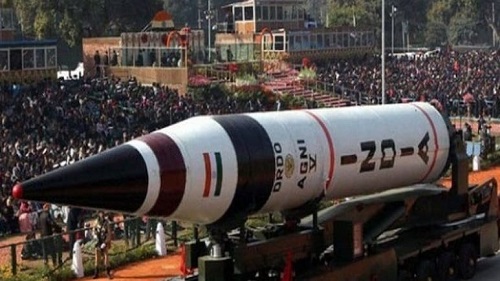
However, SIPRI's latest assessment suggests that India may be gradually moving toward mating some nuclear warheads with delivery systems or positioning them closer to operational forces. The report links this shift to the country's increasing use of canisterized missile systems and the growing role of sea-based nuclear deterrence patrols conducted by nuclear-powered ballistic missile submarines (SSBNs).
The deployment of 12 warheads, according to SIPRI, indicates that some nuclear weapons may now be maintained at a higher state of readiness than in the past.
The report estimates that India possessed approximately 190 nuclear weapons as of January 2026, reflecting a modest increase compared to the previous year. These weapons form part of what analysts describe as India's maturing nuclear triad—a strategic force structure consisting of air-delivered weapons, land-based ballistic missiles, and sea-based nuclear platforms.
The development of a credible nuclear triad has long been a key objective of India's strategic planners. While aircraft and land-based missile systems have formed the backbone of India's deterrent for decades, the induction of SSBNs has strengthened the country's second-strike capability, considered essential for maintaining a reliable deterrent.
SIPRI also highlighted India's continued investment in sea-based deterrence patrols, which are intended to ensure that a retaliatory nuclear capability remains survivable even in the event of a first strike by an adversary.
One of the most significant aspects of the report is the suggestion that some of the deployed warheads may be associated with India's SSBN fleet. Ballistic missile submarines are regarded as one of the most secure components of a nuclear deterrent because they can remain hidden underwater for extended periods.
The deployment of nuclear weapons aboard submarines would represent a major enhancement in operational readiness and strategic flexibility. It would also align India more closely with other established nuclear powers that maintain a portion of their arsenals on constant operational patrol.
Despite the reported deployment, there is no indication that India has altered its fundamental nuclear doctrine. The country continues to adhere to its "No First Use" (NFU) policy, under which nuclear weapons would only be employed in retaliation to a nuclear attack on Indian territory or on Indian forces anywhere in the world.
India's nuclear doctrine emphasizes maintaining a "credible minimum deterrent" rather than pursuing numerical parity with other nuclear powers. Successive governments have maintained that the country's nuclear arsenal exists solely to deter aggression and safeguard national security.
Experts note that the reported deployment does not necessarily signal a more aggressive nuclear posture. Instead, it may reflect the evolution of India's strategic capabilities as it seeks to ensure the credibility and survivability of its deterrent in an increasingly complex regional security environment.
As geopolitical tensions continue to shape global security calculations, SIPRI's findings suggest that India's nuclear forces are entering a more mature and operationally integrated phase, while remaining anchored to the principles of deterrence and No First Use that have defined the country's nuclear policy for decades.





















Leave Your Comment