



Viral Desai
India’s visionary commitment to achieving Net Zero greenhouse gas emissions by the year 2070 stands as a historic milestone in the global battle against climate change. As the world’s fifth-largest economy and one of the most dynamic developing nations, India has consistently demonstrated that economic growth and environmental stewardship can proceed hand in hand. To bridge national climate ambitions with ground-level action across diverse sectors, the Ministry of Environment, Forest and Climate Change introduced a transformative digital mechanism known as the Net Zero Portal. Launched officially in September 2026 on World Ozone Day by Union Minister of State Kirti Vardhan Singh in Mumbai, this digital platform marks a major advancement in institutional coordination, transparent governance, and voluntary climate responsibility.
The fundamental core of India’s Net Zero Portal lies in its capacity to aggregate, standardise, and highlight climate actions undertaken by corporate entities, industrial leaders, public sector enterprises, and municipal authorities across the country. Historically, while many forward-thinking Indian organisations adopted progressive decarbonisation goals and invested in sustainable technologies, their pledges were fragmented across individual corporate sustainability reports, corporate websites, and isolated regulatory filings. The Net Zero Portal unifies these scattered efforts under a single, centralised national repository. By providing a structured public framework where organisations can voluntarily register, outline their baseline emissions across Direct Scope 1 and Indirect Scope 2 energy usage, and publish clear timelines for reaching carbon neutrality, the initiative instills unmatched clarity and institutional credibility into India’s corporate climate movement.
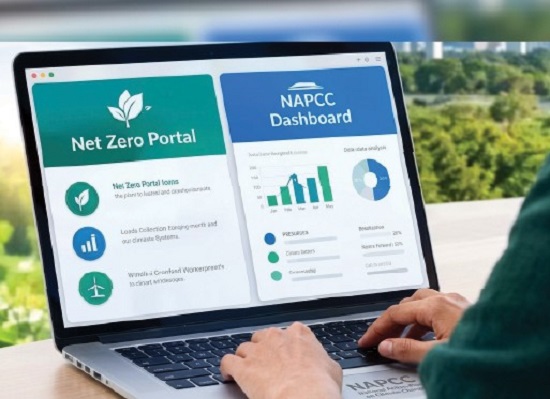
A key strength of this central platform is its commitment to open disclosure and progress tracking. Rather than relying on static promises, the Net Zero Portal encourages participating entities to submit annual updates regarding their transition plans. Organisations can detail specific decarbonisation strategies, such as expanding renewable energy procurement, improving thermal and electrical efficiency, introducing circular manufacturing processes, adopting green hydrogen, or implementing nature-based carbon removals. By aligning its reporting guidance with internationally respected standards, including the Greenhouse Gas Protocol, the Science Based Targets initiative, and United Nations Framework Convention on Climate Change guidelines, the portal equips Indian enterprises to benchmark their performance against global best practices while contributing directly to national priorities.
Furthermore, the launch of the Net Zero Portal operates in synergy with the National Action Plan on Climate Change Dashboard. While the portal addresses organisational and voluntary commitments, the accompanying dashboard monitors government-led progress across India’s core National Missions spanning solar energy, energy efficiency, sustainable habitat, water resources, Himalayan ecosystems, green India, sustainable agriculture, and strategic knowledge. Together, these dual digital platforms provide policy planners, research institutions, and international observers with a real-time, comprehensive view of how government initiatives and corporate actions complement each other. This integrated data infrastructure strengthens evidence-based policy making, enables targeted resource allocation, and fosters public-private collaboration toward shared environmental goals.
In addition to enhancing operational transparency, the Net Zero Portal generates substantial economic and strategic advantages for Indian industries in an increasingly carbon-conscious international market. Global trade channels and institutional investors are demanding higher environmental, social, and governance standards across global supply chains. By establishing a trusted, government-backed public platform where Indian businesses can demonstrate verified climate leadership, the portal enhances the global competitiveness of domestic manufacturers and exporters. It signals to the international community that Indian enterprise is proactively mitigating climate risk, adopting innovative clean technologies, and taking decisive responsibility for its environmental footprint.
The broader philosophy behind the Net Zero Portal reflects India’s holistic approach to environmental governance, rooted in the values of Mission LiFE (Lifestyle for Environment). This approach recognizes that meaningful, long-term climate resilience cannot be achieved through top-down mandates alone; it requires active participation, shared ownership, and collective action across all spheres of society. By creating an inclusive platform open to multinational corporations, small and medium enterprises, state agencies, and civil organisations alike, India nurtures a vibrant ecosystem where climate consciousness becomes a defining aspect of modern enterprise.
Ultimately, the Net Zero Portal exemplifies how digital technology can serve as a catalyst for environmental transformation. By converting climate pledges into trackable, transparent, and accountable data points, India reinforces its role as a responsible global leader in the clean energy transition. The platform stands not only as an efficient monitoring tool, but as a testament to the nation’s determination to chart a sustainable, prosperous, and low-carbon future for generations to come.
(The author is a known Environmentalist and the pioneer of Satyagraha Against Pollution movement, viraludayindia@gmail.com )
(The content of this article reflects the views of writer and contributor, not necessarily those of the publisher and editor. All disputes are subject to the exclusive jurisdiction of competent courts and forums in Delhi/New Delhi only)





















Leave Your Comment