


Stretching over 2,500 kilometres and spanning 13 Indian states, the Indian Himalayan Region is home to nearly 50 million people. Agriculture, animal husbandry, and horticulture form the backbone of livelihoods here, all of which depend heavily on the region’s fragile water systems.
The Himalayas are the origin of three of Asia’s great rivers the Indus, Ganga, and Brahmaputra which are fed by glaciers, snowmelt, and monsoon rains. These rivers provide water for irrigation, drinking, and hydropower across vast plains downstream.
.jpg)
Water under stress: A growing crisis
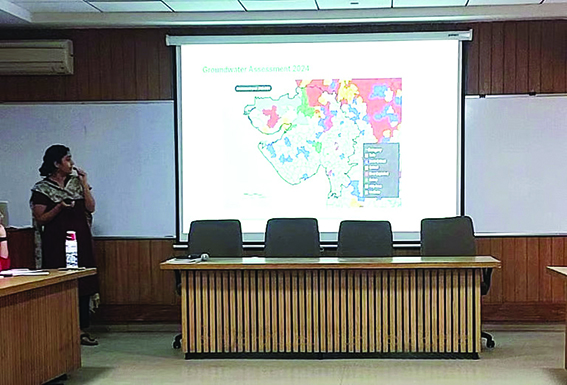
At the IWMI–Tata partners meet held in December 2025 in Anand, Gujarat, experts, policymakers, and researchers came together to discuss the critical role of the Himalayas in sustaining life and livelihoods across South Asia in a session titled ‘Himalayan ecosystems, aquifers and livelihoods’. The session highlighted the immense ecological, hydrological, and social importance of the Indian Himalayan Region (IHR), while also sounding the alarm on the mounting pressures facing its water resources.
The first part of the session set the context for the emerging water challenges in the Himalayan region followed by discussions on the need for collaborative action and future directions to be undertaken to deal with the water challenges through the formation of the Himalayan Research Consortium. Speakers underscored how climate change, urbanisation, and land-use changes are straining Himalayan water systems.
Rethinking Himalayan waters
The participants for the session included experts from Centre for Ecology and Development and Research (CEDAR), ITC, Water For People, Tata Trusts and IWMI. The first part of the session included a presentation by Dr Rajesh Thadani from CEDAR followed by an open discussion.
Dr Rajesh Thadani argued that there was a need to look at the Himalayas from a different perspective than before in the context of the changing climatic, socioeconomic and demographic situation in the region. There was a need for:
Breaking the silos
The session called for a continuum approach that recognised these linkages and integrated management strategies accordingly.
Beyond glaciers: Rivers, rainfall and the changing narrative
The Himalayas have often been viewed through a glaciocentric lens. However, the Himalayas have only 0.02 percent of the global ice, and snow and ice are important in some parts of the Himalayas, with the western rivers depending on them for their flows. However, rivers like the Ganga and Brahmaputra are largely rain-fed, with snow and ice contributing to their flows only in their upper reaches. This shift in understanding challenges long-held assumptions and demands new approaches to water management.
The rainfall paradox
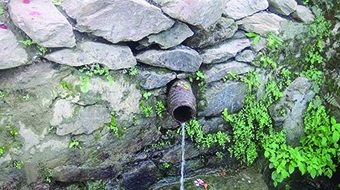
Despite being a high-rainfall region, the Himalayas face acute water scarcity outside the monsoon. With 80% of rainfall concentrated in a few months, storage becomes a challenge. Constructing tanks is difficult in mountainous terrain, making springs indispensable as natural storage systems. Mountainous terrain and climate change induced intense rainfall is creating problems for infiltration in mountainous regions of the Himalayas and springs in the region are drying rapidly creating further challenges for water security in the region.
The Himalayas are changing, so should our approach
How do we ensure adequate supply of water in the region: Pathways forward
Reviving springs and recharging aquifers
Treatment of recharge zones is often expensive and can offer temporary relief while long-term sustainability requires ecological restoration and community-led management. Solutions can include restoring native vegetation or forests to enhance infiltration and recharge aquifers.
Building partnerships to find solutions
While source sustainability is the key, water is much more than that. How the water gets used is also equally important. Partnerships are essential to find solutions by merging different perspectives together.
Floating the idea of the Himalayan Water Consortium, Dr Thadani emphasised the importance of people and organisations working at the grassroot level, working across different geographies on different issues like urban water supply, sewage management etc across the Himalayas to come together as a part of the Himalayan Water Consortium.
Rethinking Himalayan waters
The participants for the session included experts from Centre for Ecology and Development and Research (CEDAR), ITC, Water For People, Tata Trusts and IWMI. The first part of the session included a presentation by Dr Rajesh Thadani from CEDAR followed by an open discussion.
Dr Rajesh Thadani argued that there was a need to look at the Himalayas from a different perspective than before in the context of the changing climatic, socioeconomic and demographic situation in the region. There was a need for:
Breaking the silos
The session called for a continuum approach that recognised these linkages and integrated management strategies accordingly.
Beyond glaciers: Rivers, rainfall and the changing narrative
The Himalayas have often been viewed through a glaciocentric lens. However, the Himalayas have only 0.02 percent of the global ice, and snow and ice are important in some parts of the Himalayas, with the western rivers depending on them for their flows. However, rivers like the Ganga and Brahmaputra are largely rain-fed, with snow and ice contributing to their flows only in their upper reaches. This shift in understanding challenges long-held assumptions and demands new approaches to water management.
The rainfall paradox
Despite being a high-rainfall region, the Himalayas face acute water scarcity outside the monsoon. With 80% of rainfall concentrated in a few months, storage becomes a challenge. Constructing tanks is difficult in mountainous terrain, making springs indispensable as natural storage systems. Mountainous terrain and climate change induced intense rainfall is creating problems for infiltration in mountainous regions of the Himalayas and springs in the region are drying rapidly creating further challenges for water security in the region.
The Himalayas are changing, so should our approach
How do we ensure adequate supply of water in the region: Pathways forward
Reviving springs and recharging aquifers
Treatment of recharge zones is often expensive and can offer temporary relief while long-term sustainability requires ecological restoration and community-led management. Solutions can include restoring native vegetation or forests to enhance infiltration and recharge aquifers.
Building partnerships to find solutions
While source sustainability is the key, water is much more than that. How the water gets used is also equally important. Partnerships are essential to find solutions by merging different perspectives together.
Floating the idea of the Himalayan Water Consortium, Dr Thadani emphasised the importance of people and organisations working at the grassroot level, working across different geographies on different issues like urban water supply, sewage management etc across the Himalayas to come together as a part of the Himalayan Water Consortium.
Building collaborations: The Himalayan Water Consortium
This open discussion included experts such as Shilpa Verma from IWMI, Divwang Waghela from Tata Trusts, Biswadeep Ghosh form Water For People and Prabhakar L from ITC who discussed the vision of a Himalayan Water Consortium, a decentralised network that would share data, connect experts, scientists, environmentalists, and citizens, as well as global communities, and create workable models that can be scaled up in different parts of the region. Its mission would be to ensure source sustainability, improve water use efficiency, collect and share data to build evidence, and develop scalable models tailored to diverse Himalayan geographies.
Biswadeep Ghosh shared his experiences of working with the Participatory Groundwater Management initiative with Arghyam and its partners and the work on springshed management pioneered by ACWADAM that not only spread across the Himalayan regions and beyond, but also highlighted the importance and need to conserve springs in the mountain regions as they were the only crucial source of water supply for communities in the region. The effort led to major breakthroughs in involving communities in managing their springs, recognition of springs as important sources for water security in hilly terrains and the need to conserve them at the policy level, and attaining water security through efforts made by different organisations in the mountain landscapes.
The effort also highlighted the need for more data on springs and the need for more dedicated funds to support institutional models for spring rejuvenation and water security in the mountain landscapes. Priorities which could be pushed forward through the consortium, which could build on these experiences from the earlier efforts were mentioned. He also highlighted the need to recognise the role of forests in water security and the need for incorporating payment for ecosystem services to understand the value of forests at the community level through the consortium.
Divyang Waghela from Tata Trusts pointed out that earlier experiences showed that the level of springshed management that was done in different states was variable, both in terms of political systems and maturity of civil society. The consortium would be a good starting point to meet this gap through capacity building of stakeholders and local institutions through sharing and collective action to make connections between science, policy and practice and help make changes at the policy level.
Prabhakar L from ITC reminded that the consortium idea was new to the Indian ecosystem and it was important to build awareness of funding partners and direct their attention to important issues needing intervention through the consortium. There was also a need to build a data base and inventory of efforts being made in different parts of the country and their successes and failures and also develop training and information material for capacity building as a part of the consortium.
Experiences from the ground
Arun Pandhi from P - Green Solutions highlighted the difficulties of water storage in rural Uttarakhand, where scattered land holdings and limited infrastructure constrain agricultural productivity. Cropping patterns are often dictated by water availability, and inefficiencies in storage and distribution lead to significant losses.
Dr F A Shaheen from the Sher-e-Kashmir University of Agricultural Sciences and Technology of Kashmir in his presentation emphasised how urbanisation, tourism, and agricultural intensification are reshaping the delicate balance of wetlands, alpine lakes, pastures, and watersheds in Jammu & Kashmir.
While these changes threaten ecosystems and livelihoods, the good news is that the government is now providing funds for research and investing in initiatives such as pollinator revival and springshed restoration.
Evidence on the status of springs in the Himalayas was shared by Vinod Kothari from Himmothan Society. Springs remain vital sources of water in the Himalayas, but they are disappearing at a rapid pace. Heavy rainfall events are increasing runoff, while data on springs is scarce. Community participation in springshed management and data collection is essential, especially as disasters intensify.
The case of Almora, once known as the “town of springs”, illustrates the crisis. With many springs dried, the town now depends on the Kosi River, whose discharge has also reduced. Springs feeding into streams that sustain the Kosi are being overused, leading to further drying and reduced baseflows.
Community participation and ownership
In the panel discussion that followed, community involvement emerged as a recurring theme. The example of the revival of Nainital Lake, supported by citizen-led efforts around Sukhtaal recharge structures, was discussed, demonstrating the power of collective action. Yet, participants acknowledged that participation is uneven.
While rural communities are changing, growing urban populations often depend on the state to meet their water needs. Experts stressed that springs will remain important but cannot be the sole solution. Complementary measures such as rainwater harvesting, wastewater recycling, and water budgeting must be integrated. To succeed, interventions must be designed differently — incentivising communities, democratising knowledge, and engaging youth who bring new perspectives and priorities.
The conference highlighted that Himalayan water challenges are deeply interconnected — spanning agriculture, ecosystems, urbanisation, and community dynamics. Addressing them requires not only technical solutions but also social innovation through empowering communities, restoring ecosystems, and rethinking governance. The future of Himalayan water security will depend on how effectively science, policy, and citizen action converge to sustain this fragile lifeline.
Aarti Kelkar Khambete
(https://www.indiawaterportal.org/climate-change/indias-himalayan-water-under-strain-how-climate-change-is-reshaping-rivers-aquifers-and-livelihoods)
(The content of this article reflects the views of writer and contributor, not necessarily those of the publisher and editor. All disputes are subject to the exclusive jurisdiction of competent courts and forums in Delhi/New Delhi only)



















Leave Your Comment