


Manoj Dubey
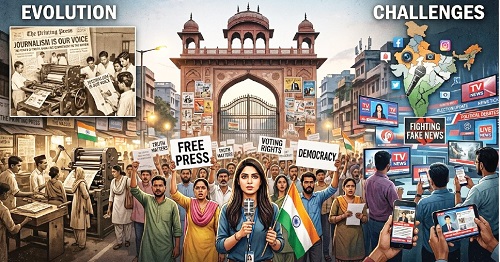
Indian media has undergone a remarkable transformation since Independence in 1947. In the early decades, newspapers and radio were the primary sources of information. The press played a key role in nation-building by informing citizens and strengthening democratic debate. All India Radio, under government control, emerged as a major source of news and public information.
Television emerged in the 1950s but expanded significantly after the launch of Doordarshan’s national service in 1982. For several decades, it remained largely state-controlled. The arrival of satellite and private television channels in the 1990s transformed the media landscape, bringing 24-hour news, greater competition and diverse viewpoints.
Government-controlled media are owned, funded or substantially influenced by the state and are generally expected to communicate official policies, government programmes and public-interest information. Their strength lies in their access to official sources and nationwide public service coverage, but concerns about editorial independence may arise.
Private Media Houses
Private media houses play an important role in India’s democratic and media landscape. Newspapers, television channels, digital news organisations and other private platforms provide the public with news, analysis and diverse viewpoints. Competition among media organisations can encourage innovation, investigative journalism and faster reporting. Private media can also scrutinise government policies, raise public concerns and provide space for debates on social and economic issues. At the same time, commercial pressures, ownership interests, advertising dependence and competition for audiences can influence editorial priorities. Sensationalism and misinformation are additional concerns. Therefore, private media houses have an important responsibility to maintain accuracy, independence, transparency and journalistic ethics while serving the public interest. In practice, most media houses become pro-government. Some journalists call the media Godi media for supporting the Modi government.
Social Media
The Internet revolution of the 2000s further transformed journalism. Online newspapers, news portals and social media enabled instant access to information and allowed citizens to participate directly in public discourse. Smartphones and affordable mobile data accelerated this transformation. Today, India has a vast and diverse media ecosystem comprising print, television, digital news, podcasts, social media platforms and independent creators. At the same time, the media faces challenges, including misinformation, sensationalism, declining trust, commercial pressures, political polarisation and the need to uphold journalistic standards. Thus, Indian media has evolved from a predominantly print-and-state-broadcast system into a highly diverse, competitive and digitally connected industry.
Platforms such as Facebook, Instagram, YouTube and X enable people to receive news instantly, share views and connect with others across geographical boundaries. They have also created opportunities for education, business, entertainment and social campaigns. However, social media can have both positive and negative effects. It can increase public awareness and encourage participation in social and civic issues, but misinformation, manipulated content and rumours can spread rapidly. Algorithms may repeatedly expose users to similar viewpoints, potentially creating social and political divisions. Excessive use can also affect concentration, sleep and personal relationships. Social media has therefore changed the relationship among individuals, the media and society. Its influence depends largely on how responsibly it is used. Media literacy, fact-checking, privacy awareness and responsible sharing are essential to ensure that social media strengthens rather than weakens informed public discourse.
Criticism
Since independence, Indian media has sometimes faced criticism for practices that can weaken democratic discourse. At different times, sections of the media have been accused of political bias, sensationalism, paid news, misinformation, and excessive dependence on powerful owners or advertisers. During the Emergency (1975–77), press censorship severely curtailed independent journalism. In later decades, television’s ratings competition encouraged sensational coverage, while the digital era has made the rapid spread of fake news, manipulated content, and communal rumours easier. Media trials can also sway public opinion before legal proceedings conclude. These problems do not characterise the entire Indian media; responsible journalism has continued alongside them. Both traditional and digital media should adhere to professional ethics and clearly distinguish between news, analysis, opinion, and political propaganda.
Freedom Of Expression
India’s media enjoys constitutional protection under Article 19(1)(a), which guarantees freedom of speech and expression, though this freedom is subject to reasonable restrictions. India has a large and diverse media landscape, including public broadcasters, private television channels, newspapers, digital platforms and independent journalists. However, concerns persist about political influence, ownership concentration, economic pressures, legal restrictions and journalists’ safety. The 2026 Reporters Without Borders Press Freedom Index ranked India 157th out of 180 countries. At the same time, independent and regional media continue to provide diverse viewpoints. Thus, media freedom exists, but ensuring consistent independence, fairness, accuracy and accountability remains an ongoing challenge. Fact-checking can counter fake news, rumours and manipulated content. Independent journalism, editorial transparency and the protection of journalists can further strengthen public trust. Indian media can become stronger by adopting the best professional practices from around the world.
Conclusion
Since independence, Indian media has played a vital role in strengthening democracy and nation-building. Its major contributions include: informing citizens about government policies, elections, laws, and national events; holding governments accountable through investigative reporting and public scrutiny; giving voice to public concerns, including those of marginalised and disadvantaged communities; promoting national integration by connecting people across India’s diverse regions and languages; creating political awareness and encouraging informed participation in elections; exposing corruption and wrongdoing through investigative journalism; supporting social reform by highlighting issues such as poverty, discrimination, gender inequality, and illiteracy; providing a platform for debate on important national and international issues; responding to crises and disasters by disseminating timely information; and promoting education and public awareness of health, science, the environment, and development.
Apart from free and responsible media, we must ensure the independent, impartial, and effective functioning of Parliament, the judiciary, and the Election Commission. There must be adequate civic education, and citizens should understand the Constitution, their rights, and their responsibilities. Panchayats and municipalities should receive adequate powers and resources to function effectively. Effective use of RTI, social audits, and open government data can improve accountability and enhance transparency.
Among the key challenges facing Indian democracy are casteism, dynastic politics, and corruption. Elected representatives should regularly account to citizens for their performance. Strengthening internal democracy within political parties can help improve the system. Appropriate use of technology can reduce opportunities for corruption and improve transparency. The media can scrutinise and report on the performance of the legislature, the executive, and the judiciary. The effective functioning of these four pillars will make the world's largest democracy more vibrant.
(The content of this article reflects the views of writer and contributor, not necessarily those of the publisher and editor. All disputes are subject to the exclusive jurisdiction of competent courts and forums in Delhi/New Delhi only)




















Comments (1)
S
For nation building, democracy role of any form of media is essential with patriotic,scientific positive attitude.