


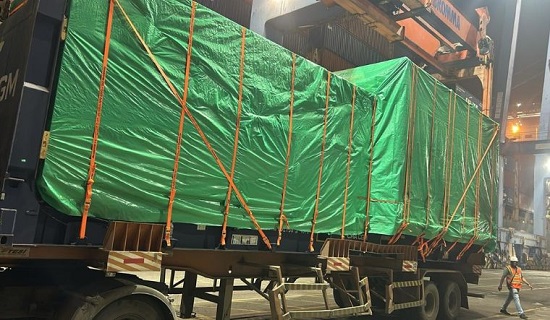
In a recent development, Indian security agencies at Mumbai's Nhava Sheva port have halted a Karachi-bound ship originating from China, suspecting it to be carrying a dual-use consignment with potential implications for Pakistan's nuclear and ballistic missile program. The incident, which occurred on January 23, involved the interception of a Malta-flagged merchant vessel named CMA CGM Attila. Customs officials, acting on intelligence input, inspected the consignment onboard, which included a Computer Numerical Control (CNC) machine manufactured by an Italian company.
CNC machines, known for their precision and efficiency controlled by computer systems, hold significant relevance in manufacturing critical components utilized in missile development programs. Upon inspection, a team from the Defence Research and Development Organisation (DRDO) verified that the seized CNC machine could indeed be employed by Pakistan for its nuclear initiatives.
The interception comes against the backdrop of longstanding concerns regarding the proliferation of dual-use technologies, particularly those with applications in military programs, such as CNC machines, which have been regulated under international arms control agreements like the Wassenaar Arrangement since 1996. This global accord aims to prevent the spread of such technologies to entities with potential military interests.
Notably, the consignment's documentation indicated Shanghai JXE Global Logistics Co Ltd as the consigner and Pakistan Wings Pvt Ltd of Sialkot as the consignee. However, further investigation revealed discrepancies suggesting that the shipment, weighing over 22,000 kilograms, was actually dispatched by Taiyuan Mining Import and Export Co Ltd and destined for Cosmos Engineering in Pakistan.
This incident is not an isolated one, as Indian authorities have previously seized similar dual-use items en route from China to Pakistan. Cosmos Engineering, a defense supplier in Pakistan, has been under scrutiny since March 2022 when Italian-made thermoelectric instruments were intercepted at Nhava Sheva port.
The ongoing investigation aims to ascertain if the suspected Pakistani entities receiving these dual-use items are associated with Pakistan's Defense Science and Technology Organisation (DESTO), responsible for much of the country's defense research and development.
These interceptions underscore persistent concerns over China's support for Pakistan's nuclear and missile programs. In a notable instance from February 2020, China attempted to ship an autoclave, essential for missile production, to Pakistan under the guise of industrial equipment. Such activities raise alarms regarding potential violations of international agreements, including the Missile Technology Control Regime (MTCR).
In a separate development in June 2023, the US Bureau of Industry and Security (BIS) sanctioned three Chinese companies for their involvement in supplying missile-applicable items to Pakistan's ballistic missile program, further highlighting the ongoing challenges in regulating the proliferation of dual-use technologies.
Despite commitments to international conventions, the interception of covert shipments reveals a persistent pattern of cooperation between Pakistan and China in potential proliferation activities, posing significant challenges to global non-proliferation efforts. As investigations continue, it remains imperative for international stakeholders to strengthen regulatory mechanisms and ensure compliance with arms control agreements to prevent the misuse of dual-use technologies for military purposes.


















Leave Your Comment