


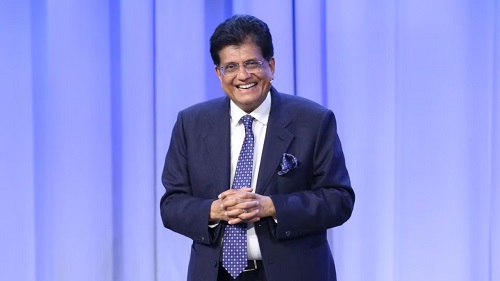
In a clear articulation of India’s recalibrated approach to global commerce, Union Minister for Commerce and Industry, Piyush Goyal, stated on Friday that the country will not sign any trade agreement in haste or succumb to conditions from partner countries that restrict its strategic autonomy.
The firm declaration, made at the Berlin Global Dialogue, comes amid ongoing and complex trade negotiations with major economic partners, including the United States, the European Union (EU), and the United Kingdom.
Minister Goyal underscored that for New Delhi, modern trade deals are not merely transactional discussions about tariffs and market access. Instead, he positioned them as instruments for building long-term trust and sustainable frameworks for global business cooperation.
"India will not sign any trade deal in a hurry," Goyal asserted, addressing European concerns over India's continued procurement of Russian crude oil. He emphasized that India’s decision-making is driven by a long-term vision rather than short-term pressures.
"In a very short-term context, it's not about what is going to happen in the next six months. It's not just about being able to sell steel to America," Goyal said, hinting at the broader strategic calculus guiding talks with Washington.
His comments highlight India's resolve to navigate a complex global landscape where trade is increasingly intertwined with geopolitics. Western nations, including the EU, the UK, and the US, have been pressuring India to scale back its imports of discounted Russian crude, arguing that it helps fund Moscow's war in Ukraine. India has consistently defended these purchases as essential for its energy security and for maintaining affordable fuel prices for its vast economy.
A Measured and Strategic Approach
Goyal’s statements signal a patient and measured approach to ongoing negotiations. The most prominent among these is the long-pending Free Trade Agreement (FTA) with the European Union, where differences persist on critical issues such as market access for European automobiles and spirits, India's demand for easier mobility for its professionals, environmental standards, and rules of origin.
Simultaneously, trade talks with the United States continue, albeit outside a formal FTA framework. These discussions are crucial, especially after the US imposed tariffs of up to 50% on certain Indian steel and aluminium exports. Despite these challenges, Goyal, in an interaction with Doordarshan on Thursday, indicated that India and the US were making progress in their trade negotiations.
At the heart of this strategy is a fundamental shift in perspective. “Trade deals are for a longer duration. It's not only about tariffs, it's also about trust and a relationship. Trade deals are also about businesses,” Goyal explained in Berlin.
This philosophy marks a departure from the past and reflects India's growing confidence on the world stage. The government is prioritizing agreements that are balanced, equitable, and respect the country’s strategic and developmental needs, even if it means prolonging the negotiation process. The message from Berlin is unequivocal: India is open for business, but on its own carefully considered terms.




















Leave Your Comment