


India and the United States appear to be approaching a crucial moment in their efforts to conclude a bilateral trade agreement, with US President Donald Trump and Secretary of State Marco Rubio both signalling that a breakthrough could be imminent. However, behind the growing optimism lies a complex negotiation involving market access, energy cooperation, technology transfers and strategic considerations. While Washington is keen to expand its commercial engagement with New Delhi, India is equally determined to secure competitive terms that protect its economic interests. The proposed agreement, therefore, is not merely about reducing trade barriers; it could also shape the future of one of the world's most consequential economic and strategic partnerships.
The prospect of a long-awaited trade agreement between India and the United States has gained fresh momentum after President Donald Trump declared that the two countries were “pretty close” to finalising a deal. His remarks, reported by Bloomberg on Tuesday, came as US Secretary of State Marco Rubio began a three-day official visit to India, adding diplomatic weight to the renewed optimism surrounding the negotiations.
Speaking to reporters at the White House, Trump said India wanted an agreement and expressed confidence that both sides would reach one. He also suggested that the final arrangement “could be a much different kind of deal”, without providing further details about what that might entail.
Although Trump's comments indicate progress, the absence of specific details makes it difficult to determine the precise terms of the emerging agreement. The phrase “a much different kind of deal” could suggest a different negotiating structure or a more limited initial arrangement, but neither possibility has been confirmed. What is clear is that both governments are increasingly signalling their desire to move beyond negotiations and towards implementation.
Rubio's comments during his visit reinforced that impression. Speaking on Tuesday, he described the countries as “very, very close” to finalising the agreement, adding that they were nearly at the stage of executing it.
“The State Department doesn't negotiate trade agreements, but we are very much involved in what's happening,” Rubio said, indicating that trade discussions are also relevant to the wider diplomatic relationship. He acknowledged that a small number of issues remained unresolved but expressed hope that they would be addressed shortly and that an announcement could follow.
The convergence of statements from the White House and the State Department is significant. It suggests that the negotiations have reached a stage where the remaining differences, rather than the broad framework of cooperation, are becoming the principal focus. Nevertheless, political optimism should not be mistaken for a completed agreement. The final outcome will depend on the precise terms accepted by both sides and the legal and procedural steps required to operationalise them.
The two countries announced a framework for an interim trade agreement in February 2026, providing a foundation for further negotiations. More recently, Union Commerce and Industry Minister Piyush Goyal said that the first tranche of the India-US bilateral trade agreement had been finalised and was undergoing legal drafting.
Goyal indicated that New Delhi hoped to complete the process soon and operationalise the arrangement once India secured a comparable or competitive advantage over peer countries.
His statement highlights a central consideration in India's approach: concluding an agreement is important, but the commercial terms must also deliver tangible benefits. In international trade, the headline announcement often attracts the most attention, while the detailed provisions determine the actual distribution of gains and costs.
For India, these details could influence the competitiveness of domestic manufacturers, the prospects of exporters, access to the American market and the ability of Indian businesses to compete with producers from countries that already enjoy favourable trade arrangements with Washington.
For the United States, the negotiations offer an opportunity to expand market access for American businesses, strengthen commercial ties with a major economy and encourage greater Indian purchases of US goods, energy resources and advanced technologies.
The challenge is to reconcile these objectives without allowing the agreement to become one-sided. A durable partnership requires both countries to believe that the benefits outweigh the concessions they have made.
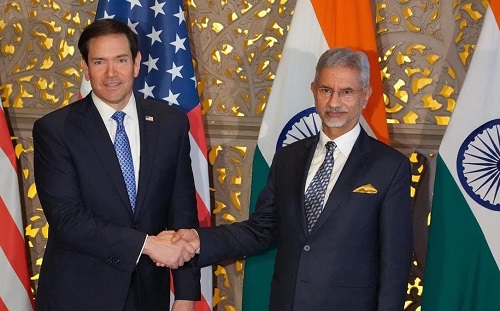
The timing of the latest statements is particularly noteworthy because Rubio's visit extends beyond the narrow question of tariffs and market access. During his meeting with External Affairs Minister S. Jaishankar in Mumbai, Rubio urged India to increase energy trade and step up purchases of American technologies and systems.
These priorities illustrate Washington's broader approach to its relationship with New Delhi. Trade is increasingly connected with energy security, defence cooperation, technology supply chains and the strategic balance in the Indo-Pacific.
For the United States, stronger commercial ties with India could create opportunities for American companies while deepening cooperation with a major regional partner. For India, expanded access to American technology and energy supplies could support economic growth, industrial modernisation and strategic diversification.
Yet the relationship is not without competing interests. India has traditionally placed considerable emphasis on strategic autonomy, seeking to maintain working relationships with multiple global powers rather than align itself exclusively with one country. Its energy purchases, defence partnerships and trade relationships reflect this approach.
Consequently, Washington's desire for closer economic integration must be balanced against India's insistence on retaining the freedom to make decisions based on its own economic and security requirements.
The proposed trade agreement also has implications beyond conventional commerce because of the continuing dispute over India's purchases of Russian energy.
Before his India visit, Rubio said in Samarkand, Uzbekistan, that Washington was very close to finalising a trade agreement with New Delhi. He added that the negotiations were among the factors considered when the US President made decisions involving national security waivers.
His remarks came after Trump deferred certain sanctions-related measures concerning Russian energy under the Lindsey O. Graham Sanctioning Russia and Iran Act. The legislation contemplated tariffs of up to 100 per cent on leading purchasers of Russian oil or gas, potentially including India.
The deferral of these measures has provided some breathing room, but it does not eliminate the underlying uncertainty. Secondary sanctions remain a potential instrument of American policy, leaving India exposed to the possibility of renewed pressure if Washington changes its approach.
This creates an important distinction between commercial negotiations and strategic leverage. Even if the trade agreement is concluded, disagreements over Russian energy could continue to influence the broader relationship.
India's position is shaped by its need to secure affordable and reliable energy for a large population and a growing economy. Its purchasing decisions are influenced by prices, supply security and domestic demand, not solely by geopolitical preferences.
The United States, meanwhile, is seeking to influence the economic choices of countries it considers important to its sanctions policy towards Russia. The challenge for both governments is to prevent these differences from undermining cooperation in other areas.
The message from both capitals is encouraging: a deal appears close. The more consequential question is whether the final agreement will be balanced, commercially effective and resilient enough to withstand the political and strategic differences that inevitably accompany a relationship of this scale.





















Leave Your Comment