


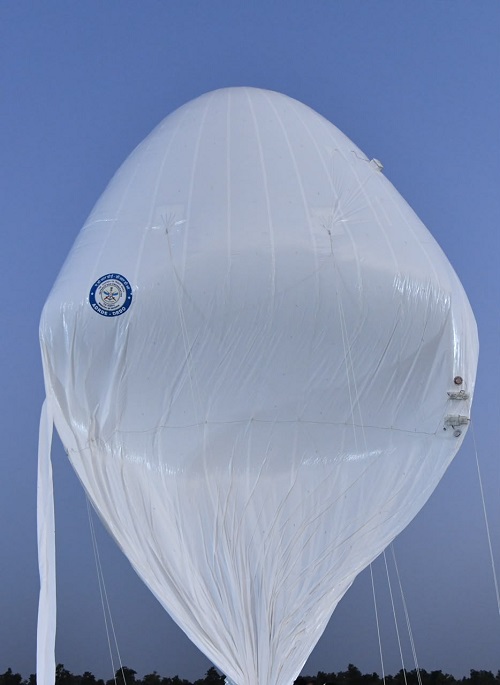
India’s pursuit of defence self-reliance is extending beyond conventional aircraft and missile systems into the strategic domain of the stratosphere. The successful flight trial of the Defence Research and Development Organisation’s (DRDO) indigenously developed High-Altitude Platform (HAPS), which reached an altitude of 21 kilometres above mean sea level and sustained flight at 20 kilometres for more than 30 minutes, represents a significant step towards developing long-endurance aerial surveillance capabilities. Although the experimental flight was limited in duration, its successful completion and recovery demonstrate progress in validating the platform’s essential systems and bring India closer to mastering a specialised technology with potential applications in national security, intelligence and persistent observation.
The strategic importance of modern defence technology is increasingly determined by a country’s ability to monitor, collect information and maintain situational awareness across vast geographical areas. Satellites provide extensive coverage, while conventional aircraft can respond to immediate operational requirements. High-Altitude Platforms (HAPS) offer a potentially valuable middle ground, combining the advantages of aerial observation with the possibility of remaining in a designated region for extended periods. DRDO’s latest achievement indicates that India is working to develop an indigenous capability in this emerging technological field.
The experimental flight reached 21 km above mean sea level and maintained an altitude of 20 km for more than 30 minutes before the platform was commanded to descend. Its successful recovery and the subsequent analysis of flight performance data provided an opportunity to assess the functioning of the vehicle and its onboard systems. Real-time video feeds and other operational parameters were transmitted to the Ground Control Station throughout the flight, indicating that the platform performed as intended during the trial.
The significance of this achievement lies not merely in the altitude attained but also in the successful integration of multiple technologies required to operate an airborne system in the demanding conditions of the stratosphere. The platform carried an array of electronic instrumentation and control packages, including an inertial measurement unit, a Global Positioning System receiver, onboard cameras and an altitude-control mechanism, alongside other subsystems. Their coordinated functioning is essential for maintaining flight stability, determining position, gathering information and enabling controlled operations.
For a system intended to operate at extreme altitudes, reliable performance across these interconnected components is indispensable. A successful experimental flight helps engineers identify technical strengths and areas requiring further refinement. It also generates valuable operational data that can guide subsequent development, testing and validation. However, the transition from an experimental demonstration to a dependable, long-endurance platform will require further trials to establish sustained flight capability, operational reliability and performance under varying environmental conditions.
The HAPS is being designed and developed by DRDO’s Aerial Delivery Research and Development Establishment (ADRDE), Agra. It is a lighter-than-air system conceived as a long-endurance stratospheric aerial surveillance platform. Unlike conventional aircraft that depend on continuous high-speed flight, lighter-than-air platforms use buoyancy to remain airborne. This characteristic offers the possibility of maintaining a persistent presence over a particular area, provided that the platform’s endurance, station-keeping capability and operational requirements can be adequately demonstrated.
Such a capability could have considerable relevance for India's security requirements. Persistent aerial observation may support border monitoring, maritime surveillance, intelligence gathering and the assessment of developments across strategically important regions. A platform operating in the stratosphere could potentially observe a large area for longer periods than many conventional airborne assets, depending on its sensors, payload, endurance and deployment configuration.
The platform could also complement existing surveillance infrastructure rather than replace it. Satellites, manned aircraft, unmanned aerial vehicles and ground-based sensors perform different functions, each with its own strengths and limitations. A mature HAPS capability could provide an additional layer in this network, offering flexibility in observation and potentially reducing dependence on more expensive or less persistent alternatives for certain missions. The actual benefits, however, would depend on the system's eventual operational specifications and demonstrated capabilities.
Another important aspect of the trial is the coordination required among multiple defence and civil aviation agencies. The flight was conducted in coordination with the Indian Air Force, the Centre for Military Airworthiness and Certification (CEMILAC), the Directorate General of Civil Aviation (DGCA), the Airports Authority of India (AAI) and other civil authorities. This cooperation highlights the importance of airspace management, safety procedures and technical oversight when testing unconventional aerial systems at high altitudes.
The development of advanced defence platforms is rarely the achievement of a single laboratory. It depends on the integration of research, engineering, testing, certification and industrial production. As the HAPS programme progresses, collaboration between DRDO laboratories, public-sector enterprises and private industry could help strengthen India's domestic capabilities in specialised materials, electronic systems, flight controls, sensors and other critical components. Building a reliable indigenous supply chain would be as important as demonstrating the technology itself.
Defence Minister Rajnath Singh congratulated DRDO, the Indian Air Force, public-sector undertakings and industry partners on the successful flight trial. He described the achievement as an important milestone in the Aatmanirbhar Bharat initiative and in India's efforts to realise a long-endurance stratospheric airship. Defence Secretary and Secretary of the Department of Defence Research and Development, as well as DRDO Chairman Rajesh Kumar Singh, also congratulated the teams involved.
The emphasis on indigenous development carries a wider strategic message. Countries that control the design, integration and production of specialised defence technologies are better positioned to adapt them to their own operational needs. Domestic expertise can also improve the ability to upgrade systems, address technical problems and reduce dependence on external suppliers. Nevertheless, technological self-reliance must be measured by the ability to deliver reliable, scalable and operationally useful systems, not solely by the successful completion of individual trials.





















Leave Your Comment