


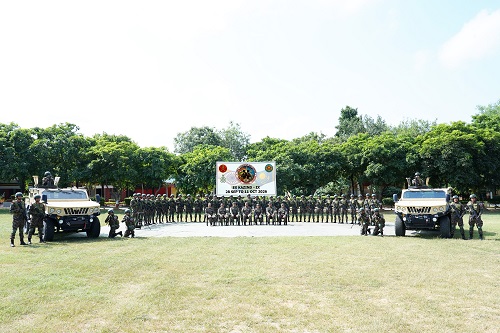
India and Kazakhstan are set to deepen their defence partnership as a 60-member Indian Armed Forces contingent departs for Oskemen to participate in the ninth edition of Exercise KAZIND-2026. The joint military exercise, scheduled from September 28 to October 11, will focus on counter-terrorism operations in challenging semi-urban and mountainous environments, while enhancing interoperability, operational coordination and mutual understanding between the two armed forces.
A 60-member contingent of the Indian Armed Forces has departed for Oskemen, Kazakhstan, to take part in the ninth edition of the India-Kazakhstan Joint Military Exercise KAZIND-2026. The exercise will be conducted from September 28 to October 11 and is aimed at enhancing interoperability between the two forces and developing their ability to conduct coordinated counter-terrorism operations.
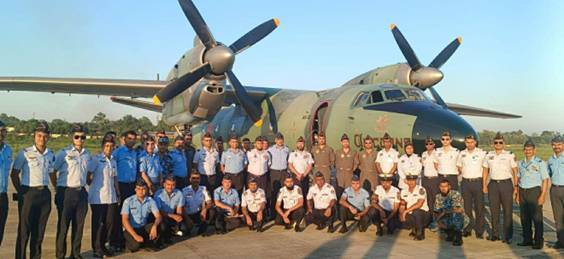
The Indian contingent is drawn primarily from a battalion of the GARHWAL RIFLES, with personnel from other arms and services as well as the Indian Air Force. The Kazakhstan Armed Forces will participate with a contingent of similar strength, consisting mainly of personnel from its Land Forces.
KAZIND-2026 has been designed around joint counter-terrorism operations in a sub-conventional environment under a United Nations mandate. The exercise will provide both sides with an opportunity to train together on operational procedures that require close coordination, rapid decision-making and effective employment of different military capabilities.
A major focus of this year's exercise will be operations in semi-urban and mountainous terrain. The participating troops will undertake joint planning and execution drills, with particular attention to air mobility and the integrated use of Unmanned Aerial Systems and Counter-UAS capabilities.
The training programme will include a range of operational activities designed to replicate responses to terrorist threats. These will include raids, search-and-destroy missions, cordon-and-search operations, securing helipads and landing sites, and Special Heliborne Operations. Such drills are intended to improve the ability of troops from both countries to operate together while responding to rapidly changing situations.
KAZIND-2026 will also incorporate a Joint Command Post and an Intelligence and Surveillance Centre. These elements will support coordinated planning, information sharing and execution of operations by the participating contingents. The exercise architecture is intended to bring together intelligence, surveillance, planning and battlefield response within a common operational framework.
The exercise will culminate in a comprehensive validation exercise. During this phase, the Indian and Kazakh contingents will jointly employ the tactics, techniques and procedures rehearsed during the preceding stages against a simulated terrorist threat. The validation exercise will provide an opportunity to assess the effectiveness of joint planning and coordination in a realistic operational setting.
Beyond tactical training, KAZIND-2026 is expected to provide an important platform for the two armed forces to exchange operational experience. Training together in demanding terrain and under simulated counter-terrorism scenarios can help personnel understand each other's procedures, capabilities and approaches to military operations.
The exercise also carries significance for the broader India-Kazakhstan defence relationship. Regular military engagements such as KAZIND provide opportunities to strengthen professional ties and build mutual trust and camaraderie between personnel of the two countries.
As India and Kazakhstan continue to expand their defence cooperation, the exercise reflects their shared interest in maintaining regional peace and stability. KAZIND-2026, through its emphasis on interoperability, intelligence coordination, air mobility and emerging technologies such as unmanned and counter-unmanned systems, is expected to further reinforce military-to-military cooperation and the two countries' commitment to collective security.




















Leave Your Comment