


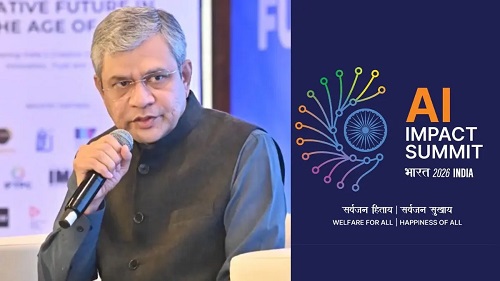
India is poised to witness a massive surge in artificial intelligence (AI) investments, with Information and Broadcasting Minister Ashwini Vaishnaw announcing that the country expects more than 200 billion dollars in AI-related investments over the next two years. The announcement was made during a press conference in New Delhi ahead of the India AI Impact Summit 2026, a major international gathering aimed at shaping the future of responsible AI development.
Addressing the media, the minister highlighted the overwhelming response to the summit, noting that participants from across the country and around the world have arrived to engage in discussions on the transformative potential of artificial intelligence. He described the event as a platform for collaboration among governments, industry leaders, researchers, and policymakers to build a shared global understanding of how AI should be developed and deployed responsibly.
Vaishnaw emphasized that India intends to play a leading role in fostering international consensus on the ethical and responsible use of AI technologies. According to him, artificial intelligence must ultimately serve humanity and contribute to inclusive growth rather than deepen inequalities or create new risks.
He pointed out that the rapid evolution of AI presents complex challenges that require balanced solutions. These issues, he said, cannot be addressed solely through legislation or regulatory frameworks. Instead, a comprehensive techno-legal approach is needed—one that combines technological innovation, policy design, ethical safeguards, and collaborative governance mechanisms.
The India AI Impact Summit 2026 will feature a wide range of technical sessions, case-study discussions, and parallel policy dialogues centered on artificial intelligence. Global technology experts, government representatives, and academic leaders are expected to deliberate on practical pathways for ensuring AI’s safe and beneficial deployment.
Key discussions will explore governance frameworks, industry use cases, innovation ecosystems, and strategies to mitigate risks while maximizing economic and social benefits. The minister noted that such dialogue is essential as nations worldwide grapple with balancing innovation and regulation in an increasingly AI-driven world.
A central theme of the government’s approach, Vaishnaw said, is workforce readiness. The government is prioritizing reskilling and upskilling initiatives to prepare citizens for emerging technology sectors. Creating a strong talent pipeline, he added, will be critical for sustaining innovation and ensuring that India remains competitive in the global digital economy.
The focus includes training programs, industry-academia collaboration, and initiatives designed to equip young professionals with skills in AI, data science, semiconductor design, and advanced computing.
Highlighting broader technological ambitions, the minister said India has strong potential to become a global hub for semiconductor design. He described the past year as highly encouraging for the country’s semiconductor mission, with growing momentum in investment and ecosystem development.
Vaishnaw underlined that design capabilities form the backbone of a robust semiconductor industry. As India moves into the next phase of its semiconductor strategy, the government plans to place greater emphasis on strengthening design innovation, talent development, and domestic expertise.
The anticipated scale of AI investments signals growing global confidence in India’s digital infrastructure, talent base, and policy direction. With the India AI Impact Summit serving as a convergence point for global stakeholders, the country aims to position itself not only as a major technology market but also as a thought leader in shaping the ethical and sustainable future of artificial intelligence.
As discussions unfold in New Delhi, India’s message is clear: technological advancement must go hand in hand with responsibility, collaboration, and human-centric innovation.





















Leave Your Comment