


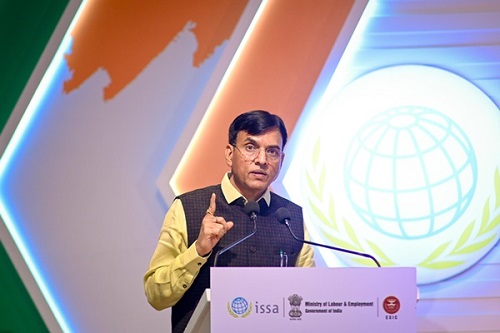
Union Labour and Employment Minister Dr. Mansukh Mandaviya underscored India's strides in improving the ease of doing business and enhancing social security coverage during his address at the International Seminar on Formalization and Social Security Coverage for Workers in the Informal Sector. The two-day event, held in New Delhi, aimed to address crucial issues pertaining to the welfare of informal sector workers.
Dr. Mandaviya emphasized that India has become increasingly attractive to Foreign Direct Investment (FDI) from multinational corporations, attributing this success to the government's efforts in facilitating business operations. He highlighted the country's commitment to ensuring social security without discrimination as a top priority.
Social Security Measures
The Minister outlined significant social security initiatives, stating that approximately 60 crore individuals benefit from government health security schemes, which provide free medical treatment up to five lakh rupees. Additionally, he noted the distribution of 5 kilograms of food grains to prevent any deprivation of basic food necessities among the population.
Key Discussions at the Seminar
Labour and Employment Secretary Sumita Dawra elaborated on the seminar's focus on integrating India's vast informal workforce into social security frameworks. With over 600 million workers in the informal sector, discussions revolved around strategies to extend comprehensive social security benefits to this demographic.
E-Shram Program Advancements
Dr. Mohammed Azman, President of the International Social Security Association, commended India's progress through the e-Shram program. This initiative aims to register 90% of the informal sector workforce in a centralized database, facilitating better outreach and coverage under social security schemes.
The seminar, a collaborative platform for policymakers, experts, and stakeholders, aims to drive forward India's agenda of inclusive growth and comprehensive social security. It underscores the government's commitment to prioritizing the welfare of all workers, especially those in the informal sector, through innovative policies and targeted initiatives.
Conclusion
India's efforts under the leadership of Dr. Mansukh Mandaviya reflect a proactive approach towards enhancing both economic opportunities and social security for its citizens. With initiatives like e-Shram and expansive health and food security programs, the country continues to strengthen its position as an attractive destination for global investment while ensuring inclusive growth and welfare for all segments of society.
The seminar marks a significant step in aligning policy frameworks with the evolving needs of India's workforce, paving the way for sustainable development and equitable prosperity across the nation.




















Leave Your Comment