


India has officially overtaken China to become the largest supplier of smartphones to the United States, marking a historic shift in global electronics trade. According to fresh data from research firm Canalys, India’s smartphone shipments to the US surged by an astounding 240% in the second quarter of 2025, capturing 44% of the US smartphone import market. Just a year ago, India’s share was a modest 13%.
China, once the undisputed leader in this space, saw its share plummet from 61% in Q2 2024 to just 25% in Q2 2025. Vietnam has also emerged as a strong contender, increasing its share to 30%. This dramatic reshaping of supply chains has been driven by a combination of geopolitics, pandemic-era disruptions, and strategic manufacturing shifts by tech giants—particularly Apple.
The turning point came when Apple, faced with both COVID-19-related disruptions in China and escalating tariff tensions between Washington and Beijing during the Trump administration, began accelerating its production shift to India. President Donald Trump’s tariff regime slapped 50% tariffs on Indian goods, 30% on Chinese goods, and 20% on Vietnamese products. The higher tariff on China, coupled with ongoing trade uncertainties, made India a comparatively attractive hub for US-bound manufacturing.
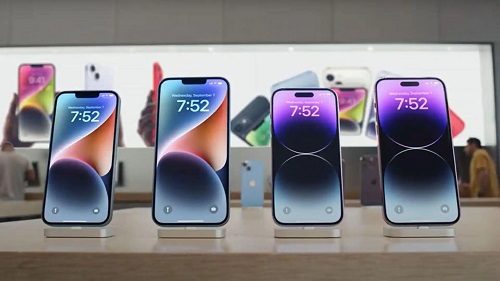
India’s southern state of Tamil Nadu, home to Apple’s key suppliers such as Foxconn, Pegatron, and Tata Electronics, became the epicenter of this transformation. The facilities there now churn out base models like the iPhone 15 and iPhone 16, while assembly of iPhone Pro models still relies heavily on China. In March 2025, iPhone exports from India hit a record high—just before Trump’s reciprocal tariffs were announced—underscoring the scale of Apple’s bet on India.
India exported over 24 million iPhones in 2025, with 78% shipped to the United States.
Between January and May 2025 alone, India sent 21.3 million smartphones to the US—surpassing last year’s total.
Smartphone exports from India to the US skyrocketed 182% to $9.35 billion in 2025.
Government data reveals India’s mobile manufacturing capacity has exploded—from just two manufacturing units in 2014 to over 300 units today.
In 2014, only 26% of mobile phones sold in India were made locally; today, that figure stands at 99.2%.
The industry’s value jumped from ₹18,900 crore in FY14 to ₹4,22,000 crore in FY24.
Government Push and Policy Support
Union Minister Ashwini Vaishnaw recently highlighted the scale of this growth, noting that India’s electronics production has risen six-fold in 11 years, touching ₹12 lakh crore. Electronics exports, he said, have increased eight-fold to ₹3 lakh crore, cementing India’s position as the world’s second-largest mobile phone manufacturer.
The Production Linked Incentive (PLI) scheme for Large Scale Electronics Manufacturing has been a major catalyst. Union Minister Jitin Prasada told Parliament that the scheme has attracted ₹12,390 crore in investments, yielded ₹8,44,752 crore in cumulative production, generated exports worth ₹4,65,809 crore, and created over 1.3 lakh direct jobs.
The scheme’s impact has been transformative—turning India from a net importer to a net exporter of mobile phones in under a decade.
While Apple is the clear leader, other brands have contributed to India’s rise. Samsung and Motorola have both ramped up shipments from India, though at a much smaller scale. Samsung still relies primarily on Vietnam, while Motorola maintains its core manufacturing in China. Nevertheless, their diversification strategies underscore the growing appeal of India’s manufacturing ecosystem.
Industry analysts agree that US smartphone makers are increasingly keen to diversify supply chains. Tariffs, geopolitical uncertainty, and pandemic disruptions have all pushed vendors to front-load inventory and shift sourcing.
India is now viewed as a viable hub for both entry-level and high-end models, even though the most premium devices, like Apple’s Pro lineup, remain heavily China-dependent.
However, the US smartphone market itself remains sluggish—growing just 1% in Q2 2025. iPhone shipments to the US actually fell 11% year-on-year, while Samsung shipments surged 38%, Motorola rose by 2%, and other brands like Google and TCL maintained steady growth.
India’s ascent as the top US smartphone supplier signals a structural shift in global electronics manufacturing. It is the result of:
Geopolitical rebalancing – US-China trade tensions and tariffs prompted companies to rethink sourcing.
Pandemic-driven supply chain diversification – COVID-19 lockdowns in China accelerated the need for alternative hubs.
Policy-driven incentives – India’s PLI scheme and infrastructure push attracted large-scale investments.
Domestic manufacturing maturity – From near-zero capacity a decade ago to hundreds of operational units today.
While China still plays a dominant role in premium smartphone production, India’s rapid rise—particularly in Apple’s supply chain—suggests a future where global smartphone manufacturing is far more decentralized. For Washington, it means less reliance on Beijing; for New Delhi, it means a solidified place in the high-value global electronics trade.




















Leave Your Comment