


In a world increasingly defined by geopolitical fractures and strategic uncertainty, the imperative for stable, like-minded partnerships has never been greater. Speaking at a pivotal meeting in Paris yesterday, India’s External Affairs Minister, Dr. S. Jaishankar, underscored this reality, calling for deepened collaboration between India and France to "stabilise global politics."
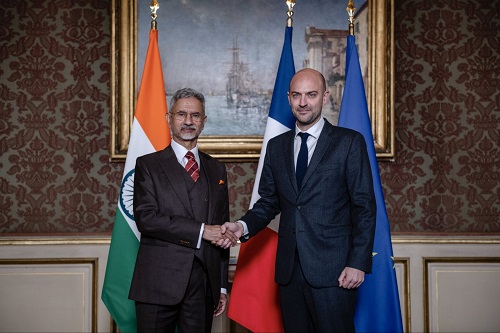
Dr. Jaishankar’s remarks came during talks with his French counterpart, Minister Delegate for Foreign Trade, Economic Attractiveness, Francophonie and French Nationals Abroad, Jean-Noel Barrot. The meeting, characterised by its strategic tone, highlighted the unique convergence of interests and values between the two nations.
"France is among India’s oldest strategic partners," Dr. Jaishankar stated, emphasising the depth of a relationship that has evolved from a historical friendship into a cornerstone of global diplomacy. "Working together is important for stabilising global politics at this stage."
This call for joint stewardship comes as the international order grapples with multifaceted challenges—from regional conflicts and economic volatility to technological disruption and climate crises. In this context, the India-France partnership, built on mutual trust and a shared commitment to strategic autonomy, emerges as a potential anchor.
A key theme of the ministers’ discussion was the mechanism of sustained engagement. Dr. Jaishankar pointed out that "continuous conversation is an important part of nurturing the relationship." This reflects a mature partnership where strategic alignment is maintained not just through formal agreements but through persistent diplomatic dialogue, ensuring both nations remain attuned to each other’s perspectives in a rapidly changing world.
The timing of this reinforced collaboration is particularly significant. Dr. Jaishankar noted the unique diplomatic confluence of 2024: India currently holds the chairmanship of the BRICS (Brazil, Russia, India, China, South Africa) grouping, representing a significant constituency of the emerging and developing world. Simultaneously, France is at the helm of the G7, the forum of advanced economies.
This dual leadership places India and France in powerful, complementary positions to bridge perspectives between major global forums. The minister also referenced their shared membership in the G20, further underlining the multiple avenues through which the two countries can coordinate to shape global agendas, from finance and food security to energy transitions and digital governance.
Beyond broad geopolitics, the meeting had a clear immediate objective: preparing for French President Emmanuel Macron’s visit to India next month. President Macron is slated to participate in a high-profile Artificial Intelligence Summit, a focus area that underscores the forward-looking nature of the bilateral partnership.
Collaboration on critical and emerging technologies—encompassing AI, quantum computing, space, and cybersecurity—is a central pillar of the India-France relationship. Joint efforts in these domains are not merely economic; they are strategic, aiming to build secure and ethical technological ecosystems. The groundwork laid by the ministers will likely aim to translate this visit into concrete, outcome-oriented partnerships in the tech sphere.
The Paris meeting reaffirms that the India-France strategic partnership is moving beyond bilateral benefits to assume a larger role in global governance. As Dr. Jaishankar’s remarks suggest, in a "fractious geopolitical environment," alliances built on consistency, shared democratic values, and a commitment to a multipolar world order are indispensable.
As President Macron prepares for his visit, the stage is set for this ancient partnership to craft a modern blueprint: one where strategic autonomy and international responsibility converge, aiming to offer stability and innovative solutions to a turbulent world.



















Leave Your Comment