


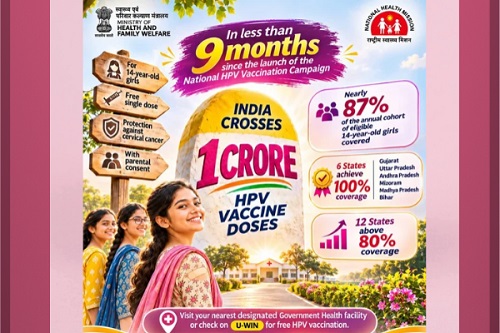
India has crossed a significant milestone in its fight against cervical cancer, with more than one crore doses of the Human Papillomavirus (HPV) vaccine administered under the National HPV Vaccination Campaign in less than nine months since its launch. Achieving nearly 87 per cent of the targeted coverage reflects the growing reach of the country's preventive healthcare programme and the combined efforts of state governments, healthcare professionals, frontline workers and parents. The initiative, which offers free and voluntary vaccination to 14-year-old girls, is aimed at reducing the future burden of cervical cancer and strengthening women's healthcare through early prevention.
According to the Ministry of Health and Family Welfare, the campaign has covered nearly 87 per cent of its identified annual target population of approximately 1.20 crore girls. The target has been determined on the basis of the Registrar General of India's 2021 population estimates. Crossing the one-crore vaccination mark within such a short period highlights the scale of the nationwide immunisation drive and the expanding participation of states and Union Territories in the programme.
Six states have achieved 100 per cent coverage of their identified target populations. These include Gujarat, Uttar Pradesh, Andhra Pradesh, Mizoram, Madhya Pradesh and Bihar. Several other states have also registered substantial progress. Assam has reported coverage of more than 96 per cent, while Telangana has crossed the 95 per cent mark. Karnataka and Uttarakhand have also vaccinated over 90 per cent of their respective target populations.
In terms of the total number of beneficiaries, Uttar Pradesh has emerged as the leading contributor, with more than 29.14 lakh 14-year-old girls receiving the vaccine. Bihar follows with over 13 lakh vaccinated girls, while Gujarat has recorded nearly eight lakh beneficiaries. These figures demonstrate the importance of large-scale mobilisation and the role of state-level healthcare networks in taking preventive medical services to eligible beneficiaries.
Launched by Prime Minister Narendra Modi in February 2026, the National HPV Vaccination Campaign provides a free, safe and voluntary single-dose HPV vaccine to 14-year-old girls through government health facilities. The programme is designed to protect young girls against HPV infections that can lead to cervical cancer later in life. HPV is a group of viruses, some types of which are responsible for the development of cervical cancer. Vaccination at the recommended age, before potential exposure to the virus, is an important preventive measure.
Cervical cancer remains a major public health concern among women, making prevention, awareness and timely intervention essential components of the national healthcare strategy. Although vaccination is a powerful preventive tool, experts also emphasise the importance of regular screening and awareness, particularly among adult women. The campaign therefore represents an important step towards reducing the future incidence of the disease and strengthening India's long-term approach to women's health.
Health and Family Welfare Minister Jagat Prakash Nadda congratulated the states and Union Territories on the achievement, acknowledging the collective contribution of healthcare professionals, frontline health workers and parents. He said the progress reflected a shared commitment to protecting the health of future generations of women.
Nadda also highlighted the role of government healthcare facilities and the U-WIN digital vaccination platform in facilitating the nationwide programme. The platform helps support vaccination-related registration and records, contributing to the effective implementation and monitoring of immunisation activities.
The achievement of administering over one crore doses is an important step towards the campaign's annual target of approximately 1.20 crore girls. With several states already completing their identified coverage and others approaching the target, the programme is moving towards wider national coverage.
Beyond the vaccination figures, the initiative signals a shift towards a more preventive model of public healthcare, where diseases are addressed through timely protection rather than relying exclusively on treatment after diagnosis. By prioritising adolescent health and making the vaccine available free of cost at government facilities, India is seeking to reduce the long-term impact of cervical cancer and build a healthier future for its women.





















Leave Your Comment