


India has registered a series of significant achievements in the space sector over the last three years, reinforcing its position as a leading spacefaring nation. Between July 2023 and June 2026, the country successfully conducted 12 launch vehicle missions, launched 11 national satellites, and placed nine satellites for international customers into orbit. The period also witnessed several landmark accomplishments in space exploration, launch vehicle development, and commercial space activities.
Among the biggest milestones was the success of the Chandrayaan-3 mission, which made India the first country in the world to achieve a soft landing near the Moon's south pole. The country also launched Aditya-L1, its first dedicated solar observatory mission, aboard the Polar Satellite Launch Vehicle (PSLV), marking another major step in India's space science programme.
During the same period, India completed its 100th launch from the Satish Dhawan Space Centre at Sriharikota, underlining the steady growth of its launch capabilities. Another breakthrough came with the SPADEX mission, through which India became the fourth country in the world to successfully demonstrate docking and undocking technology in space—an important capability for future space stations and deep-space missions.
India also completed the development of the Small Satellite Launch Vehicle (SSLV) after its third developmental flight. Following the successful demonstration, a technology transfer agreement was signed with Indian industry, paving the way for greater private sector participation in satellite launches.
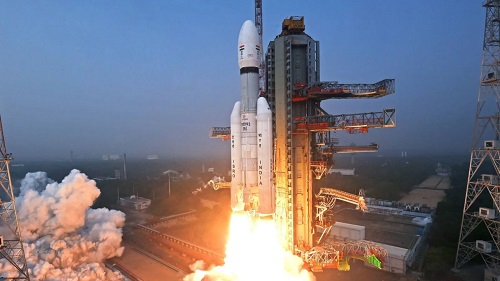
The country further strengthened its international standing by successfully launching the joint NASA-ISRO Synthetic Aperture Radar (NISAR) mission using the GSLV launch vehicle. In another achievement, the LVM3 rocket launched the heaviest satellite ever placed into Geostationary Transfer Orbit (GTO) from Indian soil through the CMS-03 mission. In its subsequent mission, LVM3 also launched the heaviest satellite ever lifted from India for a United States commercial customer.
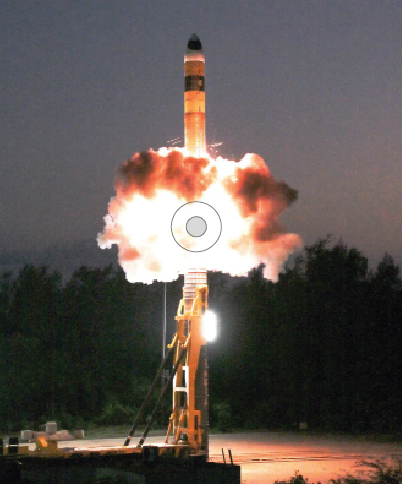
At present, the Department of Space operates four launch vehicles—PSLV, GSLV, GSLV MkIII (LVM3), and SSLV—which are used for Earth observation, communication, navigation, scientific exploration, and commercial launch services for both domestic and international customers.
To further expand launch capabilities, the Government has approved the establishment of a Third Launch Pad at Sriharikota in Andhra Pradesh. The new facility will support future Next Generation Launch Vehicles (NGLV) while also serving as a backup to the existing Second Launch Pad. In addition, the SSLV Launch Complex at Kulasekarapattinam in Tamil Nadu is being developed as India's second rocket launch site. The facility will cater to SSLV missions as well as launches by private space companies and other non-governmental entities.
The government has also introduced several measures to strengthen India's space ecosystem and encourage private sector participation. Non-Government Entities (NGEs) are now permitted to establish temporary testing facilities within ISRO campuses, allowing startups and private companies to access critical infrastructure while reducing development costs and timelines. Alongside this, the Indian National Space Promotion and Authorization Centre (IN-SPACe) has introduced policy reforms, simplified authorization procedures, financial assistance for startups and MSMEs, technology commercialization initiatives, skill development programmes, and support for space manufacturing clusters.
India's commercial space business has also shown steady growth. According to audited financial figures, NewSpace India Limited (NSIL) generated revenue of ₹44,743.13 lakh from launch services during 2024-25, ₹21,821.10 lakh during 2023-24, and ₹1,16,613.16 lakh during 2022-23.
Looking ahead, ISRO is developing several advanced technologies to strengthen India's leadership in the global space sector. These include a 200-tonne thrust semi-cryogenic engine, a semi-cryogenic booster stage for the LVM3 launch vehicle, Vertical Take-off and Vertical Landing (VTVL) technology for reusable rockets, a high-thrust LOX-Methane engine, a partially reusable Next Generation Launch Vehicle (NGLV), a Winged Body Orbital Re-entry Vehicle (ORV), and air-breathing propulsion technology for future reusable launch systems.
IN-SPACe has also prepared a long-term roadmap aimed at increasing India's share in the global space economy. Under this vision, India's space economy is expected to reach USD 44 billion by 2033 through enhanced infrastructure, increased private sector participation, innovation, indigenous manufacturing, and the development of a globally competitive space ecosystem.
The information was provided by Union Minister of State for the Prime Minister's Office and the Ministries of Personnel, Public Grievances and Pensions, Atomic Energy and Space, Dr. Jitendra Singh, in a written reply in the Rajya Sabha on Thursday.



















Leave Your Comment