


A 62-year-old Hindu trader was brutally hacked to death inside his shop in central Bangladesh just three days before the country’s general elections, an incident that has reignited concerns in India and abroad over the safety of religious minorities amid political uncertainty in the neighbouring nation.
The killing took place late Monday night in Trishal upazila of Mymensingh district, around 115 km north of Dhaka. According to Bangladeshi media outlet bdnews24.com, unidentified assailants attacked the trader with a sharp weapon inside his shop at the Bogar Bazar intersection and fled after looting a substantial amount of cash.
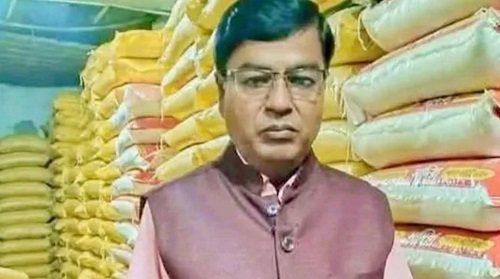
Police identified the victim as Susen Chandra Sarkar, the owner of Bhai Bhai Enterprise and a resident of Southkanda village. Trishal Police Station officer-in-charge Muhammad Firoz Hossain said the attackers left Sarkar’s body inside the shop, locked the shutters from outside, and escaped, delaying the discovery of the crime.
Family members, who became alarmed when Sarkar failed to return home, later forced open the shop and found him lying in a pool of blood. He was rushed to Mymensingh Medical College Hospital, where doctors declared him dead.
“We have been running this rice business for years and had no disputes with anyone,” said Sarkar’s son, Sujan Sarkar. “The criminals brutally murdered my father and looted the shop. We want the perpetrators identified and punished without delay.”
Police have launched an investigation, but no arrests had been reported at the time of writing.
The killing comes at a sensitive political moment as Bangladesh prepares to hold parliamentary elections on February 12, the first since former prime minister Sheikh Hasina was ousted following mass protests in August 2024. Observers say the run-up to the polls has been marked by political volatility and sporadic law-and-order challenges.
For India and the wider international community, the incident has drawn attention to the longstanding issue of minority safety in Bangladesh, particularly during periods of political transition. Hindu community members in Bangladesh have historically faced episodic violence linked to political unrest, elections, or regional tensions.
Last month, the Bangladesh Hindu Buddhist Christian Unity Council, an umbrella body representing religious minorities, claimed that communal violence has surged in recent weeks. The organisation said it recorded 51 incidents of communal attacks in December 2025 alone, including assaults on minority-owned homes and businesses.
Tensions have also reportedly risen since the killing of radical youth leader Sharif Osman Hadi in December, which some analysts believe has contributed to an increasingly polarised environment.
Bangladesh is a key strategic and economic partner for India, sharing deep cultural ties, a long land border, and close cooperation on trade and security. Incidents targeting minorities are closely watched in New Delhi, where they often resonate due to historical, cultural, and religious links with Bangladesh’s Hindu community.
According to Bangladesh’s 2022 census, Hindus number around 13.13 million, accounting for about 7.95 per cent of the country’s population. While the Bangladeshi constitution guarantees equal rights to all citizens, international rights organisations have periodically raised concerns about the protection of minorities and the pace of justice in communal violence cases.
As Bangladesh heads into a high-stakes election, Sarkar’s killing has underscored broader anxieties about security, rule of law, and the protection of vulnerable communities—issues that are likely to remain under regional and international scrutiny in the days ahead.


















Leave Your Comment