


The first election to the Silchar Municipal Corporation has produced a result that carries significance beyond the boundaries of a newly constituted civic body. The BJP-led NDA won 34 of the 42 seats, with the BJP alone securing 32 and its ally Asom Gana Parishad winning two, while Congress was reduced to two seats and independents won six. More politically pointed was the fact that the election was conducted through ballot papers—an electoral method that opposition parties have frequently demanded in their criticism of electronic voting. Assam Chief Minister Himanta Biswa Sarma seized on the outcome to tell Congress that it had “lost even on ballot papers”, turning a municipal result into a broader political argument.
The Silchar Municipal Corporation result is important first because it establishes the political complexion of Silchar’s first elected municipal corporation. The 42-ward corporation became operational in June 2025 after the erstwhile municipal board was upgraded, and the city had remained without an elected civic body for about six years. The NDA's commanding majority therefore gives the ruling alliance considerable space to shape the corporation's initial priorities, administration and development agenda.
But the political messaging around the result is likely to be more consequential than the arithmetic alone.
Ballot papers remove one argument, but not every argument
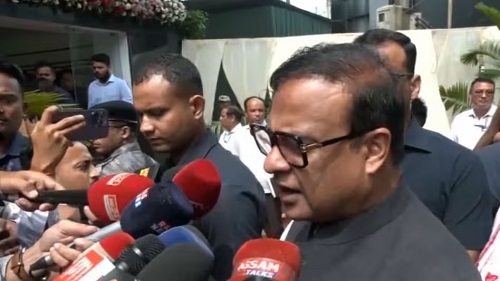
Sarma's “even on ballot papers” remark directly targets one of Congress's recurring objections to electronic voting. Assam BJP president Dilip Saikia made a similar argument, saying that Congress could not attribute its defeat to EVMs when the Silchar election was conducted using ballot papers.
As a political counterargument, it is straightforward: the voting method was different, yet the Congress remained marginal in terms of seats. But analytically, the result should not be stretched into a blanket verdict on the wider EVM debate. A municipal election in one city cannot by itself settle a national debate about electoral technology, voting procedures or election administration.
What it does establish is narrower but significant: in Silchar, under a ballot-paper system, Congress failed to translate its demand for paper ballots into an electoral advantage. The BJP and its allies won 34 seats, compared with Congress's two.
That makes the result particularly useful to the BJP's political narrative. The party can now argue that its electoral support cannot simply be explained through objections concerning voting technology.
Development now becomes the real test
The more substantive question, however, begins after the counting ends. Civic elections are ultimately judged by roads, drainage, drinking water, waste management, traffic, street lighting and urban planning rather than by political rhetoric.
These issues were already central to the Silchar campaign. Residents have faced complaints relating to poor roads, inadequate drainage, waterlogging, drinking-water supply and waste management. Sarma had also promised a special development fund of Rs 1 crore for every ward represented by a winning BJP candidate, along with a separate annual allocation for the corporation if BJP secured control.
That promise now acquires a different significance because the NDA has secured the numbers to control the corporation. The electorate has effectively handed the ruling alliance an opportunity to demonstrate whether its development-oriented campaign can be converted into visible civic improvements.
This is particularly relevant because the BJP itself has framed the mandate as an endorsement of the development and governance agenda of Prime Minister Narendra Modi and Sarma. Such claims inevitably create an accountability benchmark. If waterlogging, roads, sanitation and drinking water remain unresolved, the political conversation will eventually shift from electoral mandate to delivery.
Congress faces a local organisational challenge
For Congress, the two-seat tally is more than a numerical setback. It raises questions about the party's organisational presence in an important urban centre of Barak Valley. Yet the six seats won by independents also indicate that the contest was not simply a binary BJP-versus-Congress election.
The corporation had a sizeable independent presence in the field, with civic concerns forming a major part of the campaign. That suggests that local issues, candidate credibility and ward-level organisation mattered alongside larger political narratives.
The Congress will therefore need to distinguish between two separate questions: why its organisational machinery failed to convert the election into seats, and whether it can rebuild itself through sustained engagement with municipal concerns. Treating the defeat solely as a consequence of broader national politics could overlook the intensely local nature of civic elections.
For the BJP, meanwhile, the result provides political momentum and administrative responsibility at the same time. The first elected Silchar Municipal Corporation now belongs overwhelmingly to the NDA. The next measure of that mandate will not be another slogan about ballot papers, but whether the corporation can deliver the urban transformation that voters were promised.
The Silchar verdict has therefore produced two narratives: a political victory for the BJP-led alliance and a governance test for the new civic administration. The first has already been counted. The second is only beginning.



















Leave Your Comment