


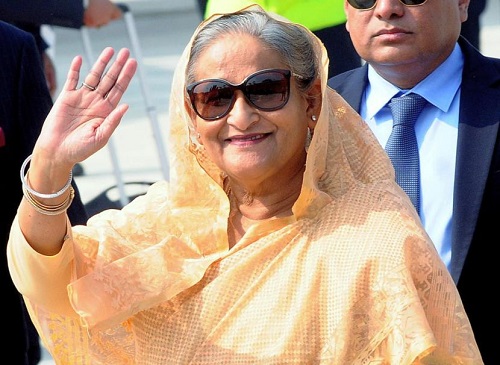
Bangladesh could be heading towards another major political confrontation as former Prime Minister Sheikh Hasina has announced plans to return from India on December 16, choosing the country's Victory Day for a potentially consequential homecoming. More than a declaration of intent, the announcement represents a direct political challenge to the government of Prime Minister Tarique Rahman, while raising serious questions about the former leader's legal status, personal security and the future of Bangladesh's deeply polarised political landscape. With a death sentence hanging over her following a trial in absentia, Hasina's proposed return could turn a national day of celebration into a defining moment in the country's political history.
The choice of December 16 is politically significant. Bangladesh observes Victory Day to commemorate the surrender of Pakistani forces in 1971, which paved the way for the country's emergence as an independent nation. By selecting this occasion, Hasina appears to be attaching her proposed homecoming to one of the most emotionally significant milestones in Bangladesh's national history.
For Hasina, who is the daughter of Bangladesh's founding leader Sheikh Mujibur Rahman, the date also carries considerable historical and political symbolism. Her family legacy and the Awami League's association with the liberation struggle have long been central to the party's political identity. Her announcement could therefore be interpreted as an attempt to reassert her political relevance at a time when her party is facing unprecedented restrictions.
However, the circumstances surrounding her proposed return are dramatically different from those under which she left Dhaka. On August 5, 2024, a massive student-led uprising brought her 15-year tenure to an abrupt end. The protests, which initially emerged over the controversial government job quota system, developed into a wider movement against her administration. The violent suppression of demonstrations, allegations of human rights abuses and mounting public anger eventually made her position untenable, forcing her to flee to India.
The United Nations estimated that up to 1,400 people were killed during the unrest. These developments fundamentally altered Bangladesh's political landscape and triggered a prolonged period of political transition.
A Death Sentence Complicates Her Return
The most formidable obstacle to Hasina's proposed homecoming is the criminal case against her. In November 2025, Bangladesh's International Crimes Tribunal sentenced her to death in absentia for crimes against humanity over her government's handling of the 2024 uprising. The prosecution held her responsible for ordering a deadly crackdown on protesters.
Hasina has rejected the allegations and dismissed the verdict, maintaining that she is willing to defend herself through legal proceedings if she returns to Bangladesh. Her position, however, faces a serious legal challenge because the prosecution maintains that she has exhausted the available appeal period.
India's Position and the Road Ahead
India also occupies an important position in this developing situation. Hasina has been residing in India since August 2024, and Dhaka has previously sought her extradition. New Delhi had indicated that it was examining Bangladesh's request and wished to engage constructively with the new government.
Consequently, her proposed return is not simply a domestic political matter for Bangladesh. It also involves diplomatic considerations between two neighbouring countries whose relationship has considerable strategic, economic and security significance.
For India, the challenge lies in balancing its bilateral engagement with Bangladesh against the legal and diplomatic sensitivities surrounding Hasina's presence on Indian soil. Any decision concerning her extradition would require careful consideration of the applicable treaty provisions and the circumstances of the case.
The coming weeks will reveal whether the December 16 announcement is the beginning of a genuine attempt at political and legal confrontation or a calculated move to keep the former prime minister at the centre of Bangladesh's political discourse. One thing is clear: the proposed homecoming has the potential to test the country's fragile political equilibrium and the government's ability to reconcile accountability for past abuses with political stability.


















Leave Your Comment