


The 'Dilli Chalo' protest march, organized by farmers from Punjab and Haryana, has garnered significant attention and sparked controversy as tensions escalate between the protesters and law enforcement. Amidst clashes and instances of violence, the Haryana Police has taken a decisive step, initiating proceedings to seize the assets of farmers who are deemed responsible for damaging public property during the agitation.
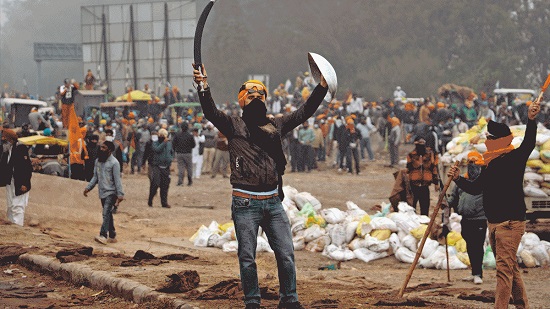
The move comes after repeated efforts by the police to contain the situation at the Punjab-Haryana border, where farmers have been attempting to breach barricades and disrupt law and order by pelting stones at the authorities. In a statement issued by the police, it was emphasized that persistent attempts to dismantle barricades and resort to violence have necessitated firm action to uphold public safety and protect infrastructure.
Prior to the commencement of the protest on February 13, the Haryana Police had issued warnings to the protesting unions, cautioning them against causing damage to public property. Notices were sent, indicating that any destruction during the agitation would result in the freezing of bank accounts and the seizure of assets to compensate for losses incurred. This preemptive measure aimed to deter protesters from engaging in activities that could escalate tensions and lead to further unrest.
Tragically, despite these warnings, the situation has escalated, resulting in casualties and injuries. In Ambala district alone, two police officials have lost their lives, and over 30 officers have been injured during clashes with protesters. Reports from the ground suggest instances of protesters resorting to violence, including stone-throwing and destruction of public and government property, further exacerbating the volatile situation.
Initially, the Haryana Police had announced intentions to take action against protesting farmer leaders under the National Security Act (NSA) of 1980, indicating the severity with which they viewed the unrest. However, this decision was later reversed, perhaps in response to evolving circumstances and the need for a more nuanced approach to de-escalate tensions.
A press release issued by the Ambala Police highlighted the persistent efforts by protesters to breach barriers at the Shambhu border, one of the focal points of the 'Dilli Chalo' march. The release underscored concerns over the use of social media platforms by some farm leaders to disseminate provocative content aimed at inciting unrest, further complicating efforts to maintain peace and order.




















Leave Your Comment