



Bindiya Kumari
In India, October, November, and December are not just three months on the calendar; they rank among the most critical months of the year for the country's markets, businesses, and daily economic activities. With festivals like Dussehra, Diwali, Dhanteras, Bhai Dooj, Chhath, and Gurupurab—followed by the wedding and tourism seasons—the national market shifts into a higher gear during this period. From brick-and-mortar shops to online platforms, from transport and packaging sectors to large business houses and small artisans, the livelihoods of millions are inextricably linked to this festive demand.
Therefore, at a time when the country is witnessing a spate of agitations, sit-ins, and displays of strength on the streets in the name of electoral politics, merely listening to political slogans is not enough. One must also consider the timing of these movements, their focal points, and their potential economic impact.
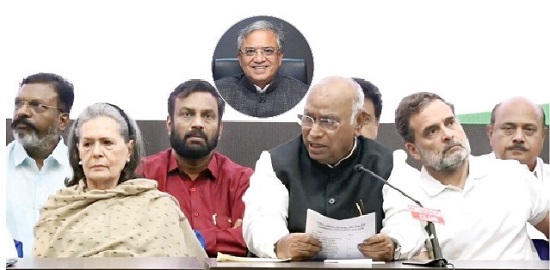
The recent campaign launched by opposition parties and affiliated political groups against Chief Election Commissioner Gyanesh Kumar has raised precisely these questions. Allegations are being leveled regarding voter lists, the Special Intensive Revision (SIR) process, and alleged "vote theft." Rahul Gandhi raised serious questions about the electoral process during a press conference. This was followed by talk of protests in Delhi and nationwide agitations. Now, slogans such as "Arrest Gyanesh Kumar" have appeared on posters for the event scheduled at Jantar Mantar on September 25.
Political dissent is an integral part of democracy. Questioning the Election Commission is also a democratic right. However, the question remains: is the timing and manner of these actions merely a political coincidence?
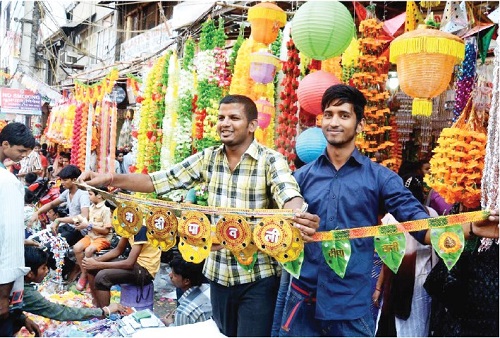
To understand this, it is essential to comprehend India’s festive economy. During the last Diwali festive season, it was estimated that business worth approximately ₹6.05 lakh crore was transacted in the country's markets. This involved trade in goods worth approximately ₹5.40 lakh crore and services worth around ₹65,000 crore. This represented an increase of about 25 percent over the trade volume of approximately ₹4.25 lakh crore seen in 2024. Festive demand does not merely boost sales for shopkeepers; its impact is visible across sectors such as packaging, transportation, delivery, warehousing, decoration, hospitality, and temporary labor. Estimates suggest that the season also generated around 50 lakh temporary employment opportunities. In essence, the Diwali market is more than just a marketplace; it is a source of income for millions of families.
Another significant shift has been observed here. Traditional markets have retained a share of approximately 85 percent in this trade. This clearly implies that India’s small traders, local markets, and traditional business networks remain the backbone of the festive economy. In a major commercial hub like Delhi alone, business turnover during the festive season was estimated to reach between ₹70,000 crore and ₹80,000 crore.
Now, consider this: if the capital, Delhi, is turned into a focal point for constant political protests, road blockades, and tension during such a period, who bears the brunt? Not the Chief Election Commissioner. Nor the political leaders.
The impact falls first on the shopkeeper who stocks up on inventory ahead of Diwali; on the small trader who has waited all year for the earnings of this season; on the transporter whose vehicles ferry goods day and night; on the delivery worker whose income depends on the volume of orders; on the artisan who spent months crafting goods for the festival; and ultimately, on the customer, who may have to pay the price for this chaos through higher costs, delays, and limited availability.
This is precisely where the political controversy surrounding Gyanesh Kumar transforms into a broader economic issue. Is there a right to express political disagreement with the Election Commission? Absolutely. But should the consequence of such disagreement be the creation of uncertainty in the capital and major markets during the country's most crucial trading season? Asking this question is equally important.
Rahul Gandhi’s rhetoric regarding "vote theft" further fueled this debate. Questioning the electoral process is one thing, but presenting concrete evidence to substantiate those claims is quite another. When asked when he felt that votes had been stolen, his response—citing a mere "feeling"—naturally cast doubt on the seriousness of his claims. In a sensitive matter like elections, evidence must hold greater weight than emotions.
But the matter does not end there. Discussions regarding campaigns like ‘Gen Z 2.0’ and ‘Jantar-Mantar 2.0’ concerning the SIR are emerging. These campaigns call for protests centered around the Election Commission, the voter list, and Gyanesh Kumar. It would be easy to dismiss this merely as a routine political movement; however, it is essential to also consider certain parallel activities taking place abroad.
Social activist Yogendra Yadav’s recent visit to the United States is being cited in this context. There, he participated in events involving the Indian diaspora and various advocacy groups. On September 14, he took part in a program in Cambridge titled ‘India After the Student Protests.’ The Boston South Asian Coalition (BSAC) was among the event's organizers. In the past, these organizations have campaigned on issues such as the CAA-NRC, the farmers' protest, Assam, Lakhimpur Kheri, and other matters concerning India.
Subsequently, reports emerged that Yadav met Amartya Sen near Harvard on September 15. According to available details, the conversation covered topics such as SIR, voter lists, student protests, and the role of the opposition.
A meeting between an individual and a foreign organization is not, in itself, evidence of a crime or a conspiracy. Ideas are exchanged in democratic societies; Indian citizens attend events abroad, and foreign citizens participate in events in India. This should be viewed as normal democratic activity. However, the role of journalism also involves asking questions.
If the very issues being discussed and mobilized around abroad begin to appear shortly thereafter in the language and slogans of political movements in India, why shouldn't that parallel be examined? It is this very parallel that makes the entire matter intriguing. Student protests, SIR, voter lists, ‘democratic resistance,’ opposition politics, and the Election Commission—all these issues have been discussed on various platforms. Now, these same issues are visible at Delhi’s Jantar Mantar. Posters for the September 25 event featured demands for the arrest of Gyanesh Kumar and slogans such as ‘vote theft.’ The list of speakers included Yogendra Yadav alongside various political and social activists.
Is all of this part of a larger, coordinated campaign? A definitive answer cannot be provided solely based on similar slogans or the resemblance between events. This will require an independent investigation into concrete documentation, financial ties, communication records, and organizational links.
However, one thing is clear: political movements are no longer confined to parliaments and legislative assemblies. Digital platforms, universities, international advocacy networks, diaspora groups, and street protests have all become part of modern political discourse. Therefore, India, too, must understand this changing political landscape.
Ultimately, the most critical issue concerns India's economy. For millions of small traders across India, sales during the festive season are about far more than just profit. It is from these earnings that many families repay debts incurred throughout the year, pay school fees, carry out home repairs, and raise capital for the next business cycle. For a small trader, the Diwali season can often transform their financial outlook for the entire year. Therefore, creating an atmosphere of fear or uncertainty in the market is by no means a trivial matter.
Today, India’s economy is among the fastest-growing major economies in the world. The consumer market is expanding, digital payments are proliferating rapidly, and a shift in consumer behavior is evident—favoring the 'Vocal for Local' initiative and indigenous products. Estimates from the previous festive season indicated that approximately 87 percent of consumers prioritized Indian products. This is not merely a sales figure; it represents a significant opportunity for domestic production and small businesses.
In this context, the question arises: should we allow political conflict to escalate to the point where it impacts the economic activities that sustain the livelihoods of millions of Indians? Political parties certainly have every right to question the government and the Election Commission; the opposition is an integral part of a democracy. However, dissent should not come at the cost of ordinary citizens, shopkeepers, laborers, and business owners.
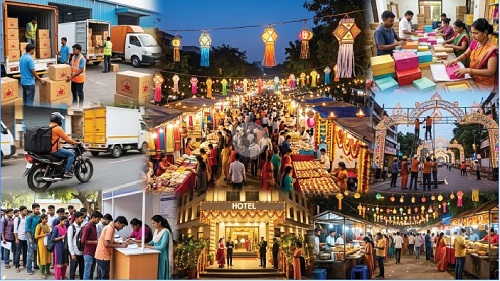
This is precisely where the role of the ordinary citizen becomes crucial. Festivals are not merely religious or cultural events; they are also major hubs of social and economic activity. When a family buys earthen lamps from a local market, they are doing more than just purchasing a product—they are boosting a potter's income. When a customer buys locally made textiles, they are supporting the business of a small trader and manufacturer. When an individual purchases an Indian product, they drive up the demand for domestic production. In essence, the act of shopping is also a form of economic participation. Therefore, during this festive season, the most effective response lies not in political slogans, but in keeping everyday life running normally. Markets bustling, shops open, transport operating, deliveries taking place, artisans at work, and customers shopping—this is the true strength of the economy.
If there is to be a debate about the Election Commission, it should be based on evidence. If there are questions regarding the SIR, facts should be presented. If there are irregularities in the voter list, specific examples and documents should be provided. If allegations are leveled against the government, they should be countered politically. However, all this must take place within the framework of democratic institutions, rather than creating chaos that disrupts the livelihoods of ordinary Indians.
Chief Election Commissioner Gyanesh Kumar currently finds himself at the center of this political confrontation. His decisions may be criticized, the Election Commission's functioning questioned, and the SIR subjected to public debate. Yet, disrupting the nation's economic activities by turning an individual into the face of a political conflict is a different matter entirely. Ultimately, the true test lies in what the common Indian prioritizes—anarchy or their own hard work?
Shopkeepers need their markets. Laborers need their work. Farmers need markets for their produce. Artisans need customers. The youth need employment. Families want to celebrate festivals. This is the true strength of India's festivals. Therefore, this time, festivals should be viewed not merely as celebrations but also as a showcase of India's economic strength. Visit the markets. Buy from local shopkeepers. Prioritize Indian products. Purchase goods from artisans. Keep your city's markets vibrant.
For in a democracy, governments change, political slogans shift, leaders come and go, and issues evolve. Yet, the common Indian who drives the nation's economy remains steadfast at their post every single day. They should not be brought to a halt in the name of politics. Festivals must not stop. Markets must not stop. And India's journey of development certainly must not stop.
The political conflict surrounding Gyanesh Kumar has its own place. However, India's economy cannot be held hostage by any political party, leader, or election campaign. If any political campaign truly seeks to strengthen democracy, its foremost responsibility must be to ensure that the lives and livelihoods of democracy’s most important stakeholders—the common citizens—remain undisturbed.
Therefore, India’s response during this festive season must be clear: festivals will be celebrated, markets will remain open, shopping will take place, and India’s economy will continue to grow. And if purchasing *Swadeshi* (indigenous) products boosts the earnings of an Indian artisan, trader, or manufacturer, what better way is there to celebrate the national interest?
(The content of this article reflects the views of writer and contributor, not necessarily those of the publisher and editor. All disputes are subject to the exclusive jurisdiction of competent courts and forums in Delhi/New Delhi only)





















Leave Your Comment