


The grand temple at Ayodhya, dedicated to Ram Lalla, the child form of Lord Ram, stands as a testament to the harmonious blend of traditional Indian heritage architecture and modern scientific principles. Spearheaded by the Shri Ram Janmabhoomi Teerth Kshetra Trust, the construction of the temple has enlisted the expertise of top Indian scientists and even incorporated technologies from the Indian Space Research Organisation (ISRO).
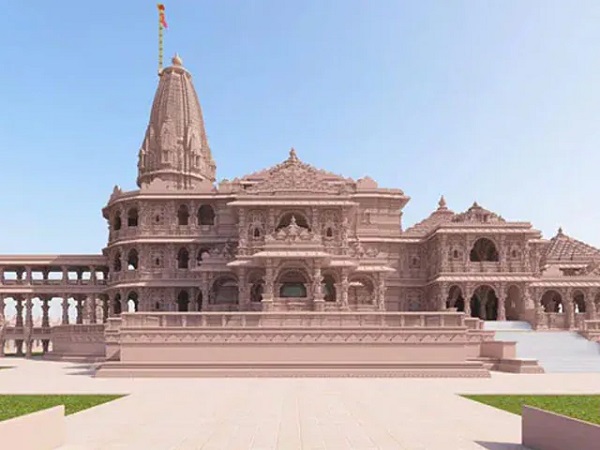
The architectural design of the temple follows the Nagar Shaily, representing the northern Indian temple style, meticulously crafted by Chandrakant Sompura, a renowned architect with a heritage spanning 15 generations. According to Mr. Sompura, the Shri Ram Temple is an unparalleled creation, not just in India but on a global scale.
Spanning 2.7 acres with a built-up area of 57,000 square feet, the temple is a three-floor structure standing at an impressive height of 161 feet, approximately 70% of the Qutab Minar. What sets it apart is the exclusive use of top-quality granite, sandstone, and marble, with no iron or steel incorporated in its construction. According to Dr. Pradeep Kumar Ramancharla from the Central Building Research Institute (CBRI), a lock-and-key mechanism using grooves and ridges replaces conventional cement or lime mortar in the joints, ensuring longevity.
An innovative solution was employed to address the challenge posed by the sandy and unstable ground beneath the temple, due to the nearby Sarayu River. The entire temple area's soil was excavated to a depth of 15 meters, replaced with engineered soil compacted to create a solid rock-like foundation. A 1.5-meter-thick M-35 grade metal-free concrete raft reinforced the structure, topped with a 6.3-meter-thick plinth of solid granite from southern India.
The visible part of the temple, made of 'Bansi Paharpur' pink sandstone from Rajasthan, boasts 160 columns on the ground floor, 132 on the first floor, and 74 on the second floor, all intricately carved. The sanctum sanctorum is adorned with white makrana marble from Rajasthan, the same source used for the Taj Mahal.
The CBRI played a crucial role in the construction from early 2020, contributing to the structural design, 'Surya Tilak' mechanism, foundation design vetting, and structural health monitoring of the main temple. According to CBRI, the chosen model, preserving the Nagara style of architecture, ensures both performance and architectural integrity, with modifications enhancing the structure's resistance to a 2500-year return period earthquake.
The grand temple at Ayodhya is not just a symbol of religious reverence but also a marvel of architectural and engineering prowess. By integrating traditional design principles with cutting-edge scientific techniques, the temple stands as a testament to India's rich cultural heritage and its ability to embrace modern advancements. With the assurance from experts like Dr. Ramancharla, it seems certain that the Ram Mandir will endure for more than a thousand years, becoming a timeless symbol of faith and architectural excellence.





















Leave Your Comment