


The Union government has taken a firm stance against a plea advocating for a lifetime ban on convicted lawmakers from contesting elections, arguing that the current provisions under the Representation of the People Act, 1951, are balanced and constitutionally sound.
In response to a public interest litigation (PIL) filed by advocate Ashwini Upadhyay, the Centre submitted an affidavit before the Supreme Court, asserting that imposing a lifetime ban would be disproportionate and unduly harsh. The affidavit, filed by the Union law ministry, highlighted that the existing law already disqualifies convicted legislators from contesting elections for six years post-completion of their jail sentence. This period of disqualification, the government argued, is based on principles of proportionality and reasonability, essential for maintaining deterrence without imposing permanent exclusion.
The controversy centers around Sections 8 and 9 of the Representation of the People Act, 1951. Section 8 mandates a six-year disqualification period for convicted lawmakers after serving their sentence, while Section 9 bars individuals dismissed from government service for corruption from contesting elections for five years from the date of dismissal.
The affidavit underscored that Parliament, as the supreme legislative authority, has the discretion to determine the duration of disqualification or penalties for convicted lawmakers. It emphasized that any change to these provisions should be within the prerogative of the legislature, not the judiciary, citing established legal precedents that prevent courts from directing Parliament on legislative matters.
Moreover, the government's filing referenced constitutional provisions, particularly Articles 102 and 191, which govern the disqualification of legislators for various grounds including holding an office of profit and unsoundness of mind. These provisions, the affidavit noted, are not permanent in nature and cease upon resolution of the disqualifying condition.
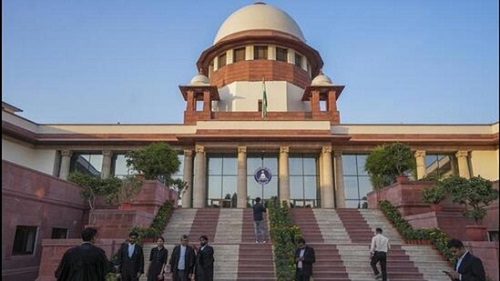
The Supreme Court, which had earlier questioned the rationale behind limiting disqualification to six years, is scheduled to hear the case on March 4. Attorney General R Venkataramani is expected to provide further insights into the government's position during the upcoming proceedings. In a previous hearing, the court had also directed the Election Commission to clarify its stance on the issue, highlighting concerns over the criminalization of politics in India.
The debate over whether to impose a lifetime ban on convicted lawmakers remains contentious, with arguments revolving around the balance between deterrence and the rehabilitation of individuals back into society after serving their sentence. As the judiciary prepares to delve deeper into this complex legal issue, the role of Parliament in shaping electoral laws and maintaining constitutional balance will be pivotal in shaping the future of electoral integrity in India.






















Leave Your Comment