


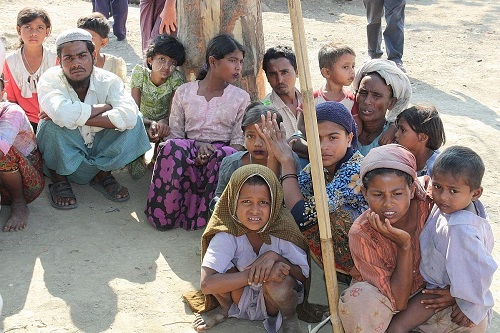
In a significant legal development, the Union government of India has recently made a noteworthy assertion regarding the status of illegal Rohingya Muslim migrants in the country. In a submission to the Supreme Court, the government firmly stated that these migrants do not possess a fundamental right to reside and settle in India. This stance underscores the complex interplay between humanitarian concerns, legal frameworks, and national security imperatives.
Citing various judgments of the Supreme Court, the government emphasized the delineation between the rights of Indian citizens and those of foreigners. While acknowledging that foreigners enjoy the right to life and liberty under Article 21 of the Constitution, the government clarified that the right to reside and settle in the country is exclusively reserved for Indian citizens. This assertion reaffirms the principle that the judiciary should respect the separation of powers and refrain from encroaching upon the legislative and policy domains of the Parliament and executive.
Moreover, the government highlighted the challenges posed by large-scale illegal migration from neighboring countries, particularly Bangladesh, which has significantly altered the demographic profile of some border states. The continued influx of Rohingyas, apart from being illegal, is deemed to have serious security ramifications for the nation. Credible intelligence indicates that many Rohingyas are involved in activities such as obtaining fake Indian identity documents, human trafficking, and subversive activities, posing threats to internal and national security.
The government's stance also underscores its commitment to safeguarding its borders and upholding the rule of law. It reiterated that those illegally entering India would be dealt with in accordance with the provisions of the Foreigners Act. Furthermore, since India is not a signatory to the 1951 Refugee Convention and its Protocol relating to the Status of Refugees, it would handle the issue of Rohingyas based on its own domestic framework.
Rejecting pleas to treat Rohingyas similarly to refugees from Tibet and Sri Lanka, the government emphasized that the recognition of refugee status is a policy decision that falls within the purview of the legislative framework. It stated unequivocally that the right to equality is not available to foreigners and illegal migrants.
While India has a long-standing tradition of hospitality and compassion towards refugees, the government's stance reflects the need to balance humanitarian concerns with national security imperatives. The Rohingya migrant crisis underscores the complex challenges facing nations in the modern world, where the protection of borders and the preservation of internal security are paramount.
As the legal proceedings continue, it is imperative for all stakeholders to engage in constructive dialogue to find a solution that upholds India's legal obligations, ensures the protection of vulnerable populations, and safeguards national interests. The government's submission to the Supreme Court signals a firm commitment to addressing these challenges while upholding the principles of justice, sovereignty, and security.

















Leave Your Comment