



Shekhar Iyer
It took an epidemic of outrage over the leakage of the question paper for the National Eligibility cum Entrance Test (NEET) - a nationwide entrance exam in India for students who want to study undergraduate or postgraduate medical and dental courses -- to open our eyes.
Once that volcano emptied out on our public space, we were forced to sit up and wonder: what happened and why now? Union Education Minister Dharmendra Pradhan had to quit, bowing to the pressure from agitators on the streets, for the mess up.
Of course, there were political factors that added fuel.
But the harsh fact is that India’s education system, once very good, has become a machine that churns out marks, ranks, and single-shot competitive examinations to measure our future generation's intelligence, worth, and potential. As they say, somebody had to bell the cat. Let's admit it.
This had to change.
But what was it all about, NEET? Certainly, not.
It was a mirror for our political system, which is institutionally responsible for creating and enforcing an environment driven by high fees, advertising, and fraudulent practices.
Gen Z is upset with the system because it relies on high-pressure, memorisation-based testing that causes severe burnout.
It fails to guarantee secure jobs or financial stability despite the high cost of tuition and relies on outdated teaching methods that ignore real-world skills and mental well-being.
Many public institutions suffer from a severe lack of basic infrastructure, qualified teachers, and modern tools. Schools teach obsolete material rather than addressing pressing global and technological issues.
Gen Z is very aware of the competitive world it has inherited and is quite capable of making prudent choices for its future.
So, we — parents, teachers, and policymakers — have to consult with them and evolve a system that is fair, robust, and respected.
Now, first things first.
Generation Z refers to people born between 1996 and 2010. They’re the second-youngest generation, between millennials and Generation Alpha. The digital age, climate anxiety, a shifting financial landscape, and COVID-19 have shaped Gen Z identity. They’re known as ‘digital natives’—the first generation to grow up with the internet.
Like every generation, Gen Z’s behaviours are shaped by how they grew up. Young people today have come of age in the shadow of climate doom, pandemic lockdowns, and fears of economic collapse.
The earliest Gen Zers were born when the internet was beginning to be widely used. They’re called “digital natives”—the first generation to grow up with the internet as a part of daily life.
The generation spans a wide range: the oldest Gen Zers have jobs and mortgages, while the youngest are still preteens. Globally, Gen Z is growing rapidly: by 2025, Gen Zers will make up a quarter of the Asia–Pacific population.
What makes Gen Z different?
This generation often turn to the internet to find information, including news and reviews, before making a purchase. They flit between sites, apps, and social media feeds, each one forming a different part of their online ecosystem.
Having grown up with social media, Gen Zers curate their online selves more carefully than those in prior generations have, and they are more likely to turn to trends of anonymity, more personalised feeds, and a smaller online presence, even as they voraciously consume media online.
Therefore, video-sharing social media sites have seen a meteoric rise. Instagram decides trends, feelings, and culture for Gen Zers, who make up 60 per cent of the app’s one billion–plus users.
Gen Zers flock to corners of the internet where they can discuss their passions and interests with those who share them—from gaming to K-pop—bonding with both people they know in real life and ones they’ve only met online.
Gen Z is also generally known for its idealism—they’re part of a new wave of “inclusive consumers” and socially progressive dreamers.
Generally speaking, Gen Zers believe in doing their part to establish greater equity for all. More than any other generation, Gen Z collectively demands purpose and accountability, the creation of more opportunities for people from diverse and underrepresented backgrounds, and rigorous, sustainable, and green practices, according to a two-year-old "insight" report from consulting firm McKinsey & Co.
The report points out that Gen Zers are already seeing a decrease in economic opportunity and don’t see a social safety net to catch them as income and pensions shrink, saving for retirement becomes more difficult, and the older population grows.
Already, 58 per cent of Gen Zers reported that a basic social need was not met—the largest percentage by far of any generation, even in the advanced countries.
Not just the Government, even the Opposition is in the dock
It is not only Prime Minister Narendra Modi and the BJP that are troubled by the youth agitations. Finally, on August 6, Leader of Opposition (LoP) in the Lok Sabha, Rahul Gandhi, had to reach out to students protesting in Jharkhand over alleged irregularities in government recruitment examinations. He assured them that their concerns would be raised with the JMM-Congress state government and expressed support for their demands.
His conversation with some civil service aspirants comes amid ongoing agitation by JPSC-JSSC aspirants in Ranchi, where they have been demanding the cancellation of the disputed examination, a fair investigation into the alleged irregularities, and comprehensive reforms in the recruitment process.
When they were firing at the Central government over the NEET leak and rejoining the Pradhan's resignation, Rahul and other Opposition leaders did not expect the Ranchi protests to become such a huge embarrassment.
On August 9, the JMM-Congress-run Jharkhand government agreed to cancel the 14th JPSC preliminary exam, the JPSC Backlog 2023, and the JPSC Backlog 2025.
At Ranchi's Jaipal Singh Munda Stadium, student leader Devendra Nath Mahto has been on an indefinite hunger strike that has drawn the same attention as Sonam Wangchuk's in Delhi's Jantar Mantar. On August 5, following a video call with activist Sonam Wangchuk, Mahto agreed to at least take water while continuing the fast.
The demands were: cancel the disputed 14th Combined Civil Services Preliminary Examination, order a CBI probe and restore public faith in Jharkhand's recruitment system.
The stir started on July 2, when the JPSC announced the examination results, naming 2,204 successful candidates for recruitment to 103 civil service posts. Candidates got only 17 days to prepare for the Mains examination. More damagingly, the JPSC failed to publish category-wise cut-off marks, a basic requirement of transparency. Even some commission members had objected to the way the results were announced.
On July 21, the Jharkhand CID arrested eight persons, including deputy examination controller Shweta Kumari Gupta and directors and employees of TSR Data Processing Private Limited (TDPL), the Lucknow-based company entrusted with key aspects of the examination process. The TDPL had earlier been blocked by the Jharkhand Staff Selection Commission (JSSC). Preliminary findings suggest possible manipulation of the examination process, including alleged digital tampering and irregularities relating to OMR (optical mark recognition) sheets. Days later, JPSC chairman L. Khiangte, a former chief secretary of Jharkhand, resigned.
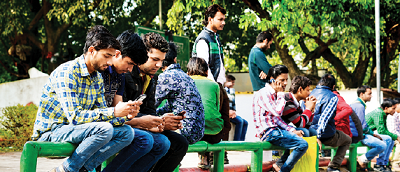
What began as a protest against one disputed examination evolved into a movement demanding structural reform of Jharkhand's recruitment machinery.
Neither CM Hemant Soren nor Rahul Gandhi can ignore this problem! Amid this protest, students online have started criticising the Cockroach Janata Party (CJP) leaders for their absence from the protest and accusing them of hypocrisy for presenting themselves as a national student movement while staying away from the Ranchi protest. After a long silence, the leaders recently announced that they would go to Ranchi to stand with the students. However, videos of protesting students are now going viral, with many saying they do not want CJP leaders to come.
On July 25, Union Education Minister Dharmendra Pradhan announced his resignation, bowing to pressure from protesters who had gathered under the banner of CJP at Delhi's Jantar Mantar for 36 days. They held him responsible for the leakage of question papers of the NEET examination for admission into medical colleges. Soon after, CJP representatives, at a joint press conference with Union Ministers Jitendra Singh and J.P. Nadda, announced the end of the agitation at Jantar Mantar, saying all their demands had been met.
In his resignation letter, Pradhan wrote that stepping down was “not a matter of personal prestige” and that he was doing so, “saddened” by developments over the preceding ten days, to deny “anti-national forces” room to exploit the situation.
By accepting Pradhan's resignation, Prime Minister Narendra Modi was seen as bowing to a loose coalition of Gen Z protesters who took on one of the most politically formidable governments in the history of independent India and emerged victorious.
Jantar Mantar protests
The protest has been the most visible expression of public anger against Modi's government in recent years and gained momentum after July 20's police crackdown on people marching to parliament, which left many people injured.
The protests gained global attention after Ladakh activist and educationist Sonam Wangchuk joined them on 28 June and began an indefinite hunger strike in support of their demands.
As his health deteriorated, the crowds began to swell, and Wangchuk was forcibly removed from the protest site by the police on July 18 and taken to the hospital, where he continued to fast. He finally called it off early on July 24, after the government assured him that his demands would be looked into.
The CJP is not a real party but has evolved into a powerful platform for young people's anxieties and dissent. The CJP was formed after the chief justice of India described some unemployed young people who had turned to journalism and activism as "cockroaches". He later said he was referring specifically to people with "fake and bogus degrees", but by then, the term had turned into a big controversy.
The movement was led by Abhijeet Dipke, a 30-year-old political communications strategist and former Boston University student. The CJP quickly gained a large online following, reaching 26 million on Instagram.
Challenge to Modi
The protests dealt a severe blow to the prime minister's personal brand and his aura of invincibility. Since coming to power in 2014, Modi's government has rarely tolerated dissent and cracked down heavily on protests, which is why Pradhan's resignation is being seen as a big deal in India.
But this isn't the first time they have faced big protests - and it's not the first time they have been forced into a climbdown either. In 2021, the government repealed the agricultural laws following a year-long farmers' protest.
However, the students' protest has resonated with a large section of middle-class India, cutting across religious, caste, and sectoral identities, as people voice anger over the lack of educational opportunities and jobs.
The government certainly conceded. There is little doubt about that. But did it concede because it was apprehensive of the CJP?
In fact, it can be argued that the BJP was looking beyond the protesters and worrying about who stood to gain from the political undercurrent they had created. Modi would have known that he might incur a higher political cost by retaining Pradhan than by letting him go. He may have been sacrificed because the BJP leadership feared losing something far more consequential. Pressure grew on the government after July 20's violent crackdown when police and paramilitary forces used batons and wooden sticks to beat up young men and women, firing tear gas canisters at them.
Modi has now deployed a strong counter-strategy on multiple fronts. Modi has directly intervened, hoping to bypass the political fallout by announcing a high-powered task force led by tech-expert Nandan Nilekani to ensure structural, leak-proof public examination reforms. The government introduced the amended Public Examinations Act in Parliament, which mandates severe penalties (up to 10 years' imprisonment and a fine of up to ₹10 crore) for organised mafia syndicates found to have leaked or tampered with test papers. Union Minister Pralhad Joshi was brought in to take over the Education portfolio, as an additional charge and manage public fallout.
These measures may help the Modi government to tackle the immediate crisis and regain strategic ground with students and young voters. However, Rahul Gandhi and other Opposition leaders won't let the tension subside and press the government on the issue in Parliament. They won't lose this opportunity to corner Modi. But then no crisis lasts forever.
We do have good reasons to consider the crisis brought about by the July 20 events in Delhi a major one, and the subsequent media coverage as hype as well.
Political fallout
It is no surprise that Rahul Gandhi sees a great opportunity for the Congress in the events. He views Modi’s political and governance challenges—because of widespread youth unemployment, recurring examination paper leaks, and national economic stress—as direct consequences of deep policy failures, institutional overreach, and an ideological disconnect with India’s millions.
He labels Modi as anti-youth, arguing that shrinking job markets in manufacturing, banking, and IT have left graduates with meaningless degrees. He claims the administration encourages distractions like social media reels or gig work on platforms like Blinkit to mask a severe lack of structured employment.
He has heavily criticised police crackdowns on student demonstrators demanding exam fairness, asserting that the government owes the youth truth and justice instead of offering patronising pardons.
More importantly, it is RSS chief Mohan Bhagwat's remarks in Mumbai on August 6, during an interaction with Gen Z, are bound to make the top BJP leadership take note. The Sangh appears to be taking the lead over the Modi government in starting a dialogue with the youth. Bhagwat stated that Gen Z protests over issues like exam paper leaks are a legitimate form of dialogue.
He has asserted that youth grievances are genuine and should not be labelled anti-national.
Observers view his remarks as a nudge toward constructive engagement and systemic reform rather than confrontation. He emphasised that the era of blind obedience is over, and today's youth demand logic, discussion, and reasoning.
Coming amid youth-led agitations and public debates, his comments are widely interpreted as advocating an empathetic, communicative approach rather than an adversarial response.
Were the RSS Chief's remarks a wake-up call for the BJP? Certainly, his statement puts the RSS directly inside the debate over how India’s political establishment engages with a generation often dismissed as unserious or confined to social media.
The RSS message to all its affiliates is clear: disagreement is not disloyalty, and young people taking to the streets cannot automatically be portrayed as enemies of the nation.
Now, in his most recent significant intervention, Bhagwat strongly disapproved the political establishment's tendency to brand protesting youth as "anti-national". Bhagwat asserted that "if Gen Z is protesting, they are not anti-nationals" and that the government must address grievances using logic and dialogue rather than dismissal.
Modi's response
On August 8, Modi showed that he was alive to the challenge. He addressed the 57th Convocation Ceremony of IIT Delhi as the Chief Guest, delivering an inspiring blend of youth-centric lingo, critical life lessons, and national technological milestones. He brought to the fore the other side of the current events.
Modi captured the audience's attention by utilising popular Gen-Z phrases. He highlighted how today's youth are boldly claiming milestones like "first in my bloodline to build a rocket," "first in my bloodline to make a drone," or "first in my bloodline to make a chip in India. He drew a sharp contrast between academic life and reality, stating: "In IIT exams, there is a syllabus... but in the exam of life, everything is out of the syllabus."
He emphasised that life won't hand out a question paper, and that graduates must identify the real problems themselves. Warning graduates about the mental toll of the social media era, he urged them not to compare their success, salary packages, or startup milestones with those of their peers. He emphasised, "Life is absolutely not a leaderboard; your real race is not with anyone else, it is with yourself."
In a lighter moment that drew widespread laughter, Modi remarked, "I am not Baba Bageshwar, but surely, thoughts are running through every student's mind" regarding their first salaries, moving to new cities, or launching startups.Global Access Initiatives:
It is clear that a national conversation has begun at all levels. We need to talk, or rather hear out, this generation. Sometimes, the best answers come from just listening to those speaking out now.
(The content of this article reflects the views of writer and contributor, not necessarily those of the publisher and editor. All disputes are subject to the exclusive jurisdiction of competent courts and forums in Delhi/New Delhi only)




















Leave Your Comment