


India is a land of festivals where religion, culture, tradition and community life come together. Among the many Hindu festivals celebrated across the country, Ganesh Chaturthi, popularly known as Ganesh Puja, occupies a special place.
Lord Ganesha is worshipped as Vighnaharta, the remover of obstacles; Siddhivinayaka, the bestower of success; and the deity of wisdom, knowledge and auspicious beginnings. Before starting important ceremonies, educational activities, business ventures and other new undertakings, Lord Ganesha is traditionally invoked first.
Ganesh Puja is therefore more than the worship of an idol. It represents faith in wisdom over ignorance, perseverance over difficulties and harmony over division. In modern times, the festival has also become a platform for social service, cultural expression, community participation and environmental awareness.
When is Ganesh Puja Celebrated?
Ganesh Chaturthi is observed on the fourth day, or Chaturthi, of the bright fortnight of the Hindu month of Bhadrapada, generally during August or September.
The festival begins with the installation of Lord Ganesha's idol and may continue for one and a half, five, seven, ten or eleven days, depending on local tradition. The celebrations generally conclude with Ganesh Visarjan, often associated with Anant Chaturdashi.
During this year in 2026, Ganesh Chaturthi falls on 14 September.
Why Do We Worship Lord Ganesha?
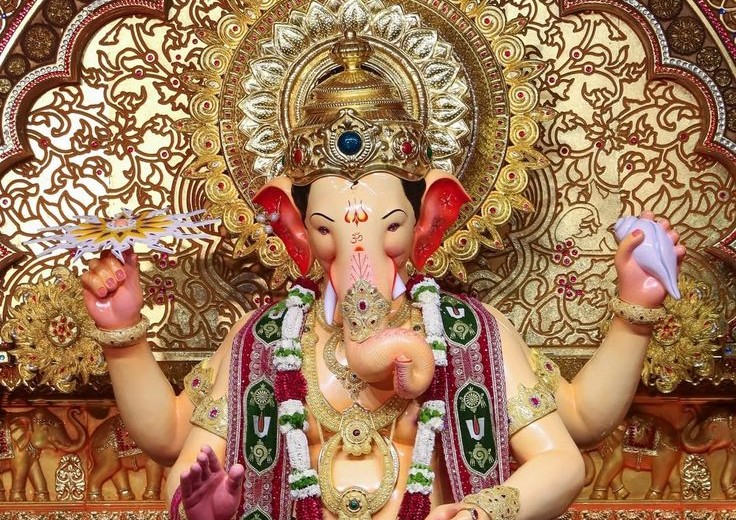
Lord Ganesha, regarded as the son of Lord Shiva and Goddess Parvati, has a unique form combining an elephant head with a human body. His form itself conveys important life lessons.
His elephant head represents wisdom and intelligence; large ears remind us to listen carefully; small eyes symbolise concentration; and the trunk represents adaptability. His large belly is traditionally associated with the ability to accept and digest life's experiences, while his one tusk symbolises retaining the essential and discarding the unnecessary. His mouse vehicle represents control over restless desires.
Thus, Ganesha is not worshipped merely for material prosperity. His deeper message is that wisdom, discipline and right action help us overcome life's obstacles.
Why is Ganesh Puja Celebrated Everywhere?
Although Ganesh Chaturthi has particularly deep roots in Maharashtra, it is now celebrated throughout India and by Indian communities abroad. Lord Ganesha's association with knowledge, success, good fortune and new beginnings gives the festival universal appeal.
The public form of Ganeshotsav received a major impetus in Maharashtra when Lokmanya Bal Gangadhar Tilak popularised public celebrations in 1893, helping transform the festival into a powerful community gathering during the freedom movement. Over time, it developed distinctive regional traditions across India.
The Traditional Puja Vidhi
Rituals vary according to family and regional traditions, but a general Ganesh Puja includes as under :-
• Purification and preparation – Cleaning and decorating the place of worship.
Installation of the idol –
• Respectfully placing the Ganesha idol, traditionally made of clay.
• Sankalpa – Taking a sincere resolve to perform the puja with devotion.
• Invocation – Offering prayers and mantras to Lord Ganesha.
• Offerings – Flowers, durva grass, fruits and other traditional items are offered.
• Naivedya – Modak and other vegetarian preparations are offered.
•Aarti and prayers – Devotees pray for wisdom, peace, health, prosperity and removal of obstacles.
• Prasad distribution – The offerings are shared among family members and devotees.
The essence of the puja is devotion and sincerity, not extravagance.
Who Can Worship Lord Ganesha?
Ganesh Puja is open to everyone. Children, students, families, senior citizens, working people and community groups participate in the celebrations.
For children and young people, the festival provides an opportunity to learn about Indian culture, mythology, art, music and social responsibility. Its deeper message is that devotion should unite people rather than create barriers.
Ganesh Puja in Modern Times :
Ganesh Puja has evolved from a largely household observance into a major public cultural festival. Large pandals and mandals, artistic idols, decorations, illumination, music and cultural programmes attract people of all ages.
Modern celebrations often include bhajan and kirtan, music and dance, drawing and essay competitions, educational programmes, blood-donation and health-awareness camps, food distribution, assistance to economically weaker families, tree plantation and cleanliness drives.
Thus, Ganeshotsav can become not merely a religious celebration but a festival of community service.
Major Ganesh Celebrations Across India :-
Maharashtra: Mumbai and Pune are particularly famous for their spectacular public Ganeshotsav, combining devotion, artistic decoration, cultural programmes and processions.
Karnataka:
Bengaluru and other cities celebrate with household and community worship, public installations and cultural activities.
Telangana and Andhra Pradesh:
Hyderabad is known for its large idols and colourful public celebrations and processions.
Gujarat, Goa and Madhya
Pradesh:
Ganesh Chaturthi is celebrated through family worship, community pandals, cultural programmes and immersion ceremonies, with distinctive local traditions.
Odisha :
Ganesh Puja has become particularly popular in schools, colleges, markets, offices, industrial establishments and community organisations. It is closely associated with students and learning, as Lord Ganesha is worshipped as the deity of knowledge and wisdom. Bhubaneswar, Cuttack, Rourkela, Berhampur, Sambalpur and many other towns and villages throughout the state celebrate the festival with much enthusiasm.
Social Benefits of Ganesh Puja :
• A well-organised Ganesh festival can make a meaningful contribution to society as discussed below:
• Promoting unity;
• People from different backgrounds participate in a common celebration;
• Strengthening community relationships;
• Residents work together for decorations, cultural programmes and social activities;
• Encouraging service;
• Ganesh Mandals/Pendals can organise charitable and welfare programmes in and around the society;
• Engaging youth: Young people gain opportunities for creativity, volunteering and community service;
• Promoting culture: Traditional music, dance, handicrafts and devotional practices receive a public platform;
• Spreading awareness;
• Pandals can communicate messages about education, cleanliness, road safety, water conservation and tree plantation;
Hence, the true success of Ganesh Puja should therefore be measured not by the size of the idol, but by the good deeds, as it creates in the society.
Economic Impact :
Ganeshotsav also generates considerable economic activity. Idol makers, sculptors, painters, flower sellers, decorators, electricians, sound and event-service providers, transport operators, food vendors, printers, small retailers, handicraft producers and cultural performers benefit from seasonal demand.
The festival therefore creates a temporary local economic ecosystem, particularly supporting small entrepreneurs, artisans and informal workers.
However, economic activity should be balanced with environmental responsibility. Sustainable materials and responsible consumption should gradually replace unnecessary waste and extravagance.
Ganesh Visarjan:
A Sacred Tradition and an Environmental Challenge
Visarjan symbolises the temporary nature of physical existence. The idol, created from the elements of nature, is worshipped and finally returned to nature.
Traditionally, clay idols could dissolve naturally in water. However, modern mass production has sometimes introduced Plaster of Paris, synthetic paints, plastics and other materials, which can adversely affect water quality.
Therefore, the spiritual significance of Visarjan should be preserved while reducing its environmental impact.
Making Ganesh Puja Greener :
• A truly modern Ganesh Puja should combine devotion with environmental responsibility-
• Prefer natural clay and biodegradable idols.
• Avoid paints containing harmful substances and choose environmentally safer colours.
• Keep idols reasonably sized.
• Replace plastic and thermocol with cloth, paper, bamboo, flowers and reusable materials.
• Reuse decorations in subsequent years.
• Use designated and properly managed immersion facilities.
• Follow locally approved practices for responsible home immersion where appropriate.
• Control excessive noise and respect students, senior citizens, patients, animals and the wider community.
Organise post-festival cleanliness drives-
Encourage tree plantation with a simple principle: “One Ganesh Puja, One Tree.”
These measures can transform a religious celebration into a lasting environmental contribution.
The New Face of Ganeshotsav
The festival is gradually moving towards more environmentally responsible celebrations. The future Ganesh festival should therefore follow a simple modern philosophy:
Less pollution, more devotion.
Less waste, more service.
Less extravagance, more compassion.
Less noise, more peace.
Less plastic, more nature.
Ganesh Puja as a Festival of Social Transformation:
The greatest opportunity before us is to connect ancient wisdom with modern responsibility.
If a Ganesh Mandal organises a blood-donation camp, it serves humanity. If it plants trees, it serves nature. If it supports poor students, it serves education. If it cleans a neighbourhood, it serves society. If it uses eco-friendly materials, it serves future generations.
This is perhaps the most meaningful way to understand Lord Ganesha's message in the 21st century.
Conclusion :
Ganesh Puja is much more than a festival of rituals, decorations and immersion. It is a celebration of wisdom, faith, unity, knowledge, prosperity and new beginnings.
Lord Ganesha teaches us that obstacles can be overcome through intelligence, patience, determination and right action. His elephant head reminds us of wisdom, his large ears encourage us to listen, and his presence at the beginning of auspicious occasions reminds us that every journey should begin with a clear mind and noble intention.
As society changes, our methods of celebration may also change—but the spirit of the festival should remain intact.
Let every Ganesh Puja become an occasion not only to worship Ganesha but also to protect Mother Earth, serve humanity and strengthen community harmony.
A Modern Mantra for Ganesh Puja -
“Worship Ganesha with devotion,
Celebrate with unity,
Serve society with compassion,
And protect nature with responsibility.”
May Lord Ganesha bless us with wisdom to choose the right path, strength to overcome obstacles, compassion to serve others and responsibility to protect our environment.
Ganpati Bappa Morya!
May Lord Ganesha return every year with new hope, new wisdom and new blessings.
Basanta Kumar Sahoo
(* Former PRO IFFCO Paradeep)
(The content of this article reflects the views of writer and contributor, not necessarily those of the publisher and editor. All disputes are subject to the exclusive jurisdiction of competent courts and forums in Delhi/New Delhi only)



















Leave Your Comment