


The INDIA bloc’s decision to launch a coordinated campaign against the Election Commission over the Special Intensive Revision (SIR) of electoral rolls marks a shift from individual party criticism to a structured, multi-stage political mobilisation. At its September 30 meeting, opposition leaders agreed on district-level demonstrations, a march by MPs to the Election Commission, engagement with the President and a major Delhi rally on November 1. The immediate issue is the integrity and transparency of voter-list revision, but the wider contest is over public confidence in the electoral process and the institutions that administer it.
The INDIA bloc has decided to take its confrontation with the Election Commission beyond Parliament and press conferences, announcing a sustained programme of protests beginning on October 2. The decision reflects the opposition parties’ attempt to turn their concerns over the Special Intensive Revision of electoral rolls into a wider public campaign centred on voters’ rights, electoral transparency and institutional accountability.
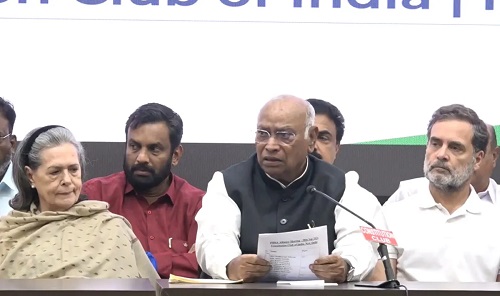
Congress president Mallikarjun Kharge said representatives of 20 parties participated in the meeting, while Shiv Sena (UBT) chief Uddhav Thackeray and Jharkhand Chief Minister Hemant Soren joined virtually. According to Kharge, the discussions lasted around three to three-and-a-half hours and produced a “strong consensus” on conducting the campaign jointly. Rahul Gandhi and TMC leader Mamata Banerjee were among those who contributed to the discussions.
The first phase will be a series of district-level “Save Democracy” marches and demonstrations from October 2 to 8. The stated objective is not merely to mobilise party workers but to explain to voters why the opposition believes the SIR exercise requires greater scrutiny. This distinction is important because the political battle over electoral rolls ultimately depends on whether concerns about individual voter exclusions, verification procedures and transparency resonate beyond party organisations.
The second major programme is scheduled for October 6, when Opposition MPs are expected to march to the Election Commission. The opposition also plans to seek an appointment with the President in the second week of October to submit a representation.
The campaign will culminate, at least in its currently announced phase, with five major rallies, including a large Delhi rally on November 1. The INDIA bloc intends to use these gatherings to place its broader allegations concerning electoral processes before the public. The opposition has also decided to seek an early hearing in the Supreme Court on matters connected with SIR and has announced a demand for elections to be conducted through ballot papers.
The dispute, however, is not occurring in a vacuum. The Election Commission has itself announced procedural changes during the SIR exercise. On September 26, it said Booth Level Officers would visit the homes of electors who received notices over unmapped records or logical discrepancies to collect documents. It also ordered help desks and special camps for vulnerable groups and constituted a committee, including an independent technical expert, to review the ECINet system. The Commission also extended the period for claims and objections in Delhi until October 30.
These measures provide an important part of the institutional context. The opposition sees the controversy as evidence of a deeper problem concerning the credibility of the electoral process, while the Election Commission has maintained that its procedures are lawful and has introduced administrative adjustments to address difficulties arising during the revision exercise. The Supreme Court is also set to examine a petition challenging aspects of the functioning of the CEC and the legality of SIR.
Rahul Gandhi has framed the issue in much broader terms, describing the opposition parties as collective defenders of the Constitution and alleging that India's democratic system has been attacked. Mamata Banerjee, meanwhile, has demanded the resignation of CEC Gyanesh Kumar and warned that the agitation could be intensified.
The political significance of the INDIA bloc’s programme therefore lies not simply in the number of marches or rallies announced. The opposition is attempting to convert a technically complex exercise involving electoral rolls into a larger democratic question. Whether that strategy succeeds will depend on how effectively the parties substantiate their allegations, explain the actual consequences of SIR to voters and maintain unity among parties with different regional interests.



















Leave Your Comment