


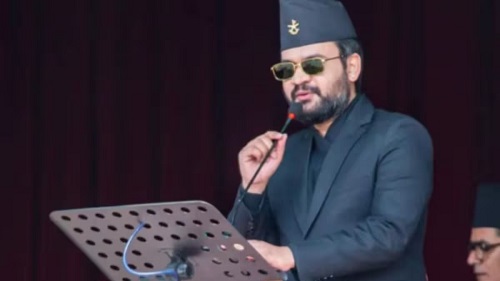
In a historic and transformative moment for Nepal, rapper-turned-politician Balendra Shah, popularly known as Balen, was sworn in as the country’s Prime Minister on Friday. His rise to the nation’s highest executive office comes just days after a sweeping electoral victory and nearly six months after the fall of the K P Sharma Oli-led government, which was ousted following a powerful wave of Gen-Z-led protests demanding systemic change.
At 35, Balen becomes the youngest Prime Minister in Nepal’s history and the first leader from the Madhes region to hold the prestigious position. Representing the Rastriya Swatantra Party (RSP), a relatively new political force, his victory marks a decisive shift away from traditional political establishments that have dominated Nepal’s governance for decades.
The swearing-in ceremony, held at the President’s Office in Sheetal Niwas at the auspicious time of 12:34 pm, reflected Nepal’s rich cultural and religious diversity. The event featured a unique blend of Hindu and Buddhist traditions. Rituals included Shankhanad (conch blowing) by seven Brahmins, the chanting of Vedic hymns (Swasti Bachan) by 108 young Hindu priests, and the recitation of Buddhist scriptures (Mangal Bachan) by 107 Lamas, symbolizing unity and harmony across faiths.
Earlier in the day, President Ram Chandra Paudel officially appointed Balen as Nepal’s 47th Prime Minister under Article 76(1) of the Constitution, following his party’s clear majority in the House of Representatives. The RSP secured a remarkable 182 out of 275 seats, comfortably surpassing the threshold required to form a government. This landslide victory underscores a growing public desire for fresh leadership, transparency, and accountability.
Balen’s journey to power is unconventional. An engineer by training and a popular rapper by profession, he first rose to political prominence as the Mayor of Kathmandu. His grassroots appeal, coupled with a strong anti-corruption stance and focus on youth empowerment, resonated deeply with a population eager for generational change.
The recent elections, the first since last year’s intense Gen-Z protests, served as a referendum on Nepal’s political future. Young voters played a pivotal role in dismantling the dominance of established parties, rallying behind Balen and the RSP’s promise of reform and clean governance.
According to sources close to the Prime Minister, Balen is expected to form a compact cabinet comprising 15 to 18 ministers. This move aligns with his vision of efficient governance and reduced bureaucratic overhead.
On Thursday, all newly elected members of the House of Representatives took their oath, setting the stage for a new legislative term under a dramatically altered political landscape. Of the 275 members, 165 were elected through direct voting, while 110 were chosen via proportional representation.
Balen’s ascent represents more than just a political victory—it signals a generational shift in Nepal’s leadership. As the country looks ahead, expectations are high for a government that not only delivers on its promises but also redefines the standards of governance in a rapidly changing society.
With the energy of youth behind him and a decisive mandate in hand, Prime Minister Balen now faces the challenge of translating hope into tangible progress for the Himalayan nation.


















Leave Your Comment