


Union Home Minister Amit Shah has set December 31, 2029, as the target for making India completely drug-free, describing narcotics as a serious threat to the country’s economic growth, social stability and future generations. Addressing the nation on Police Commemoration Day in New Delhi on Wednesday, Shah called on state police forces and Central Armed Police Forces (CAPFs) to join a coordinated national campaign against drugs. While highlighting progress in tackling terrorism, insurgency and Naxalism, he emphasised that India’s internal security achievements rest on the courage, discipline and sacrifices of police personnel who have protected the country through decades of challenges.
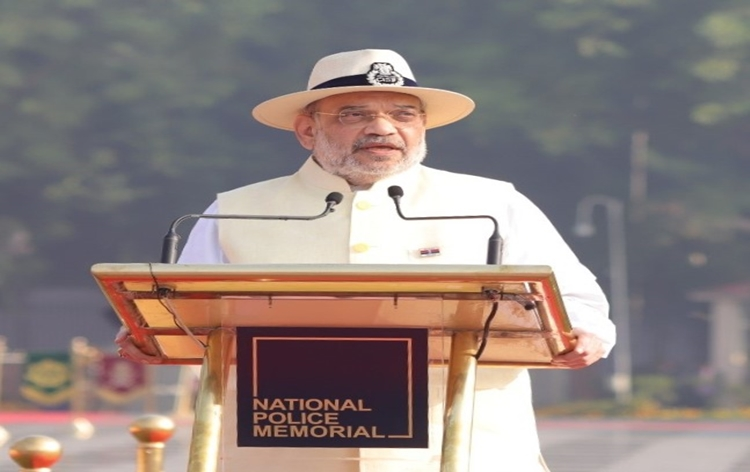
Union Home Minister Amit Shah has called for a sustained, nationwide campaign to eliminate the drug menace, setting December 31, 2029, as the deadline for achieving a drug-free India. Speaking at the National Police Memorial in New Delhi on Police Commemoration Day, Shah warned that narcotics pose a threat extending well beyond public health, with the potential to undermine economic progress and impose a substantial burden on the country.
The announcement places the fight against drugs among the Centre’s major internal security priorities for the coming years. Shah said the Ministry of Home Affairs would pursue a coordinated campaign covering the remainder of 2026 and the years 2027, 2028 and 2029. He urged police forces in every state to commit themselves to eliminating the drug threat, signalling that the objective would require cooperation across administrative boundaries and a sustained effort by law enforcement agencies.
“The nation is not yet free from all challenges; many issues still lie before us,” Shah said, stressing the need for a united response to the narcotics problem.
The deadline is ambitious, and achieving it will require more than arrests and seizures. Drug trafficking networks frequently operate across state and national borders, making intelligence-sharing, coordinated investigations and action against organised criminal networks essential. Equally important will be preventing young people from becoming vulnerable to addiction, expanding access to treatment and rehabilitation, and addressing the financial networks that sustain the illegal trade.
Shah’s emphasis on the economic consequences of drugs reflects the wider implications of the problem. Addiction can affect workforce participation, household finances and public health expenditure, while organised trafficking can provide resources to criminal networks that threaten law and order. A successful national campaign will therefore depend on combining enforcement with prevention, rehabilitation and public awareness.
Before outlining the government’s anti-drug objective, Shah paid tribute to police personnel who had sacrificed their lives in the line of duty. Laying a wreath at the National Police Memorial, he recalled the courage, discipline and restraint demonstrated by police and security personnel in protecting the country’s internal security.
The memorial, inaugurated by Prime Minister Narendra Modi in 2018, honours personnel from across the country who lost their lives while serving the nation. Shah said their sacrifices had helped establish the foundations of India’s security and international standing during the nearly eight decades since independence.
He observed that the country’s achievements would have been difficult to imagine without the dedication of those who had risked and given their lives to protect its people and borders.
The commemoration also provided an opportunity for the Home Minister to highlight the contribution of state police forces and CAPFs in preserving democratic institutions. According to Shah, their role has extended from countering armed insurgencies to ensuring that citizens can participate in elections without fear.
He credited these forces with playing an important part in efforts to make India free from Naxalism, a challenge that had affected several states for decades. Their contribution, he said, had been central to protecting democratic processes and maintaining the authority of the state in areas previously affected by extremist violence.
Shah’s remarks underscored the broad responsibilities of India’s police and paramilitary organisations. Beyond conventional law enforcement, these forces are involved in counterterrorism, border security, election duties and the disruption of organised criminal activities. The proposed anti-drug campaign will place another significant responsibility on their shoulders.






















Leave Your Comment