


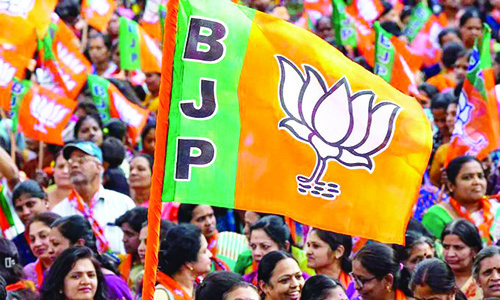
The contemporary position of the Bharatiya Janata Party, which had been reduced to merely two seats in the 1984 general elections, is widely regarded as one of the most remarkable transformations in modern Indian politics. Its victories in three consecutive Lok Sabha elections, its presence in power or coalition governments across 21 states, and its expansion into regions where it once had virtually no political footprint are not merely electoral statistics. Rather, they reflect the outcome of a long-term political strategy, ideological coherence, and sustained organisational expansion. From having no meaningful presence in West Bengal in 2011 to crossing the 200-seat mark in 2026, from a marginal force in Assam to a dominant political actor, and from near invisibility to a gradually expanding presence in politically resistant regions such as Kerala, the party has demonstrated an ability to recalibrate its expansionary model in accordance with the changing realities of India. One of the principal reasons behind this rise has been the BJP’s cadre-based organisational structure, whose roots are closely associated with the Rashtriya Swayamsevak Sangh. This network does not become active solely during elections; it maintains a sustained presence at social and cultural levels as well. The BJP has successfully combined this organisational strength with modern electoral techniques, data analytics, and booth-level micro-management. Consequently, the party has been able to establish itself even in states that were once dominated almost exclusively by regional political formations. A second significant aspect of the BJP’s growth has been its combination of ideological consistency and pragmatic flexibility. On the one hand, the party has consistently foregrounded themes such as nationalism, cultural identity, and strong leadership. On the other, it has shown a willingness to adapt its political agenda to regional aspirations and local concerns. Whether it was the politics of “parivartan” (change) in West Bengal or the issue of illegal infiltration in Assam, the BJP crafted distinct political narratives for different states while simultaneously retaining its broader ideological framework.
A third factor has been the centralisation of leadership and the broad acceptability associated with it. Since 2014, the projection of strong leadership at the level of the Prime Minister has enabled the BJP to position itself as a stable and credible national alternative. This leadership has not only shaped electoral strategy but has also instilled confidence among party workers and supporters. Simultaneously, the party has not hesitated to cultivate new state-level leadership, allowing it to appear more dynamic and adaptable in comparison to many regional parties. Another critical component of the BJP’s success has been its model of welfare politics. Schemes such as Ujjwala, Ayushman Bharat, PM Awas Yojana, and free ration distribution have helped the party consolidate substantial support among economically weaker and lower middle-class sections of society. This emerging “beneficiary class” increasingly appears to vote not solely on the basis of caste or religious identity, but also on the basis of direct material benefits. The BJP has consciously sought to transform this constituency into a durable political support base. In addition, the weakness and fragmentation of the opposition have significantly facilitated the BJP’s expansion. In several states, conflicts among regional parties and the absence of a clear national alternative have enabled the BJP to gain a strategic advantage. The party has successfully projected itself through the narrative of “stability versus disorder,” thereby strengthening its appeal among a broad spectrum of voters. Ultimately, the expansion of the BJP is not merely the story of electoral success; it is also a reflection of India’s evolving socio-political structure. A party that once occupied the political margins has today moved decisively to the centre of national politics and continues to explore new political geographies. Its greatest strength lies precisely in this capacity for continuous movement and expansion—not to remain static, but to keep advancing.

Deepak Kumar Rath





















Leave Your Comment