


Water is at the heart of everything we need to live, like food security, sanitation, clean energy, and public health. But as cities grow, industries expand, and agriculture demands more, we’re running into a harsh truth that in many parts of the world, water needs are more than what nature can sustainably provide. While agriculture remains the biggest user of water, rapid urbanisation is driving up domestic demand, and the industrial and mining sectors are thirstier than ever. As a result, in many regions, water demand is now outstripping what’s sustainably available.
This crunch in availability of water resources can spell doom for nations such as China, India and the USA, often referred to as breadbasket nations because of the large amounts of wheat and other food grains they produce due to the richness of the soil and a highly favourable climate. Data shows that they account for 41 percent of the global population, 49 percent of surface and ground level water demand, and contribute to 39 percent of food production globally. If their water runs dry, the ripple effects could be global.
Seasonal and Local Data Hold the Key to Solving Water Scarcity
In a study titled ‘Deepening water scarcity in breadbasket nations’ published in the journal Nature Communications by Qinyu Deng et al., attempts to bridge this gap by taking into account the lack of availability of seasonal and granular data on water scarcity.
It performs a detailed monthly sub-basin assessment of blue water (i.e., surface and groundwater) demand across key agricultural breadbasket regions such as India, China and the USA from 1980 to 2015. Water scarcity was defined as ‘water demand in exceedance of availability’ for the study.
In recent years, water scarcity assessments have been conducted to understand how much water people need compared to what’s actually available. Some global reports have pointed out water-scarce areas like northern India, northern China, parts of the US, the Middle East, and eastern Australia. Others have looked at monthly water shortages. But here’s the catch—very few have studied how water demand and supply change across seasons, year after year.
What might be missing is detailed data—broken down by region, month, and sector—that could show us how and why water scarcity is changing over time. That kind of insight is crucial. Without it, many current solutions are being applied in isolation—focused on specific areas or sectors without considering the bigger picture. To tackle water scarcity effectively, we need to understand it at a local level, across different times and places, and with all the people involved in mind.
Irrigation Thirst Grows: India and China See Sharp Rise in Blue Water Use for Farming
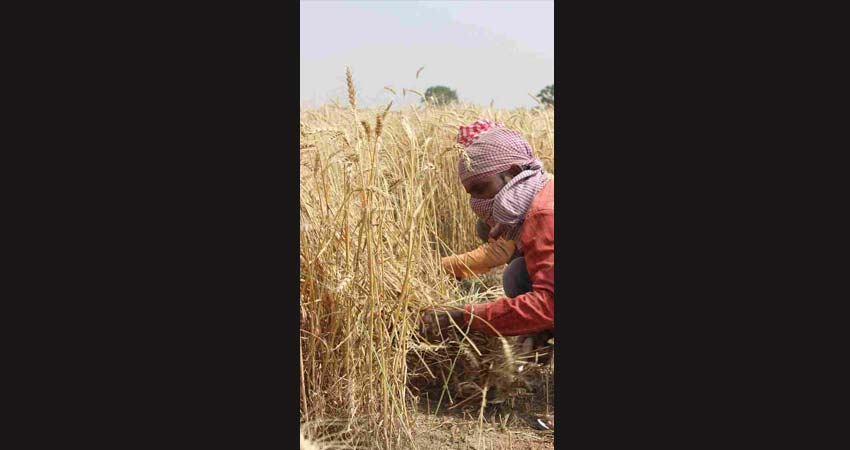
In both India and China, the demand for surface and groundwater used in farming has been climbing steadily over the years. Between 1980 and 2015, China’s irrigation water use jumped by 70 percent, and India’s shot up by a massive 83 percent. In comparison, the US saw only a modest increase of 22 percent.
What’s driving this? A shift in where and how crops are grown, along with water use that’s no longer closely tied to how productive the land is. Today, irrigation takes up most of the blue water—about 95 percent in India, 80 percent in China, and 81percent in the US. That’s a huge chunk going just to grow crops.
India’s growing water crisis has a lot to do with the crops it chooses to grow. Rice, wheat, and sugarcane alone are guzzling up more than two-thirds of the country’s surface and groundwater—29 percent goes to rice, 26 percent to wheat, and 14 percent to sugarcane.
China is in a similar boat, with wheat (20 percent), rice (19 percent), and maize (15 percent) using up over half of its total blue water. In the US, alfalfa and maize are the top water consumers, taking up 25 percent and 22 percent of the total, respectively. A handful of crops are placing a massive strain on already overstretched water supplies.
By Aarti Kelkar Khambete
(https://www.indiawaterportal.org/agriculture/farm/from-india-to-the-usa-the-growing-water-crisis-in-the-breadbaskets-of-the-world)
(The content of this article reflects the views of writers and contributors, not necessarily those of the publisher and editor. All disputes are subject to the exclusive jurisdiction of competent courts and forums in Delhi/New Delhi only)





















Leave Your Comment