


As our Honourable Prime Minister Shri Narendra Modi ji completes 75 years of an extraordinary life, we find ourselves at a juncture that invites both reflection and anticipation. His journey
—from the dusty lanes of Vadnagar to the global stage as India’s Prime Minister—has been marked by unwavering resolve, transformative leadership, and a deep-rooted commitment to public service. For Gujarat, where his political career began, and for India, which he now steers with vision and vigor, this milestone is not merely chronological—it is symbolic of a legacy that continues to shape the destiny of a nation.
As the Chief Minister of Gujarat, I write this not merely as a political successor, but as a witness to the enduring legacy of a leader whose ideas, values, and actions have redefined governance. This article stands as both a tribute and a testament—reflecting on the milestones of his journey and the prospects that lie ahead.
The Genesis of a Leader
Shri Narendra Modi ji’s appointment as Chief Minister of Gujarat on October 7, 2001, was a moment of quiet revolution. At 51, he entered electoral politics for the first time, inheriting a state reeling from the aftermath of a devastating earthquake, economic uncertainty, and social unrest. Yet, within months, his leadership began to reveal a rare blend of administrative acumen and visionary thinking.
He did not merely assume office—he embraced responsibility. His first meetings with bureaucrats were marked by attentive listening, sharp observation, and a clear message: governance must be people-centric, transparent, and accountable. This ethos would go on to define his tenure and inspire a new generation of public servants.
Gujarat’s Transformation: 2001–2014
Shri Narendra Modi ji’s 13-year tenure as Chief Minister was a period of unprecedented transformation. His governance model—rooted in the Panchamrut philosophy of Jan Shakti (human resource), Jal Shakti (water power), Gyan Shakti (knowledge power), Urja Shakti (energy power), and Raksha Shakti (security power)—became the cornerstone of Gujarat’s development narrative.

Governance Reimagined
One of his earliest innovations was SWAGAT, an online grievance redressal system that empowered citizens to directly engage with the government. He emphasized e-governance long before it became a national priority. Officers were encouraged to step out of their offices and connect with people on the ground—a shift from transactional to transformational governance.
His leadership style was methodical yet empathetic. He believed in empowering officials, trusting institutions, and fostering a culture of performance and accountability.
Infrastructure as the Engine of Growth
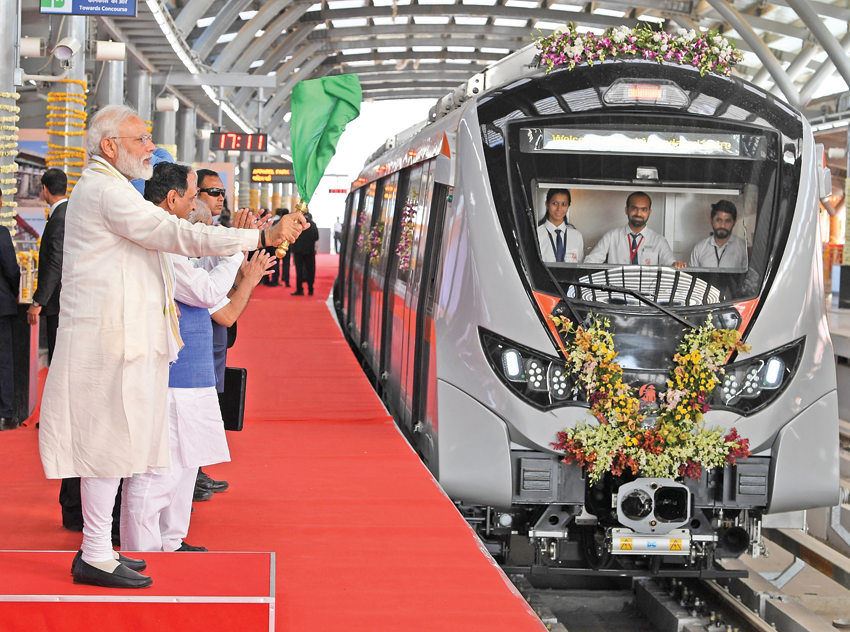
Under the leadership of Shri Narendra Modi ji, Gujarat witnessed a sweeping transformation in infrastructure development. More than 1.3 lakh kilometers of all weather roads were constructed, ensuring connectivity to even the most remote villages and tribal regions. In the railways sector, metro projects were initiated in Ahmedabad, Gandhinagar, and Surat, while the Kevadiya rail link to the Statue of Unity and the ambitious Ahmedabad-Mumbai bullet train project exemplify his forward-looking vision. Gujarat now has 17 operational airports, including four international ones, further enhancing the state's global connectivity. On the maritime front, Gujarat operates 49 ports that handle 40% of India’s cargo, establishing the state as the nation’s principal gateway to the seas. These infrastructure advancements were not limited to physical connectivity alone—they served as instruments of economic empowerment, social inclusion, and strategic positioning for Gujarat’s long-term growth.
Agricultural Renaissance
Despite its semi-arid geography, Gujarat emerged as a national model for agricultural innovation through a series of strategic interventions. The expansion of the Narmada canal network to over 69,000 kilometers brought much-needed irrigation to drought-prone and tribal regions, transforming previously barren lands into cultivable fields. In 2003, the introduction of Soil Health Cards empowered farmers with scientific insights, enabling them to make informed decisions about crop selection and fertilizer application. Initiatives such as Krishi Mahotsav and the SAUNI Yojana not only celebrated the role of farmers but also ensured reliable water access to parched areas. Collectively, these efforts led to a significant rise in agricultural productivity, enhanced farmer incomes, and a substantial improvement in rural prosperity across the state.
Energy Revolution
Gujarat’s journey from being power-deficient to becoming power-surplus stands as a compelling example of visionary energy planning under Shri Narendra Modi ji’s leadership. The Jyotigram Yojana brought about a transformative change by ensuring uninterrupted, 24x7 three-phase electricity across more than 18,000 villages, significantly improving the quality of rural life. In 2012, the launch of the Charanka Solar Park, one of the Asia’s largest at the time, marked a pioneering step toward renewable energy, establishing Gujarat as a frontrunner in solar power generation. Further solidifying this leadership, the Hybrid Renewable Energy Park in Kutch—now the largest of its kind in the world—embodies Shri Narendra Modi ji’s enduring commitment to sustainable development. Through these initiatives, Gujarat has firmly positioned itself as a national leader in both conventional and renewable energy sectors.
Social Transformation: Inclusive and Empowered Gujarat Education as a Catalyst
Shri Narendra Modi ji firmly believed that education is the cornerstone of empowerment and societal progress. To translate this vision into action, he launched initiatives such as the Shala Praveshotsav and the Kanya Kelavani Rath Yatra, which mobilized communities across Gujarat to enroll children—particularly girls—in schools, thereby fostering a culture of inclusive education. Recognizing the importance of data-driven learning, he established the Vidya Samiksha Kendra, a world-class command center designed to monitor educational outcomes and enhance teaching effectiveness. Under his leadership, the number of universities in Gujarat grew from 21 in 2001 to 108 today, including specialized institutions like Raksha Shakti University and the Gujarat Forensic Science University. These efforts not only elevated literacy rates but also cultivated a skilled and future-ready workforce, positioning Gujarat as a leader in educational innovation.
Health for All
Gujarat’s health sector witnessed unprecedented modernization under the visionary leadership of Shri Narendra Modi ji. The introduction of the 108 Ambulance Service revolutionized emergency medical response across the state, saving countless lives through timely intervention. Targeted nutrition campaigns were launched to combat malnutrition among women and children, significantly improving health outcomes in vulnerable communities. In the realm of medical education, the number of MBBS seats expanded dramatically from 1,275 to 7,050, while the count of medical colleges increased from 10 to 40, ensuring greater access to professional healthcare training. Additionally, the Global Center for Traditional Medicine, currently under construction in Jamnagar, reflects India’s growing influence in holistic health and its commitment to integrating traditional practices with modern medicine. Collectively, these initiatives have made healthcare in Gujarat more accessible, affordable, and inclusive for all sections of society.
Women Empowerment
Shri Narendra Modi ji’s tenure in Gujarat was distinguished by a series of pioneering initiatives aimed at empowering women across social and economic spheres. The formation of Sakhimandals, or Self-Help Groups, played a transformative role in fostering economic independence and entrepreneurship among women, especially in rural areas. Programs like the Chiranjeevi Yojana and the Khilkhilat Ambulance service ensured safe maternity care and reliable postnatal support, significantly improving maternal health outcomes. His decision to implement 50% reservation for women in local governance bodies led to an impressive 52% representation, reshaping the leadership landscape at the grassroots level. Additionally, the establishment of Women Industrial Parks in Sanand and Halol provided dedicated spaces for women-led enterprises to thrive. Shri Narendra Modi ji’s commitment to “Nari Shakti” was not confined to rhetoric—it was deeply embedded in policy frameworks and institutional reforms that continue to uplift and empower women across Gujarat.
Cultural Revival and Global Recognition
Shri Narendra Modi ji’s profound respect for India’s cultural heritage sparked a renaissance that revitalized Gujarat’s identity and elevated it on the global stage. The Rann Utsav, a vibrant celebration of local art and culture, transformed the Kutch region into a world-renowned tourism destination, attracting visitors from across the globe. Under his leadership, Gujarat earned prestigious UNESCO World Heritage recognition for sites such as Rani Ki Vav, Dholavira, and the historic city of Ahmedabad, affirming their global cultural significance. The inclusion of Garba in UNESCO’s list of Intangible Cultural Heritage further showcased Gujarat’s rich folk traditions to an international audience. Standing tall at 182 meters, the Statue of Unity serves as a monumental tribute to Sardar Vallabhbhai Patel and a powerful symbol of national unity. Through these visionary initiatives, Shri Narendra Modi ji not only safeguarded Gujarat’s cultural legacy but also projected its timeless values and artistic excellence to the world.
Industrial Growth and Global Identity
Gujarat has firmly established itself as India’s industrial powerhouse, driven by a series of landmark initiatives and strategic developments. The Vibrant Gujarat Summit evolved into a globally recognized platform for investment and innovation, attracting participation from leading economies and multinational corporations. GIFT City, India’s first International Financial Services Center, has emerged a thriving hub for fintech enterprises and global capital flows, reinforcing Gujarat’s position in the financial sector. The Surat Diamond Bourse, now the world’s largest office building, stands as a testament to the state’s entrepreneurial dynamism and leadership in the gems and jewelry industry. Furthermore, Gujarat is the only state in India with four upcoming semiconductor manufacturing plants, underscoring its emergence as a critical node in the country’s technology and defense ecosystems. Collectively, these developments have made Gujarat a preferred destination for global investors, innovators, and industry leaders seeking sustainable growth and strategic long-term partnerships.
Environmental Stewardship
Shri Narendra Modi ji’s foresight laid the foundation for a model of sustainable development that integrated environmental stewardship with inclusive growth. Gujarat became the first state in India to establish a dedicated Climate Change Department, signaling a proactive and institutional commitment to ecological consciousness. In a unique blend of culture and conservation, 23 Sanskrutik Vans—cultural forests—were developed across the state, preserving biodiversity while celebrating heritage. Water conservation efforts were equally innovative and inclusive, with women-led water committees playing a central role in managing water resources at village level. Shri Narendra Modi ji’s approach to development was distinctly holistic, ensuring that economic progress was always balanced with ecological responsibility and long-term sustainability.
|Legacy and Continuity
Even after assuming office as Prime Minister in 2014, Shri Narendra Modi ji’s legacy from Gujarat continued to influence and shape national policy frameworks. Flagship initiatives such as PM-JAY, Khelo India, Swachh Bharat, and Nal Se Jal drew direct inspiration from pioneering schemes originally implemented in Gujarat, reflecting the scalability and success of his governance model. During India’s G20 Presidency, Gujarat hosted 18 high-profile meetings, underscoring its global stature, organizational excellence, and cultural hospitality. Major national infrastructure projects—including the Delhi-Mumbai Expressway, the Vande Bharat Trains, and AIIMS Rajkot—also bear the imprint of Gujarat’s developmental priorities and strategic planning. Through his leadership, Shri Narendra Modi ji has ensured that Gujarat remains not only relevant but central to India’s broader growth narrative.
11 Years: A Decade of Transformation and Inclusive Growth
2025 marks eleven years of Prime Minister Narendra Modi ji’s leadership—a period defined by transformative governance, inclusive growth, and a bold reimagining of Bharat’s global identity. Since 2014, PM Narendra Modi ji has championed Vikasvaad—development-centric politics—propelling India from the world’s 11th to 4th largest economy.
This decade witnessed sweeping progress across sectors: defence, commerce, aviation, railways, ports, and digital infrastructure. Eastern India, especially the North-East, saw unprecedented development. Bharat’s foreign relations reached new heights, reflecting its rising global stature.
Guided by the Sankalp of “India First,” the Narendra Modi ji’s government delivered on ambitious goals—from the world’s largest Covid-19 vaccination drive to tap water access for millions. Over 25 crore citizens rose above the poverty line, aided by tech-driven welfare delivery and elimination of middlemen.
Empowerment replaced entitlement. The JAM Trinity (Jan Dhan, Aadhaar, Mobile) enabled direct, transparent, and corruption-free benefits. Schemes like PM Garib Kalyan Anna Yojana, PM Awas Yojana, and Ujjwala Yojana ensured food, housing, clean fuel, and sanitation for the poorest. Over 52 crore MUDRA loans empowered grassroots entrepreneurs, especially women.
For farmers, the “Beej Se Bazaar Tak” model supported agriculture end-to-end. PM-Kisan and PM Fasal Bima Yojana provided income and insurance, while India’s millet revolution gained global recognition with the UN’s 2023 declaration.
Women-led development became a cornerstone. From banning Triple Talaq to expanding maternity leave, Nari Shakti moved from margins to leadership. Over 35 crore women accessed MUDRA loans, and crores of homes were registered in their names.
Youth empowerment surged through NEP 2020, Startup India, Skill India, and Agnipath. India now boasts one of the world’s largest startup ecosystems and a record expansion of IITs, IIMs, and AIIMS.
Globally, Narendra Modi ji redefined diplomacy—leading Vaccine Maitri, Operation Sindoor, and the International Solar Alliance. India’s G20 presidency, themed Vasudhaiva Kutumbakam, culminated in the African Union’s inclusion—an emblem of India’s global leadership.
Digital transformation has been pivotal. `44 lakh crore was transferred via DBT, saving `3.5 lakh crore by curbing leakages. Platforms like BHIM, DigiLocker, and GeM revolutionized transactions and governance, with DigiLocker alone serving 54 crore users.
As Bharat enters Amrit Kaal, Narendra Modi ji’s 11-year journey reflects a resilient, aspirational, and self-reliant nation—ready to lead the world.
A Life of Purpose
Shri Narendra Modi ji’s journey from Vadnagar to Varanasi, from CM to PM, is a testament to what conviction, clarity, and compassion can achieve. At 75, he stands not just as a leader but as a symbol of India’s aspirations.
As Chief Minister of Gujarat, I see his legacy not in monuments or metrics alone—but in the millions of lives transformed, the dreams awakened, and the future he continues to shape.
Let us celebrate Narendra Modi ji @75 with prospects of a brighter, bolder, and more inclusive India.
Looking Ahead: Prospects Beyond 75
As Shri Narendra Modi ji enters his 75th year, his vision for Viksit Gujarat and his mantra—“Viksit Bharat, Sashakt Bharat”—are not mere slogans, but a roadmap. For Gujarat, this means:
> Becoming a global hub for green energy, semiconductors, and AI-driven governance.
> Deepening social equity through tech-enabled inclusion and skill development.
> Preserving cultural heritage while embracing innovation and global partnerships.
> Strengthening infrastructure to support a $1 trillion economy.

By Bhupendra Patel
(The writer is Chief Minister of Gujarat.)




















Leave Your Comment