


The Indian National Congress (INC) was founded in 1885, by A O Hume, a retired British civil servant, notable Ornithologist, and British political reformer who worked in British India. He is known as ‘the Father of Indian Ornithology.’ He supported the idea of self-governance by the Indians. The Congress was formed to create a platform for civic and political dialogue with the British Raj. Its first President W C Banerjee was an Indian Barrister. In the first two decades of it's formation, the party did not express desire for independence from the British Empire. In 1915, Mahatma Gandhi’s return from South Africa marked a pivotal moment for the Congress. His leadership and the philosophy of nonviolent resistance, exemplified in the Champaran Satyagraha movement against the Britishers in 1917, galvanized the Indian freedom movement and he remains the spiritual leader and icon of the country. In 1924, Mahatma Gandhi became the President of Congress, his Satyagraha art of resolution led him to the support of popular leaders including Jawahar Lal Nehru, Sardar Patel, Maulana Azad, C. Rajagopalachari, Subhash Chandra Bose, Khan Abdul Gafar Khan, Jai Prakash Narain and many others. He led the freedom struggle successfully and India became independent in 1947. Subsequently, Congress dominated Indian politics for several decades.
The country has seen about 100 Presidents of Congress since its inception including W. C. Bannerjee, Dadabhai Nauroji, Gopal Krishna Gokhale, Madan Mohan Malviya, Annie Besant, Maulana Azad, Sarojini Naidu, Subhash Chandra Bose, Motilal Nehru, K Kamraj, Jawahar Lal Nehru, Indira Gandhi, Rajiv Gandhi, Sonia Gandhi, Rahul Gandhi and Mallikarjun Kharge.
This 139-year-old party has its roots in India’s freedom struggle. It has seen every change in modern India’s political landscape and itself been through several transformations. Interestingly, it also appears to be the nursery for other political parties, creating no less than 70 parties since independence. The first one was Kisan Mazdoor Party led by Jivatram Kripalani in 1951 and the last was Democratic Progressive Azad Party led by Ghulam Nabi Azad in 1922. After P V Narsimha Rao stepped down and was succeeded by Sitaram Kesari as the Congress President in 1996, the following years were difficult for the party. Kesari was removed by the Congress Working Committee and Sonia Gandhi became the President of the party in 1998. In 1999, Sharad Pawar, Tariq Anwar and P. A. Sangma opposed the right of Italian born Sonia Gandhi to lead the party and they formed the Nationalist Congress Party (NCP) popular mainly in Maharashtra. In 1998, Mamata Banerjee quit the Congress and established the Trinamool Congress (TMC). She won the West Bengal assembly elections and became the Chief Minister in 2011. After the death of YSR Reddy, a popular Congress leader of Andhra Pradesh, his son YS Jaganmohan Reddy quit the Congress and founded YSR Congress in 2012. The party contested the assembly elections and formed the government led by YS Jaganmohan Reddy, in Andhra Pradesh. Ghulam Nabi Azad, former Chief Minister of Jammu and Kashmir and former Union Minister left the Congress and established Democratic Progressive Azad Party in 2022. Since 2014, when BJP led NDA came to power at the centre, the INC has received blow after blow. It has lost many states and the constituencies held by the Congress stalwarts for decades. The party has not just lost elections, both general and assembly, it has more worryingly seen a steady drain of its members, some of whose parents and grandparents were associated with the Congress. They have left to join other parties, form their own parties or to join the BJP, an ideological opponent to Congress. The last decade has seen the party passively cede state after state where it once reigned supreme. We have seen many Congress stalwarts leaving the party in the recent past and most of them are with the BJP.
Himanta Biswa Sarma, a popular Congress leader from Assam joined the BJP in 2015 and is presently heading the BJP government in Assam. Jyotiraditya Scindia, a popular Congressman from MP, joined the BJP in 2020. Presently, he is a Rajya Sabha member and Union Minister. The royal scion is the son of Late Madhav Rao Scindia, a former Union Minister. Capt. Amarinder Singh, former royal and Indian Army veteran who served as Chief Minister of Punjab resigned from the Congress in September 2021 and joined the BJP. Jitin Prasad, a popular young Congress leader from UP and a former Union Minister, joined the BJP in June 2021. Ashwin Kumar, a former Union Minister, quit the Congress in 2022. Sunil Jakhar, a Congress veteran, and son of Balram Jakhar former speaker of Lok Sabha, crossed over to the BJP in 2022 and assumed the office of state BJP president. RPN Singh, Congress leader from eastern UP and former Union Minister, joined the BJP in January 2022 and is now a Rajya Sabha member. His father Late CPN Singh was also a Union Minister from Congress. Gujarat’s popular young Patidar Congress leader Hardik Patel switched over in 2022 and is now a sitting BJP MLA. Anil Antony, young Congress leader and son of Congress veteran A K Antony from Kerala left Congress in 2023 and is now contesting the Lok Sabha election on BJP ticket. Milind Deora, a young Congress leader from Maharashtra and former Union Minister broke his family’s 55year association with the Congress in January 2024 and joined the Shiv Sena (Shinde). His father was also a Lok Sabha member. Ashok Chavan, a strong Congress leader and former Chief Minister of Maharashtra joined the BJP in February 2024, and is now a Rajya Sabha member. Recently, Boxer Vijender Singh and Gaurav Ballabh left Congress and Joined the BJP.
After the assassination of Rajiv Gandhi in 1991, Sonia Gandhi refused to be the President of the Congress and Narasimha Rao became the Prime Minister with Manmohan Singh as the Finance Minister. They laid the foundation of the liberalization of the Indian Economy which proved to be a milestone in the history of independent India. I understand that too much dependence on Nehru-Gandhi family is not desirable any more. Sonia Gandhi was the Congress President from 1998 to 2017 and again from 2019 to 2022.Rahul took charge from 2017 to 2019. Kharge has been the President since 2022 but the power remains with Rahul, Sonia, and Priyanka. Rahul Gandhi has not achieved any success in politics in the last 10 years and the party spokespersons on TV debates struggle to defend him.
It is felt by a section of political analysts that Rahul Gandhi should take a break for a few years and the Congressmen from outside this family run the show. There is no dearth of capable leaders in the party. The exodus of senior and seasoned politicians along with young energetic leaders must be arrested. The grand old party does not look grand, it just looks old. For a vibrant democracy strong opposition is the necessity. The Congress has played a historic role in India’s journey to independence and political development. The party must undergo a transformation that transcends dynastic politics and embraces a more inclusive and dynamic leadership in the interest of the party and the country.
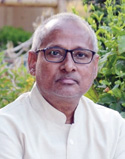
By Manoj Dubey
Principal (Retd.)
Delhi Public Schools
(The content of this article reflects the views of writers and contributors, not necessarily those of the publisher and editor. All disputes are subject to the exclusive jurisdiction of competent courts and forums in Delhi/New Delhi only)



















Leave Your Comment