


The Election Commission of India (ECI) was established on 25th January 1950, under Article 324 of the Constitution, to ensure free and fair elections in the country. It is an autonomous constitutional authority responsible for conducting elections to the Parliament, State Legislatures, President and Vice President. The first Chief Election Commissioner (CEC) was Sukumar Sen who oversaw India’s first general elections in 1952, a massive logistical challenge with 17.6 crore voters. The ECI successfully conducted elections despite limited resources, setting a strong foundation for democracy.
Malpractices During Elections
Although the Elections in India are largely free and fair, they are often marred by various malpractices that undermine democratic values. These unethical practices distort the will of the people and weaken public faith in the electoral process. The common malpractices include, booth capturing (when goons take control of polling stations to cast false votes), voter intimidation (threatening the voters to support for a particular candidate), vote buying (through the distribution of cash, liquor, or gifts), electoral violence, and the misuse of government machinery by ruling parties.
Electoral Reforms
In 1989, the ECI became a multi member body with the addition of two election commissioners to manage increasing complexities. The Indian Voter Id Card (officially known as Electoral Photo Identity Card (EPIC)) was first introduced in 1993 during the tenure of CEC T.N. Seshan. He is widely credited with revolutionizing the electoral process and restoring the credibility of the Election Commission. Prior to his tenure, elections in India were often plagued by widespread malpractices and administrative apathy. Seshan brought firmness, discipline, and a rule based approach to conducting elections. Electronic Voting Machines (EVMs) came into effect from 1998, when M.S. Gill was the CEC. In 2013, Voter Verifiable Paper Audit Trail (VVPAT) was introduced during the tenure of CEC V. S. Sampat. It contains the name and party affiliation of the candidates for whom the vote has been cast.
Judicial Intervention
The Indian judiciary has played a crucial role in safeguarding the integrity of the electoral process. Several landmark judgments have helped ensure transparency and fairness:
1. In 1975, the Allahabad High Court declared Prime Minister Indira Gandhi’s election null and void due to corrupt practices in her 1971 Rai Bareli campaign. However, the Supreme Court later overturned the decision.
2. In 2002, the Supreme Court made it mandatory for all candidates to disclose criminal records, assets and educational qualifications bringing much needed transparency to the nomination process.
3.In 2013, the Supreme Court ruled that elected representatives convicted of serious crimes would be disqualified immediately, preventing criminals from holding office for extended periods.
4.The same year, the court introduced NOTA (None of the Above), giving voters the right to reject all, thus enhancing voter choice.
5. Courts have also acted against hate speech, religious or caste-based campaigning and have upheld the authority of the Election Commission in regulating elections.
Recent SIR Controversy in Bihar
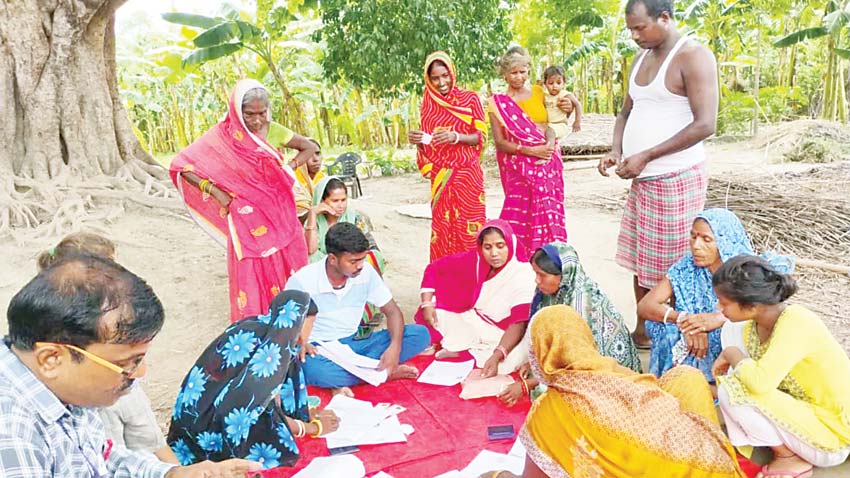
On 24th June 2025, the ECI has launched a Special Intensive Revision (SIR) of Bihar’s electoral rolls, the first such exercise in the state since 2003. Designed to update and clean the electoral rolls, it involves door-to-door enumeration by Booth Level Officers (BLOs), with political party participation via Booth Level Agents (BLAs). This exercise is aimed to detect the number of deceased, migrant, duplicate, and illegal electors.
However, the SIR process has drawn strong criticism from major opposition leaders from Congress, RJD, TMC and Left parties. They have called it devious and impractical, and a possible attempt to disenfranchise the poor, migrants, and marginalized communities, especially given the June-July monsoon timing ahead of the Bihar elections, and exclusion of Aadhar, EPIC, and ration cards as valid documents. The involvement of local police and intelligence agencies in this process has raised concerns. Critics claim that it creates fear among voters, especially in minority dominated areas, and undermines the neutrality of the ECI, alleging the process favors the ruling BJP led NDA and weakening their electoral base.
Opposition MPs protested in Parliament and the opposition MLAs did the same in Bihar assembly, alleging it is an affront to electoral democracy. The ECI has defended the revision, citing rapid urbanization, frequent migration, and inclusion of foreign illegal immigrants. The BJP has backed the exercise, calling it a need to ensure the legitimacy of electoral rolls.
These opposition parties filed petitions in the Supreme Court, which on 10th July refused to stay SIR, but directed the ECI to address the concerns. ‘In our prima facie view, since the list is not exhaustive, it would be in the interest of justice for ECI to also consider Aadhar card, Electoral Photo Identity Card issued by the Election Commission, and the ration card’, the bench observed. The court questioned the timing of the SIR, observing that while such exercise was not objectionable in itself, it should ideally have been carried out earlier, considering the Bihar assembly elections are scheduled for November 2025.
On 21st July, the ECI filed an affidavit defending Special Intensive Revision (SIR). It asserted that the exercise is essential to restore the public confidence in the electoral process and ensure the inclusion of all eligible voters. It further said ‘apart from ensuring that no eligible elector is left out of the rolls, special attention is being given to marginalized and vulnerable communities’. Also defending the decision to exclude Aadhar as valid document, the ECI maintained that Aadhar is not a proof of citizenship as required under article 326 of the constitution. The poll body, however, clarified that the list of acceptable documents used for revision was indicative and not exhaustive. It also mentioned that over 1.5 lakh BLAs appointed by the political parties were working with BLOs to reach every household.
The first phase of SIR ended on 26th July 2025. The new draft electoral roll is set to be published on 1st August followed by month long claims and verification process. The final electoral roll will be published on 30th September for the assembly polls, scheduled later this year. According to reports, 65 lakh names might be excluded, which includes 22 lakh deceased, 7 lakh registered in multiple locations, and 35 lakh permanent migrants or untraceable voters. An additional 1.2 lakh enumeration forms remained pending as the deadline passed. If all these are excluded from the final rolls, this may be the largest single voter exclusion in any Indian state.
On 28th July, the Supreme Court again refused to halt the publication of the draft electoral rolls but reminded the ECI that the ongoing SIR must aim for ‘mass inclusion, not exclusion’ and told the poll body to consider Aadhar and the voter ID cards as valid documents. The ECI replied that the list is only a draft, and the process will remain open for ‘additions and corrections’. The Court agreed with the poll panel and said that the court could always intervene if it found illegality in the process.
This exercise represents the first phase of a planned nationwide electoral roll revision, with five other states-Assam, West Bengal, Tamil Nadu, Kerala, and Puducherry, scheduled for similar drives before 2026 elections. A nationwide rollout schedule is expected once the Supreme Court hearings conclude.
Conclusion
The SIR process is essential to ensure that the voter list is genuine and accurate, allowing only the eligible voters to participate in elections. As an autonomous constitutional body, the ECI must be trusted to conduct free and fair elections. However, the timing of the process, just ahead of the polls, invites legitimate criticism. The deletion of the deceased, duplicate, permanent migrants, and untraceable is necessary, but transparency and fairness must be upheld. The ECI should brace for questions on decline in voting population, deletions in electoral rolls. The SIR controversy is playing out across three fields – political, legal, and institutional. Opposition parties accuse the ECI of using the voter list as a tool to influence the outcomes. In this sensitive climate, ECI’s actions in the coming days will be keenly watched. The right to vote is a cherished right, especially for the poor and oppressed who consider it as the only weapon to demand accountability from the rulers, denial of this right even on technical ground is likely to be viewed with grief and anger. The ECI must act with caution, uphold its constitutional mandate, and ensure inclusion without bias. The political parties on their part must cooperate and help build faith in the democratic process.

By Manoj Dubey
Principal (Retd.)
Delhi Public Schools
(The content of this article reflects the views of writers and contributors, not necessarily those of the publisher and editor. All disputes are subject to the exclusive jurisdiction of competent courts and forums in Delhi/New Delhi only)



















Comments (3)
Very informative article and very nicely written. ????
S
ECI द्वारा SIR का संचालन देश में साफ सुथरा चुनाव प्रक्रिया के लिए अनिवार्य है। ECI के कार्य प्रणाली को माननीय सर्वोच्च न्यायालय द्वारा सहयोग मिलने से देशवासियों को न्याय तंत्र पर भरोसा बढ़ा है।आशा है देश के विकास में सभी तंत्र सकारात्मक सहयोग करेंगे तथा आम नागरिक भी अपनी जिम्मेदारियों को बखूबी निभाएंगे। प्रस्तुत लेख में लेखक ने चुनाव तंत्र की विस्तृत जानकारी दिया है, इसके लिए वह धन्यवाद के पात्र हैं।
D
Election Commission of India established on 25th January 1950 has seen many developments from single person to multi member commission. Mr. T. N. Sheshan was the most prolific and dynamic commissioner who introduced electoral photo identity card for voter. Later M S Gill introduced electronic voting machines for fast, free and fair election. On 25th June, 2025, ECI has introduced el Special Intensive revision for Bihar electoral for that a huge protest is going on. The author has chronologically explained the issue very nicely. Congratulations to him.