


Odisha, located in the eastern part India, is the eighth largest state by area and the eleventh largest by population, with over 41 million inhabitants. The state has the third largest population of Scheduled Tribes in the country. Odisha is surrounded by the states of Andhra Pradesh, Chhattisgarh, Jharkhand, and West Bengal, and has a coastline of 485 km along the Bay of Bengal in the Indian Ocean. Harekrushna Mahatab was the first Chief Minister of the state and the capital was shifted from Cuttack to Bhubaneswar. Presently the state is divided into thirty districts. The state has a unicameral legislative assembly with 147 seats, and elects 21 members to the Lok Sabha and 10 to Rajya Sabha.
The state is famous for its historical places and scenic beauty, offering a wide range of tourist attractions from coastlines to pilgrimage sites. The Puri beach festival and Rath Yatra of Lord Jagannath attract large number of visitors annually. Odisha boasts a diverse selection of tourist destinations for travellers worldwide, and is well known for its historical monuments and magnificent nature. The Sun Temple at Konark is an example of rare exquisite site one can find. The Jagannath Temple in Puri is one of the four dhams in Sanatan dharma. The Chilika lake, a designated ‘Ramsar Site’, is the largest brakish water lagoon in Asia, near Puri, home to diverse flora and fauna. It is one of the most delicate beauties Odisha has after Sun Temple and Jagannath Temple. The state is rich in mineral resources including chromite, bauxite, manganese, graphite, nickel, and iron ore. Major industries in the state include Hindalco, SAIL, NALCO, Tata Steel, Jindal Steel and Power, Paradeep Phosphates and Talcher Fertilizers. Hirakud Dam and Machkund hydroelectric project, on Mahanadi River, provide flood control, irrigation, and power to the state.
Biju Patnaik served as the Chief Minister twice and also as a central minister. His son Naveen Patnaik formed Biju Janta Dal (BJD) in 1997 and formed an alliance with the BJP led NDA and won the 2000 assembly elections to become the 14th Chief minister of the state. In 2009, he walked out of the NDA after severing ties with the BJP. His mild mannerism, ‘stand against corruption’ and pro-poor policies resulted in the development of huge support base in Odisha, which voted him to power in last five consecutive terms and led the state for 24 years to become the longest serving Chief Minister of the state. His spartan personal lifestyle and detachment from material possession made him more popular.
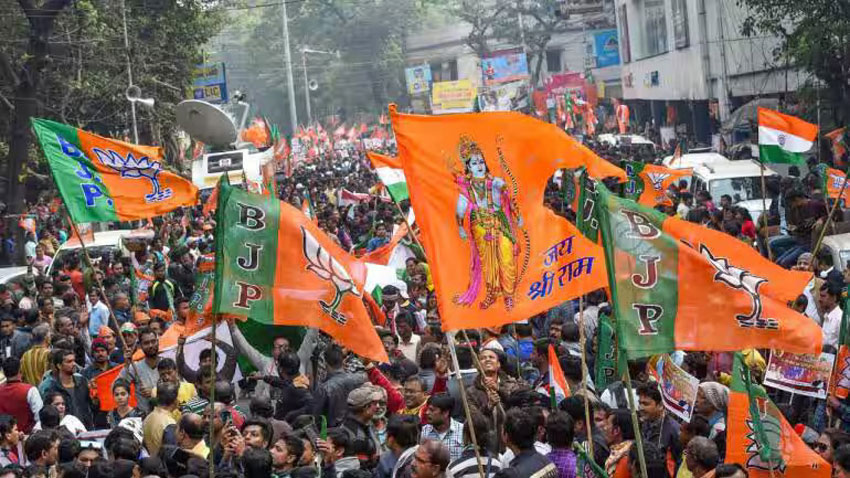
17th Legislative Assembly Elections were held in the state from 13th May to 1st June 2024 to elect 147 members. The BJP secured a majority with 78 seats, ending the 24 yearlong BJD rule under Naveen Patnaik. For the first time, the BJP formed government on its own with Mohan Charan Majhi, a popular tribal leader, as the 15th Chief minister of the state. In 2024 elections, the BJP secured 40.07% vote share winning 78 seats. Whereas the BJD got slightly more votes than the BJP with 40.22% share and won only 51 seats. In 2019 elections, the BJP vote share was 32.49% with 23 seats, and the BJD secured 44.41% votes with 112 seats.
The BJD manifesto included promises such as youth empowerment, free electricity to farmers, zero interest loan to businesswomen, tribal empowerment, infrastructure and sports development, food security and good governance. Whereas the BJP manifesto focussed on initiatives like Samrudh Krishka Niti under which the paddy crop will receive Rs 3100 per quintal, Subhadra Yogana which would provide Rs 50,000 cash voucher to women to develop fishing industry, increased road connectivity, providing 3.5 lakh jobs by 2029, increased tourism, and reduced corruption. BJP decisively defeated BJD in both the recently concluded assembly and general elections (securing 20 out of total 21 seats in the Lok Sabha). It was widely believed that the BJP will return to power, albeit with reduced number of seats. Naveen babu was a few days away from becoming the longest serving CM after former Sikkim CM Pawan Kumar Chamling.
Naveen Patnaik’s defeat was attributed to several factors, including the influence of his close aide V K Pandian, a Tamil Nadu born retired IAS officer, who worked with him for over two decades. Pandian gained the reputation of taking all the decisions in the government. He was given more importance in the BJD than any other party leader or minister. Naveen and Pandian, only these two were at the forefront of the election campaign. The BJP capitalized on anti-Pandian sentiments and portrayed him, an outsider, as the heir of Naveen Patnaik. This led to the declaration by Naveen Patnaik that Pandian will not be his successor, but it was too late and the BJD could not mitigate its impact in time. Another significant issue that worked against the BJD was the controversy surrounding the missing key to Ratna Bhandar, the treasure chamber inside Jagannath Puri temple. The missing key has been a prominent issue in the state and the BJP highlighted the issue in its favour. Naveen Patnaik also faced anti-incumbency and according to media reports, he is not keeping good health. He will always be remembered in the history of Odisha for his 24-year tenure as the CM.
Now the new BJP government led by Mohan Charan Majhi has taken charge, it will not be easy for the first time CM to keep all the factions in the party united and facing the BJD in the opposition for the first time. He will face the onerous task of matching Naveen Patnaik’s legacy. The promises made during the election campaign such as increasing the minimum support price (MSP) of paddy to Rs 3100 per quintal, Subhadra Yojana, filling of vacancies in the government, and creating ‘Lakhpati Didis’ will require a huge budgetary support. Presenting the next budget accommodating these schemes will be a daunting task. The state is rich in mineral resources and has tremendous growth potential in all the areas, particularly in tourism. It is anticipated that the promises made in the manifesto will be implemented without any discrimination and the basic issues of the people will be resolved.
By Manoj Dubey
Principal (Retd.)
Delhi Public Schools
(The content of this article reflects the views of writers and contributors, not necessarily those of the publisher and editor. All disputes are subject to the exclusive jurisdiction of competent courts and forums in Delhi/New Delhi only)




















Leave Your Comment