


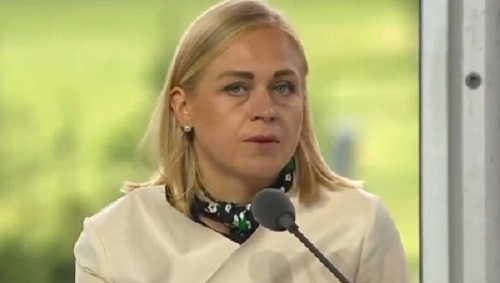
Finnish Foreign Minister Elina Valtonen has defended India’s purchase of Russian oil, stating that New Delhi acted within the framework established by Western nations through the price cap mechanism.
Speaking alongside External Affairs Minister S. Jaishankar during a meeting in Finland, Valtonen explained that the price cap policy was designed to achieve two objectives: maintain the flow of Russian oil to global markets and limit Moscow’s revenues from energy exports. She noted that India’s oil purchases complied with these rules and therefore aligned with the intended purpose of the policy.
“The objective of the price cap was to ensure that oil continues to flow into the global market while reducing Russia’s profits,” Valtonen said, indicating that India’s actions were consistent with the framework set by Western countries.
Jaishankar, meanwhile, strongly pushed back against criticism from some European quarters over India’s energy imports from Russia. He argued that the geopolitical and economic circumstances created by Western sanctions had significantly reshaped global energy markets.
According to Jaishankar, European countries increased their purchases of oil and gas from alternative suppliers, particularly in the Middle East, after imposing sanctions on Russia. This shift, he said, reduced the availability of affordable energy supplies for other countries, forcing India to seek alternative sources to meet its growing energy demands.
The External Affairs Minister stressed that India’s primary responsibility is to ensure energy security for its population and economy. He reiterated that New Delhi made decisions based on affordability and national interest while remaining compliant with international regulations.
Jaishankar also criticised what he described as changing positions by the United States regarding Russian oil. He pointed out that during the early stages of the Ukraine conflict, Washington had encouraged countries, including India, to continue purchasing Russian oil to help stabilise global energy markets and prevent supply disruptions.
However, he noted that the policy environment later shifted, with the United States imposing tariffs on certain Indian imports, a move he suggested reflected a change in approach toward countries engaging in trade with Russia.
The exchange highlighted ongoing differences between India and some Western nations over energy trade and sanctions policy. At the same time, Valtonen’s remarks underscored growing recognition in parts of Europe that India’s oil purchases have largely remained within the parameters established by the West itself.
India has consistently maintained that its energy procurement decisions are guided by national requirements, economic considerations, and the need to ensure affordable fuel supplies for its citizens. The government has repeatedly argued that developing economies cannot be expected to bear disproportionate costs arising from geopolitical conflicts beyond their control.
The discussion in Finland comes amid continuing international debate over sanctions, energy security, and the broader impact of the Russia-Ukraine conflict on global markets.





















Leave Your Comment