


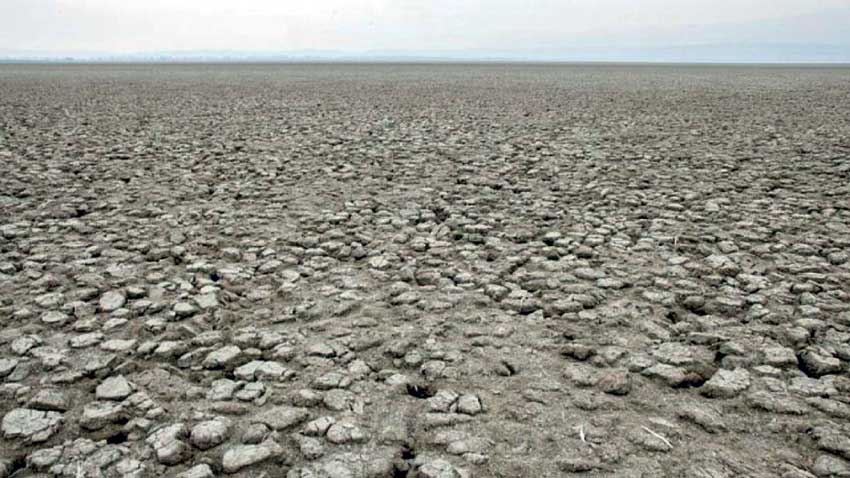
Land degradation and desertification (LDD) pose a major threat to environmental and human survival and sustainability. Nearly 33 percent of total land area is affected by land degradation globally. LDD reduces the capacity of land resources to perform essential ecosystem functions and provide goods and services to people who depend on land based natural resources for their livelihoods and survival in the long run.
LDD in India
India is one of the worst affected regions of the world in terms of loss in land quality and productivity and according to 2011–2013 figures, 96.4 million hectares (29.32 percent of the total geographic area) of the country are affected by LDD posing a risk to the livelihoods of a vast majority of farmers and livestock herders depending on it.
It has been feared that LDD could become a main barrier to realising the full benefits of rural development and poverty alleviation and trigger rural to urban migration bringing up additional policy challenges in the country.
Land degradation can majorly affect agriculture in the country, which is a major contributor to the Indian economy with nearly 14.5 percent of national GDP being sourced from agriculture and allied sectors. India is the largest producer of milk, pulses, jute, and spices, with the world’s largest cattle herd (buffaloes). Presently, the agricultural sector engages about 49 percent of total national households.
The agriculture sector experienced several phases of reformative changes, most notable of which was the Green Revolution (1958–1969) that marked a paradigmatic shift and included a transition from rainfed to irrigated practices, canal systems to well-based irrigation, the introduction of high-yielding varieties (HYV), lucrative subsidies for agrochemicals (fertilizers and pesticides), power and well installation, and a push for farm mechanisation.
However, the detrimental impacts of unregulated and uninformed agricultural intensification on the environment has led to widespread water resource depletion and contamination, as well as decline in land quality, which has become a serious concern in recent years.
The causes for LDD in India include vegetative degradation, water erosion, wind erosion, salinity, water logging, human dynamics, frost shattering and others. Erosion is the prime driver of LDD in India, accounting for over 16 percent of total LDD of which water erosion accounts for about 11 percent, while wind accounts for about 5.55 percent, negatively affecting land productivity, crop yield, farm income, and livelihoods.
Do farm practices affect LDD?
For the study, information about the statewise area affected by LDD area was obtained from the Space Applications Centre (SAC). Information about a range of agronomic variables was obtained from governmental archives, including agricultural year books of various years, the Ministry of Agriculture, the Ministry of Farmers’ Welfare, the Fertiliser’s Association of India, and the Central Ground Water Board (CGWB).
What did the study find?
Farming practices aggravated LDD
Eleven states were found to have the highest total state area under ‘salinity’, ‘water erosion’, and ‘water logging’. These included Andhra Pradesh (AP), Bihar (BR), Chhattisgarh (CG), Gujarat (GJ), Jharkhand (JH), Madhya Pradesh (MP), Maharashtra (MH), Uttar Pradesh (UP), West Bengal (WB), Orissa (OR), Karnataka (KA) and Tripura (TR).
Mineral fertiliser applications aggravated LDD hazards
Currently only 3.5 percent of the area operates under bio-pesticides in the eleven states while chemical pesticides are nearly 40–53 times higher on average than those under bio-pesticides. This shows that farmer's prefer input-intensive farming and are not aware or able to shift to sustainable land management practices.
Tillage operations increased area under LDD
Tillage is a key driver of LDD and can cause mechanical disturbances in the soil. Soil loss from conventionally tilled land exceeds the rate of soil formation by >2 orders of magnitude and leads to nutrient loss which, in a cyclic feedback loop, prompts farmers to use more agrochemicals to maintain production. The further deteriorates land quality and aggravates LDD. Adoption of reduced tillage continues to be very low in India because of low awareness of the science of tillage, how it affects land productivity, and lack of sensitisation among farmers.
Net Irrigated area negatively affected LDD
The 11-state regional cluster represented the focus of irrigated agriculture in India, accounting for nearly 76 percent of total national NIA and about 65 percent and 86 percent, respectively, of national NIA that are ‘cropped twice’ and ‘cropped more than twice’.
The states of AP, BR, MP, OR, UP, and WB, account for over 69 percent of total NIA ‘cropped twice’. These states have high rice–wheat cultivation in India, accounting for a large fraction of agricultural revenue in the respective states, in addition to providing livelihood support to millions of farming households.
Land under multiple cropping systems when coupled with irrigation was found to accelerate LDD in several ways such as increase in land erosion and evaporative enrichment of mineral salts in the topsoil. Recently, groundwater-irrigation is replacing surface-water-based systems and in the states of AP, BR, GJ, KA, MP, MH, and UP, the areas under groundwater-sourced irrigation account for about 55–78 percent of the total NIA.
Way forward
The paper argues for the need for targeted actions at the policy level such as:
The paper urges authorities to adopt an integrated approach to deal with the growing problem of LDD, combining high-end research with policy instruments as well as socio-cultural dimensions of farming by reflecting on the DPSIR framework (Driver–Pressure–State–Impact–Response), and highlighting the role of indirect drivers of LDD that influence farmers’ preferences for certain practices.
It calls for the need for high-level policy commitment to help farmers move from traditional practices to a more conservation-centric approach that maintains long-term land system sustainability
(www.indiawaterportal.org)
By Sriroop Chaudhuri, Mimi Roy, Louis M. McDonald, Yves Emendack
(The contents of this publication reflect the views of writers and contributors, not necessarily those of the publisher and editor. All disputes are subject to the exclusive jurisdiction of competent courts and forums in Delhi/New Delhi only)



















Leave Your Comment