


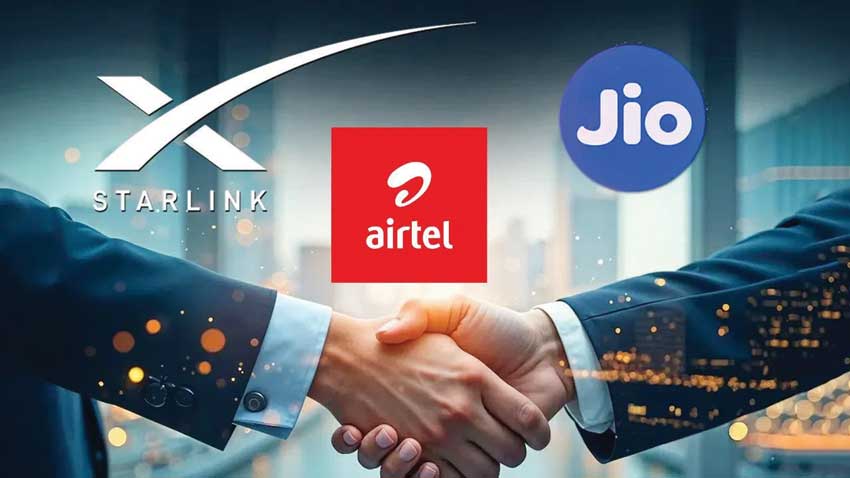
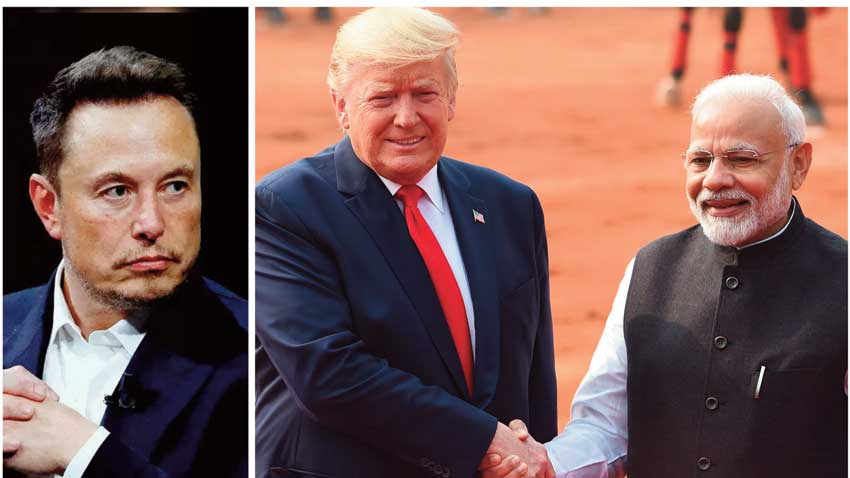
Elon Musk’s recent partnership with India’s telecom behemoths, Reliance Jio and Bharti Airtel, marks a significant milestone in the country’s digital and satellite communications landscape. However, beyond its business and technological implications, the deal carries strong geopolitical undertones, particularly in the context of Musk’s increasing proximity to US President Donald Trump. The alignment of India’s biggest corporate entities with Musk could be a calculated move to deepen ties with the US administration. The timing of this development raises questions: Could Mukesh Ambani’s decision to collaborate with Musk is part of a larger effort to position India favorably in Trump’s geopolitical calculus? And is aligning with Musk the most effective strategy to secure goodwill from Trump and his allies?
To understand the deeper geopolitical motivations behind this partnership, it is essential to examine Musk’s growing influence in American politics and his role in critical US defense and intelligence operations. SpaceX, Musk’s aerospace company, has become an indispensable asset to the US military, providing satellite-based communication and surveillance capabilities that are increasingly integrated into American defense strategy. Starlink, the satellite internet division of SpaceX, has also been instrumental in geopolitical conflicts, including Ukraine, where it has provided essential communication infrastructure. Musk’s access to classified military operations and his interactions with Pentagon officials give him a level of influence in Washington that few corporate figures can match. His recent alignment with Trump, particularly through his outspoken support and engagement with the President’s policy discussions, further cements his role as a key player in the intersection of technology, business, and geopolitics.
For India, the strategic importance of this deal goes beyond mere business expansion. The Modi government has been proactive in strengthening ties with the US, particularly in the defense, technology, and telecommunications sectors. The Indo-Pacific region has emerged as a focal point of geopolitical competition, and Washington sees India as a crucial counterbalance to China’s growing assertiveness. By aligning with Musk’s Starlink, which has strong backing from US, defense circles, Ambani and Mittal may be ensuring that India remains an integral part of the US strategic framework in telecommunications and satellite infrastructure. This could help India gain leverage in negotiations with the US on broader issues such as technology transfers, military cooperation, and trade agreements.
Mukesh Ambani’s decision to partner with Musk could also have domestic political motivations. Ambani has historically maintained good relations with various Indian governments, adapting his business strategies to align with prevailing political realities. By strengthening ties with Musk, who is privy to Trump’s inner circle, Ambani might be positioning himself as India’s key corporate intermediary with the Trump administration. Given Trump’s unpredictable foreign policy approach, securing direct corporate relationships that bypass traditional diplomatic channels could be a smart hedge against policy shifts that may arise, like the tariff war.
However, this alignment with Musk and, indirectly, with Trump is not without risks. It could complicate India’s balanced approach to US politics. Moreover, Musk’s mercurial nature—his frequent political flip-flops and unpredictable corporate decisions—introduces an element of uncertainty. His relationships with world leaders have raised concerns about his ability to balance corporate interests with geopolitical sensitivities. If Musk’s alignment with Trump leads to policy decisions that contradict India’s long-term strategic interests, Ambani’s bet could backfire.
From a purely business standpoint, the deal has undeniable advantages. Starlink’s low-earth orbit satellite network could revolutionize connectivity in India’s rural and remote regions, aligning well with the Modi government’s Digital India vision. The partnership with Jio and Airtel ensures that Starlink’s rollout will be seamless and well-integrated into India’s existing telecom infrastructure. This move could also help India reduce dependence on Chinese telecom firms, an objective that has gained urgency amid rising tensions between New Delhi and Beijing.
Ultimately, the question of whether aligning with Musk is the best way to get into Trump’s good books depends on multiple factors. What is clear is that this partnership is about more than just business—it is a calculated move in the ever-evolving chessboard of global power dynamics.

By Nilabh krishna
















Leave Your Comment