


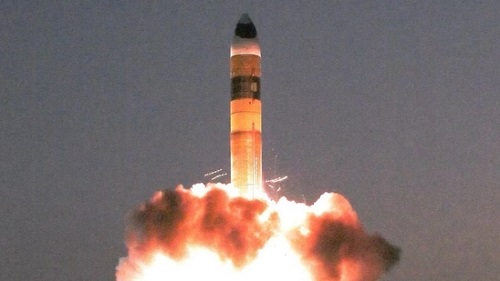
India’s quest to develop a long-range indigenous cruise missile received a significant boost on June 15 as the Defence Research and Development Organisation (DRDO) successfully flight-tested the Long Range Land Attack Cruise Missile (LRLACM), a weapon system being viewed as India’s answer to the American Tomahawk cruise missile. The successful trial marks a major turnaround from the setbacks encountered during the earlier Nirbhay cruise missile programme and strengthens India’s long-range conventional strike capability.
The missile was launched from Dr APJ Abdul Kalam Island off the Odisha coast, with tracking instruments deployed by the Integrated Test Range (ITR), Chandipur, confirming that all mission objectives were achieved. According to the Ministry of Defence, the indigenously developed missile successfully met all test parameters, validating critical technologies associated with long-range precision strike systems.
Defence experts describe the LRLACM as the successor to the Nirbhay cruise missile programme, which faced multiple developmental challenges over the years. The new missile incorporates several improvements in guidance, navigation and propulsion systems, enabling it to strike targets at distances exceeding 1,000 kilometres with greater accuracy and reliability. The missile is designed for launch from multiple platforms, including mobile ground launchers and frontline naval vessels, making it a versatile asset for the armed forces.
With a speed of up to 0.8 Mach, the subsonic cruise missile is intended to fly at extremely low altitudes, allowing it to evade enemy radar detection and penetrate heavily defended airspace. Armed with a warhead weighing around 500 kilograms, the missile can accurately engage and destroy high-value targets deep inside hostile territory. Its terrain-hugging flight profile and long stand-off range make it particularly effective against command centres, logistics hubs and strategic military infrastructure.
Officials indicate that the missile will undergo additional developmental and user trials over the next two years before being inducted into service. Once operational, it is expected to significantly enhance India’s conventional deterrence posture and provide military planners with a potent long-range strike option.
The successful test comes at a time when regional rivals already possess similar capabilities. Pakistan has fielded the Babur cruise missile since 2010, with a reported range of around 900 kilometres, while China maintains an extensive inventory of conventional and nuclear-capable cruise missiles. Analysts note that the growing importance of stand-off weapons in modern warfare has made the development of indigenous long-range cruise missiles a strategic necessity for India.
The LRLACM is also expected to complement India’s existing missile arsenal, including the BrahMos supersonic cruise missile and various ballistic missile systems. Defence planners envision future integration of long-range cruise missiles, ballistic missiles and advanced rocket systems into dedicated Army rocket regiments, enhancing India’s ability to counter evolving missile threats and maintain credible deterrence along its borders.
The successful LRLACM test is being seen as another major milestone in India’s drive for defence self-reliance. Developed through collaboration between multiple DRDO laboratories and Indian industry partners, the missile reflects the country’s growing capability to design and manufacture sophisticated strategic weapons domestically.




















Leave Your Comment