


The Bharatiya Janata Party (BJP) emerged as the biggest winner in the latest round of legislative council elections, securing 13 of the 28 seats contested across Uttar Pradesh, Maharashtra, Bihar and Karnataka. However, the results presented a mixed political picture, with the Samajwadi Party (SP) strengthening its position in Uttar Pradesh, the Janata Dal (Secular) delivering a setback to the ruling Congress in Karnataka, and Prashant Kishor’s Jan Suraaj Party making its debut in Bihar’s Upper House. Although these elections cannot be treated as a definitive measure of public opinion ahead of upcoming Assembly polls, the results offer valuable insights into regional political dynamics, party organisation and the shifting calculations of established and emerging political forces.
The BJP's performance in the legislative council elections reinforced its position as the leading political force among the four states, but the results also highlighted the limitations of translating organisational strength into uniform electoral success. While the party retained its established base in several constituencies, the SP expanded its presence in Uttar Pradesh, the JD(S) made an impact in Karnataka, and Jan Suraaj secured representation in Bihar's legislative council.
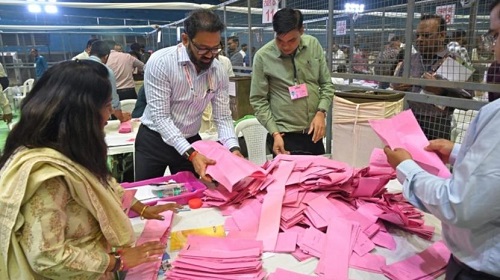
The elections, held on October 23 through ballot papers, covered 28 seats representing graduate and teacher constituencies. The counting process extended over nearly two days and was accompanied by allegations, protests and confusion. The delayed declaration of results underscored the distinctive nature of these elections, in which relatively small electorates, preferential voting and constituency-level political networks can significantly influence the outcome.
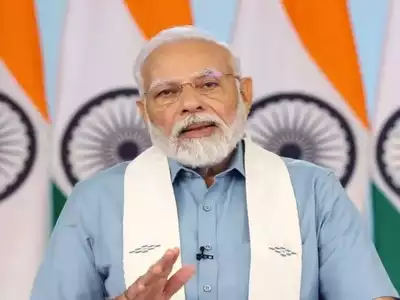
Prime Minister Narendra Modi drew attention to the Congress's performance in a post on X, referring to the elections across the four states and questioning how many seats the party had secured. The Congress's limited success, particularly its complete failure to win a seat in Karnataka, became one of the notable features of the results.
Nevertheless, the electoral verdict requires a measured interpretation. Legislative council elections involve a much narrower electorate than parliamentary or Assembly elections. Graduates, teachers and representatives of local bodies form the voting groups in the constituencies concerned. Their political preferences may not necessarily reflect those of the general electorate. Even so, the results offer an opportunity to assess the relative strengths of political parties within specific constituencies.
Uttar Pradesh, where Assembly elections are due in 2027, provided the most politically significant contest of this round. Of the 11 seats contested, the BJP won six, while the SP secured five. The BJP thus retained its previous tally, whereas the SP improved its position from the three seats it won in 2020.
Karnataka delivered an uncomfortable verdict for the ruling Congress, which failed to win any of the legislative council seats contested in this round. The BJP retained all three seats it contested, winning the North-East teacher, South-East graduate and West graduate constituencies. The JD(S), meanwhile, wrested the Bengaluru teacher seat from the Congress.
The outcome was a setback for the Congress leadership, particularly Chief Minister D. K. Shivakumar, because the party could not convert its position in government into victories in these constituencies.
Bihar produced one of the most interesting outcomes of the election round, with the BJP winning three of the eight seats contested. The JD(U) and the Rashtriya Janata Dal (RJD) secured one seat each, while Jan Suraaj won one seat and independents captured the remaining two.
The elections covered constituencies spread across Patna, Muzaffarpur, Darbhanga, Purnea and Saran.
Maharashtra's results reflected a more evenly balanced contest. Five seats went to the polls, with the ruling Mahayuti securing two seats and the opposition Maharashtra Vikas Aghadi (MVA) also winning two, while it was leading in another at the time of the reported results.
The constituencies covered several politically important areas, including Nagpur, Pune, Amravati, Kolhapur, Sangli and Chhatrapati Sambhajinagar.
The results present a varied picture of India's political landscape. The BJP emerged as the biggest winner, securing 13 of the 28 contested seats. The SP strengthened its position in Uttar Pradesh, the Congress failed to win a seat in Karnataka, the JD(S) registered a notable victory, and Jan Suraaj entered Bihar's legislative council.
For the BJP, the overall performance reinforces its position but also highlights areas where opposition parties remain competitive. For the SP, the Uttar Pradesh results offer encouragement ahead of the 2027 Assembly elections. For the Congress, Karnataka's outcome raises questions about its ability to mobilise support in constituencies where it might have expected to perform better. For Jan Suraaj, the Bihar victory represents an initial legislative breakthrough rather than proof of a wider electoral transformation.
Ultimately, the significance of these elections lies less in their numerical totals than in the political signals they provide. Specialised electorates cannot reliably predict the preferences of an entire state, and the results should not be treated as a substitute for Assembly election outcomes. Yet they reveal how political parties are performing among distinct voter groups, where their organisational strengths lie and where their vulnerabilities are becoming visible.
As the next round of major electoral contests approaches, these results offer every party material for reflection. The BJP has maintained its overall advantage, but the opposition has demonstrated that opportunities for gains remain. The decisive test will be whether these constituency-level victories and setbacks translate into broader changes in voter sentiment when the electorate expands beyond graduates, teachers and local representatives.




















Leave Your Comment