


The Election Commission issued show-cause notices to Congress leader Supriya Shrinate and the Bharatiya Janata Party's Dilip Ghosh over "derogatory" remarks against actor Kangana Ranaut and Bengal Chief Minister Mamata Banerjee respectively. Against this backdrop it is apt to discuss the rising level of using inappropriate language in politics.
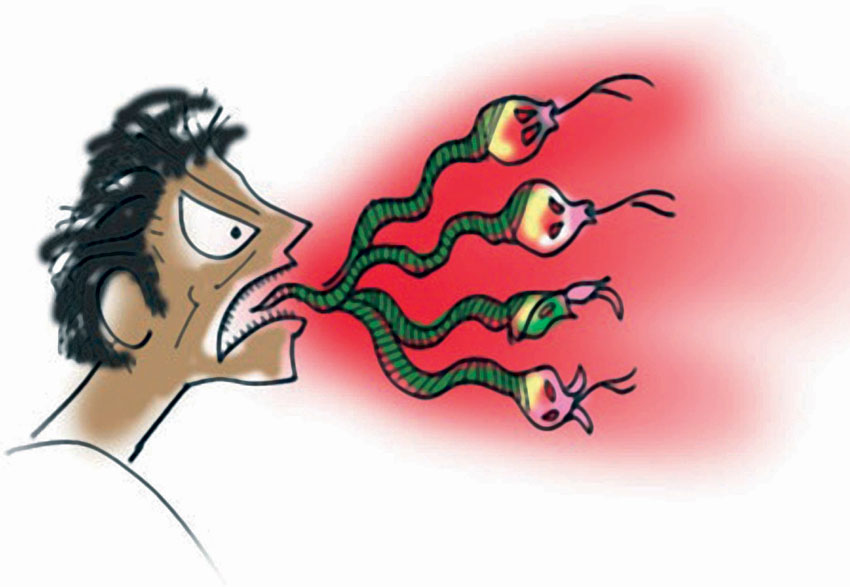
As the Lok Sabha elections draw nearer, the tongues of many politicians seem to slip further and further. They are indulging in rhetoric that not only raises eyebrows but also poses a threat to the integrity of the nation. In electoral rallies, politicians are crossing boundaries of decency, sophistication, and morality to undermine their opponents in front of the public eye. While opposing wrongdoings openly and presenting one's electoral issues effectively are imperative for nation-building, politicians must refrain from using inappropriate, inflammatory, and undisciplined language in their discourse.
The question arises: Is the use of uncivil language truly justifiable in the world's largest democracy? Following the announcement of election dates and with the escalation of electoral fervor, the statements of politicians have become sharper and more trivial.
The restrained language and disciplined discourse are all but disappearing from our country's politics. Rahul Gandhi's remarks about "fighting against Shakti" depict intentions of tarnishing religious values connected with Shakti and serving "nefarious intentions" to create animosity among religious communities. Initially, Lalu Prasad Yadav's allegations against Prime Minister Narendra Modi regarding his family have become a potent weapon for the BJP. Congress leader Supriya Shrinate's derogatory comment accompanying a photo of actress Kangana Ranaut has turned into an insult to women's empowerment. Rahul Gandhi's comments about EVMs have prompted demands for action against him from the Election Commission, stating that such "misinformation and false propaganda" without verifying facts is detrimental to national integrity and democratic values. Misleading comments about EVMs and the Election Commission have been made with intentions of "creating public disorder."
As the Lok Sabha elections progress, a wave of controversial statements has swept through the political arena. The use of dignified language and decorum in our country's politics is essential. In a democracy, the strength of a leader lies in the solidity of their language and words. After independence, as changes occurred in politics, the language and style of accusations and counter-accusations of politicians also evolved. Today, some political leaders mock their opposition with terms like "Pappu," while some opposition leaders refer to Prime Minister Narendra Modi as a "Chor" or "Chai-wallah." Is there any semblance of decorum left in our country's politics? These politicians hardly consider the impact of their crude language on their party.
The trend of making low-level, light, and cheap remarks in Indian politics has been prevalent for quite some time. However, in the last two decades, this trend has taken on a grotesque form. At the time when Ram Manohar Lohia referred to Indira Gandhi as a "Gungi Gudia," there was considerable controversy, and many opposed Lohia's statement. Congress President Kharge also made some remarks, and his statement likening PM Modi to Ravana has been widely discussed. However, Manishankar Aiyar made the most derogatory remarks. He openly used derogatory words such as "Neech" and "Katil" for Prime Minister Modi, reflecting his frustration. In the case of bitter and incorrect statements, the list of Congress leaders is quite long, whether it's Adhir Ranjan or Digvijay Singh or Sanjay Nirupam and Priyanka Gandhi. AAP leader and Delhi Chief Minister Arvind Kejriwal has crossed all limits. Former Chief Minister of Jammu and Kashmir Farooq Abdullah described EVMs as "thieves." All of them used extremely inappropriate words to take advantage, revealing their mockery and agitation. But the interesting thing is that Modi and his party have used such uncivilized words and comments for their benefit. They have created an atmosphere against those who use such words and those who speak against them before their millions of supporters. Today, the term "Chai-wallah" has become a symbol of respect for hardworking people.
Politics is now entrenched in a race to attract voters and bring them to one's side, often at the expense of decency. These politicians indulging in short-term thrills and immediate electoral gains urgently need self-reflection. Criticizing various parties and politicians with restrained language is the beauty of this country's democracy. The decorum and restraint in language are the foundation of India's democracy. While it is possible to garner temporary publicity and headlines with unruly language, there are many examples from the past that show that the public forgets such politicians soon. Politicians must maintain the decorum and restraint of language at all times. While it's time for election promises and boasting of achievements, it's also time to refrain from language lacking in decorum and bitterness.
Uday India Bureau

















Leave Your Comment