


The regulation of public demonstrations in the national capital is acquiring a more structured administrative dimension, with Delhi Police proposing a comprehensive set of guidelines for managing large gatherings at Ramlila Maidan. The proposed framework, which envisages a ceiling of 50,000 participants and restricts public events to a seven-hour window between 10 am and 5 pm, seeks to reconcile the democratic right to peaceful assembly with the imperatives of public order, security, traffic management and civic administration. If approved, the new Standard Operating Procedures (SOPs) would introduce a more systematic mechanism for organising protests, rallies and public meetings at one of Delhi's most politically significant gathering spaces.
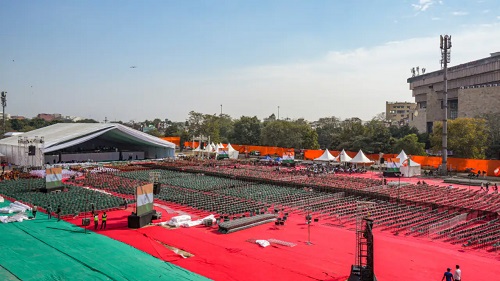
Delhi Police has initiated steps to bring protests, demonstrations and public gatherings at the historic Ramlila Maidan under a more structured regulatory framework, proposing a maximum attendance of 50,000 people and restricting event timings to between 10 am and 5 pm. The proposed guidelines seek to strengthen crowd management, ensure public safety and streamline administrative coordination at one of the capital's most prominent venues for political rallies and mass gatherings.
According to the draft Standard Operating Procedures (SOPs), no event at Ramlila Maidan would be allowed to exceed the proposed ceiling of 50,000 participants. However, the actual number of people permitted at a particular programme would depend on the nature of the event, anticipated turnout and the security arrangements available. The framework is intended to ensure that large-scale gatherings do not compromise public order, traffic movement or emergency response mechanisms.
The proposed restrictions come against the backdrop of the Delhi government's decision in October to remove Jantar Mantar from the list of designated protest locations and identify three alternative venues for demonstrations: Ramlila Ground, Burari Ground and CBD Ground. The move has made the regulation of these alternative locations particularly important for authorities managing public assemblies in the national capital.
A senior Delhi Police officer told news agency ANI that the draft SOP has been forwarded to the Delhi Police Headquarters for examination and approval. The proposal is still at a preliminary stage, and its provisions may undergo changes before the competent authorities give their final consent.
The proposed permission process places the responsibility on organisers to secure municipal clearance before approaching the police. Organisers would first need to obtain confirmation from the Municipal Corporation of Delhi (MCD) regarding the availability of Ramlila Maidan for the proposed programme. Only after receiving this clearance could they apply to the police for the necessary permission. Applications would generally have to be submitted at least 10 days before the scheduled event, allowing authorities sufficient time to assess security and logistical requirements.
The draft also seeks to make event organisers accountable for managing crowds and coordinating essential arrangements. They would have to work with traffic authorities, establish suitable parking facilities and identify designated locations for dropping off participants. Keeping surrounding roads clear and ensuring uninterrupted access for emergency vehicles would also be among their principal responsibilities.
Security provisions form another significant component of the proposed framework. The guidelines would prohibit participants from carrying firearms, swords, spears, sharp-edged objects and other restricted articles into the venue. Drone operations around Ramlila Ground would similarly be subject to prior authorisation, reflecting the emphasis on surveillance and security management during large public gatherings.
In addition to security and traffic arrangements, organisers would be expected to provide adequate drinking water, medical assistance and sanitation facilities. Proper waste collection and disposal would also be mandatory to prevent public inconvenience and maintain cleanliness during and after events.
Once approved, the SOPs will establish a more clearly defined system for organising public meetings and demonstrations at Ramlila Maidan. For now, however, the proposed attendance ceiling, operating hours and other conditions remain subject to scrutiny and final approval by the competent authorities.




















Leave Your Comment