


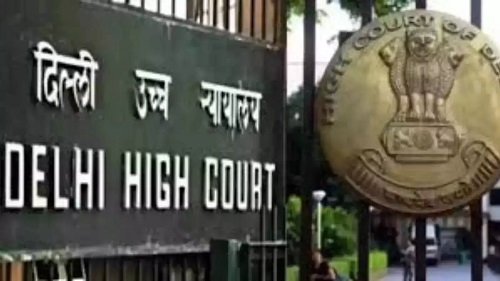
The Delhi High Court on Monday issued notices to the Central Government and the Central Board of Secondary Education (CBSE) on a Public Interest Litigation (PIL) challenging the recently introduced On-Screen Marking (OSM) system for evaluating Class 12 board examination answer sheets.
A Division Bench comprising Justices Neena Bansal Krishna and Madhu Jain sought responses from the Centre and CBSE on the petition filed by the National Students’ Union of India (NSUI). The court has scheduled the matter for further hearing on June 12.
The PIL raises serious concerns regarding the fairness, transparency and reliability of the digital evaluation mechanism adopted by CBSE for assessing Class 12 board examination papers. According to the petition, the implementation of the On-Screen Marking system has led to several irregularities that allegedly affected the academic performance of thousands of students.
The petition contends that following the declaration of Class 12 board examination results, numerous students reported discrepancies in the evaluation process. Among the issues highlighted were blurred scans of answer sheets, missing pages, mismatched answer booklets, incomplete uploads of responses and unexpectedly low marks that did not correspond with students’ academic records or expectations.
The NSUI argued that such technical and procedural shortcomings have undermined students’ confidence in the examination and evaluation process. The plea also questioned whether adequate safeguards and quality-control measures were in place before the digital marking system was implemented on a large scale.
A significant aspect of the petition is its reference to CBSE’s own public communications acknowledging technical glitches in the online portal used to provide scanned copies of answer books to students. The petitioner claimed that these admissions indicate that the digital infrastructure supporting the On-Screen Marking system may not have been sufficiently robust to ensure error-free evaluation.
The petition seeks judicial intervention to examine the functioning of the new evaluation system and to ensure that students are not adversely affected by technological failures. It also calls for greater transparency in the assessment process and appropriate remedial measures for students who may have suffered due to alleged errors in the digital evaluation mechanism.
During the hearing, the High Court took note of the concerns raised and directed the respondents to place their stand on record. The notices issued to the Centre and CBSE mark the beginning of a judicial examination of the controversial evaluation system that has sparked debate among students, parents and education stakeholders.
The outcome of the case could have significant implications for the future of digital evaluation methods in school board examinations across the country. As educational institutions increasingly adopt technology-driven assessment systems, the matter is expected to raise broader questions about accountability, transparency and the balance between technological innovation and academic fairness.
The case will now come up for hearing before the Delhi High Court on June 12.




















Leave Your Comment