


In a bold and unprecedented move to tackle its annual public health emergency, Delhi is on the verge of inducing artificial rainfall through cloud seeding as early as the next few days. With pollution levels consistently hovering in the "severe" to "hazardous" categories, the city's administration is preparing to deploy a scientific intervention in the hope of washing away toxic pollutants from the atmosphere.
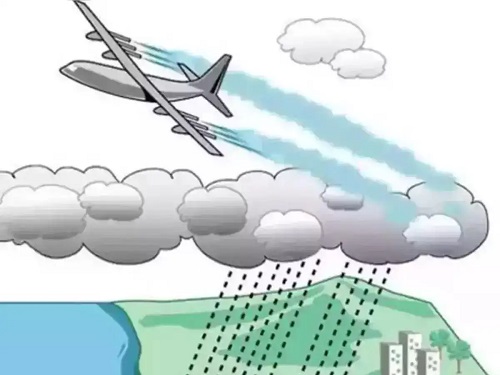
The operation has moved from the planning stage to active readiness. According to sources, a Cessna aircraft, specially equipped for cloud seeding operations, has taken off from Kanpur and is now stationed in the region, headed to Meerut. The aircraft has been fitted with specialised equipment designed to disperse seeding agents into the clouds and is currently on standby, awaiting the final command.
The execution of this ambitious plan now hinges on a single, crucial factor: the whims of the weather. Authorities have confirmed that the process could be initiated anytime within the next 72 hours, but only if suitable cloud conditions develop over the National Capital Region (NCR).
Official Green Signal Awaited
Earlier on Wednesday, Delhi Environment Minister Manjinder Singh Sirsa provided a comprehensive update on the preparedness. He stated that the cloud seeding operations are ready for takeoff, with all necessary hardware and permissions in place.
Speaking to the media, Sirsa highlighted that the project's success is intrinsically linked to suitable atmospheric conditions. "For cloud seeding, clouds are essential. We already have full permission from the India Meteorological Department (IMD), and everything is under control," Sirsa said. "The planes have arrived, including the Cessna, and all the necessary equipment has been installed. The pilots have obtained their licenses. Now, we are just waiting for the green signal from the Meteorological Department to proceed."
The Minister expressed confidence that the operation would be carried out swiftly once nature provides the required raw materials. "We are confident that within the next week, as soon as the clouds form, the cloud seeding operations will be carried out," he added.
Taking a political dig, Sirsa underscored the efficiency of the current administration, stating, "Previous governments only talked; we actually did the groundwork in 7 months: approvals, agreements, MOUs, consultations with scientists and arrangements with pilots and aircraft."
The Science of Artificial Rain
At the heart of this initiative lies the scientific technique of cloud seeding. This method is designed to enhance rainfall by dispersing substances like silver iodide, potassium iodide, or even common salt (sodium chloride) into moisture-laden clouds. These particles act as artificial nuclei around which water vapour can condense. As these droplets coalesce and grow heavier, they eventually fall as rain.
Globally, cloud seeding has been used for decades to combat drought, enhance water resources in reservoirs, and in recent years, to improve air quality. For a city like Delhi, which is enveloped in a toxic smog of vehicle emissions, industrial pollutants, and dust, the induced rainfall is expected to pull these harmful particulate matter (PM2.5 and PM10) down to the ground, offering a temporary but potentially significant respite from the choking pollution.
As Delhi waits with bated breath, all eyes are now on the sky, awaiting both the clouds and the green signal that could launch a pioneering battle against pollution through the power of artificial rain.






















Leave Your Comment