


The Government of India's ambitious Deep Ocean Mission (DOM), launched in 2021, is making significant strides in advancing marine science, deep-sea exploration, and sustainable resource utilization. Conceived as a flagship initiative, the mission seeks to unlock the immense potential of India's vast ocean resources while promoting scientific innovation, environmental conservation, and technological self-reliance. Through six key thematic verticals, the mission aims to strengthen India's Blue Economy by exploring both living and non-living marine resources, including deep-sea biodiversity, polymetallic nodules, ocean thermal energy, and advanced ocean observation systems.
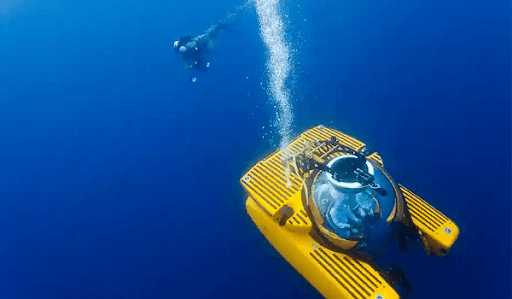
One of the most significant achievements under the mission has been the development of India's first manned deep-sea submersible, MATSYA-6000. Scientists at the National Institute of Ocean Technology (NIOT), Chennai, have completed the design and system engineering of the submersible, while all major subsystems have been successfully developed. Crewed and uncrewed wet harbour trials were conducted at a depth of 8 metres near Kattupalli, Chennai, between January and February 2025. Further strengthening India's expertise, NIOT scientists also received pilot training aboard the French deep-sea submersible NAUTILE in August 2025. In another major breakthrough, India successfully demonstrated the collection of more than 100 kilograms of cobalt-rich polymetallic nodules from a depth of 1,173 metres in the Andaman Sea during 2024 using its indigenously designed deep-sea mining machine.
The mission has also made remarkable progress in strengthening ocean climate change advisory services. Scientists have developed advanced ocean models capable of downscaling projections related to sea levels, waves, storm surges, and marine biogeochemistry across the Indian Ocean. These studies have enabled the prediction of 100-year extreme sea-level scenarios along India's coastline and the preparation of coastal vulnerability maps. Researchers have also developed a Genesis Potential Index to improve cyclone forecasting over the Bay of Bengal, along with advanced wave climate models for the Indian Ocean. To improve real-time ocean observations, the Indian National Centre for Ocean Information Services (INCOIS), Hyderabad, has completed 11 glider missions in the Arabian Sea and Bay of Bengal. It has also deployed 60 directional Wave Spectra Barometric Drifters and 92 physical and biogeochemical Argo floats across the Indian Ocean.
Exploration and conservation of deep-sea biodiversity have emerged as another major success area under the Deep Ocean Mission. Scientists have isolated nearly 2,038 deep-sea microbial species from water and sediment samples collected within India's Exclusive Economic Zone (EEZ). Several rare microbes, previously unreported from the Indian Ocean, have also been discovered through detailed genomic and biochemical studies. These microbes are being screened for molecules with potential industrial, pharmaceutical, and biotechnological applications. To support long-term research, a dedicated Marine Microbial Repository is being established at Chittedu in Andhra Pradesh. Simultaneously, the Centre for Marine Living Resources and Ecology (CMLRE), Kochi, has surveyed 31 seamounts—considered biodiversity hotspots—in the Arabian Sea and Bay of Bengal. The surveys documented 201 deep-sea species, including 43 species that may be entirely new to science.
India has also expanded its deep-ocean survey and exploration capabilities. Scientific expeditions conducted along the Central and Southwest Indian Ridges have led to the discovery of four hydrothermal vent fields and two inactive vent systems that could potentially host valuable mineral deposits. Researchers also achieved India's first-ever imaging of an active hydrothermal vent, marking a major scientific milestone. To strengthen marine research infrastructure, a contract has been awarded to Garden Reach Shipbuilders and Engineers (GRSE), Kolkata, for the indigenous construction of a new all-weather multipurpose ocean research vessel. The vessel's design, model testing, and keel laying have already been completed.
In the field of renewable marine energy, the mission has prepared a detailed project report for a high-capacity offshore Ocean Thermal Energy Conversion (OTEC)-powered desalination plant. This technology has the potential to simultaneously generate clean energy and produce fresh water from seawater, particularly benefiting India's coastal and island regions.
The establishment of an Advanced Marine Station for Ocean Biology is another important component of the mission. Land has been acquired at Nemmeli near Chennai for the facility, which will serve as a national hub for advanced marine biological research. Currently, 145 collaborative research projects involving nearly 70 national institutions, universities, colleges, and research laboratories are being carried out under the mission across diverse fields of ocean and marine sciences.
The Deep Ocean Mission also aligns with international efforts to ensure environmentally responsible deep-sea mining. India actively participates in discussions under the International Seabed Authority (ISA), where a draft Mining Code is being developed. The proposed framework incorporates stringent environmental safeguards, including environmental impact assessments, baseline ecological studies, monitoring programmes, adaptive management practices, and the precautionary principle to protect fragile marine ecosystems. The Mining Code is yet to receive formal ratification by the ISA.
The information on the progress of the Deep Ocean Mission was shared by Union Minister of State (Independent Charge) for Earth Sciences, Dr. Jitendra Singh, in a written reply in the Lok Sabha. The mission continues to position India at the forefront of deep-sea research and marine technology, laying a strong foundation for sustainable ocean resource development and reinforcing the country's long-term Blue Economy aspirations.





















Leave Your Comment