


Reality Check By

Prakash Nanda
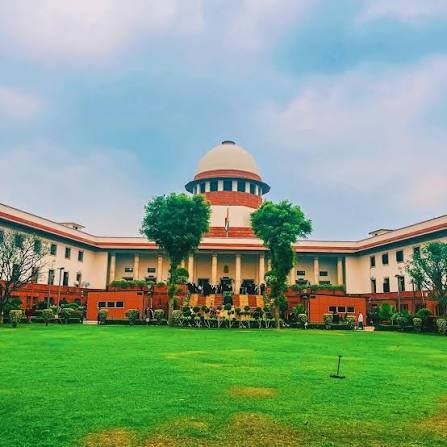
It is disappointing indeed that, as was the case in its judgment in March, the Supreme Court today (November 6) legalised the rise of a new privileged class within those getting jobs under the quota of reservations.
The greatest danger to the idea of social justice is not that its benefits are extended to historically disadvantaged communities. It is that these benefits may eventually become the exclusive preserve of a relatively privileged section within those very communities.
A policy conceived to dismantle inherited inequalities could, paradoxically, end up creating another hierarchy of privilege, with a small, influential and economically advanced section monopolising opportunities meant for the disadvantaged.
This is the larger constitutional concern arising from the Supreme Court's March 11, 2026 judgment that parental income alone cannot determine whether an OBC candidate belongs to the creamy layer. The Court has held that the occupational status and category of posts held by parents must also be considered. Its immediate concern was to prevent discrimination between similarly placed government employees and employees of public-sector undertakings and private organisations.
While this may have a legitimate legal basis, the wider implications of the judgment deserve serious public debate. Unfortunately, the Supreme Court's clarification on November 6, 2026, has limited the immediate application of its March ruling to the parties before it and protected existing seniority and promotions from reopening. That does not eliminate the need of a larger policy debate.
The creamy-layer principle was never intended to reduce social backwardness to a simple income calculation. Caste-based discrimination has social dimensions that cannot always be measured through bank balances or annual earnings. But there is an equally important principle: economic and social advancement within a historically disadvantaged community cannot be ignored indefinitely when distributing the benefits of affirmative action.
The logic behind excluding the creamy layer is straightforward. Reservation is not a family entitlement, nor is it a hereditary right to occupy a disproportionate share of opportunities. It is an instrument of corrective justice. Its purpose is to enable those who remain disadvantaged to compete on more equitable terms. Once individuals or families have achieved substantial social, educational and economic advancement, there must be a mechanism to ensure that the benefits reach others who have not enjoyed similar opportunities.
The danger of moving away from a meaningful economic test is that reservation could gradually acquire a vertical character even within the reserved category. In other words, the inequalities existing between different social groups could be reproduced inside the very communities that reservation seeks to empower.
Consider a family in which successive generations have benefited from reservation. The grandfather secured a government position, the father entered an elite profession or senior public service, and the children obtained access to prestigious educational institutions and government employment through the same reservation framework. Meanwhile, another family belonging to the same community, living in a village or an economically deprived urban settlement, has not secured even one meaningful opportunity.
Should both families continue to enjoy identical claims on the limited benefits of reservation, generation after generation?
This is where the concept of the creamy layer becomes indispensable. Without an effective exclusion mechanism, the relatively prosperous and socially influential sections can become reservation's new maharajas. They may not constitute a numerical majority, but their educational advantages, professional networks, financial resources and access to information give them a disproportionate capacity to secure opportunities repeatedly.
The result could be the perpetuation of privilege under the language of social justice.
Indeed, the irony is that the beneficiaries of reservation could gradually become divided into two classes: those who have already acquired the advantages of education, employment and social mobility, and those who remain trapped in the circumstances that originally justified affirmative action. If the former continue to dominate access to reserved opportunities, the latter may remain marginalised despite the constitutional promise of equality.
The Supreme Court itself, in the landmark Indra Sawhney judgment of 1992, recognised the necessity of excluding socially advanced sections among backward classes. The principle was rooted in the understanding that a community could remain backward collectively even when some individuals within it had achieved considerable advancement. The objective was to prevent monopolisation of opportunities by a relatively privileged minority.
This principle should not be diluted in the name of protecting reservation.
There is also a broader constitutional question. Articles 14, 15 and 16 are not merely provisions protecting group identities; they embody the promise of substantive equality. Reservation is an instrument towards that objective, not an end in itself. If its benefits are repeatedly captured by the same relatively privileged families, the constitutional objective is defeated even if the formal allocation of reserved seats remains unchanged.
Of course, occupational status matters. A senior government position can indicate social advancement in ways that salary alone may not capture. Equally, a private-sector employee earning a high salary should not automatically be treated differently from a similarly placed government employee. The Court's concern about such discrimination deserves consideration.
But correcting one form of inequality should not create another. Income, wealth, parental occupation, educational background and the actual social position of a family must be assessed through a transparent and comprehensive framework. None should become an excuse for allowing the already advantaged to retain privileged access indefinitely.
The government must now undertake a serious review of the creamy-layer criteria and establish an objective mechanism that reflects contemporary realities. It must also collect reliable data on which sections within reserved communities are actually receiving the benefits of reservation. Without such information, social justice risks becoming a slogan rather than a measurable public policy.
Ultimately, the purpose of reservation is to create a society in which historical disadvantages cease to determine an individual's future. It cannot be to create permanent beneficiaries of a policy designed to eliminate those disadvantages.
Social justice must remain dynamic, redistributive and sensitive to inequalities within disadvantaged communities themselves. Otherwise, India may end up replacing one entrenched hierarchy with another: the old privileged classes outside reservation and a new class of reservation maharajas within it.
That would be a profound betrayal of the constitutional promise of equality.




















Leave Your Comment