


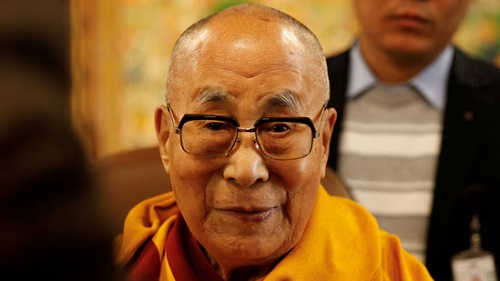
In a significant declaration today, the 14th Dalai Lama confirmed that his spiritual institution will endure beyond his lifetime, with the responsibility for selecting his successor entrusted solely to "free Tibetans." This statement, delivered ahead of his 90th birthday on July 6, marks a pivotal moment in the ongoing debate over the future leadership of Tibetan Buddhism.
The Dalai Lama, speaking from Dharamshala where he has resided in exile for decades, addressed a global audience during a religious gathering. He expressed gratitude for the numerous requests he has received over the past 14 years to continue the tradition of the Dalai Lama. These appeals, he noted, have emanated from Tibetan communities across the world, including those in exile, as well as from Buddhist adherents in the Himalayas, Mongolia, Russia, China, and from within Tibet itself.
"In accordance with these heartfelt requests, I am affirming that the institution of the Dalai Lama will persist," the spiritual leader declared solemnly.
The process for identifying his successor, the Dalai Lama clarified, has been clearly outlined in a statement dating back to September 24, 2011. According to this directive, the responsibility lies exclusively with the Gaden Phodrang Trust and the Office of His Holiness the Dalai Lama. The selection procedure will involve consultation with heads of various Tibetan Buddhist traditions and sworn Dharma Protectors, who are integral to the lineage of the Dalai Lamas.
Speaking alongside the Dalai Lama's announcement, Penpa Tsering, Sikyong (President) of the Central Tibetan Administration, emphasized the consensus reached during the 15th Tibetan religious conference in Dharamshala. He underscored that the core process of identifying the reincarnation of the Dalai Lama remains rooted in Tibetan Buddhist tradition, vehemently rejecting any political exploitation of this sacred practice by China.
"The Tibetans, both within and outside Tibet, are committed to upholding national unity and solidarity, steadfastly pursuing the just cause of Tibet, and wholeheartedly supporting the fulfillment of the Dalai Lama's noble aspirations," Sikyong Tsering affirmed.
The Dalai Lama has lived in exile since 1959, following a failed uprising against Chinese rule in Lhasa that prompted his flight to India. Throughout his decades in exile, he has continued to lead the Tibetan community and advocate for their rights on the global stage.
As the Dalai Lama ages, concerns have mounted within Tibetan communities about the potential for China to install its own appointee as the next spiritual leader, thereby exerting further control over Tibet. In response to these apprehensions, the Dalai Lama unequivocally stated that no entity outside of the Gaden Phodrang Trust possesses any authority to interfere in the selection process of his successor.
While China has long branded the Dalai Lama as a separatist figure, he has consistently portrayed himself as a humble Buddhist monk dedicated to peace and compassion. His latest declaration is widely interpreted as a strategic move to safeguard Tibetan Buddhist traditions from external manipulation and to ensure the continuity of spiritual leadership within Tibetan communities worldwide.
The announcement by the Dalai Lama represents not only a reaffirmation of his spiritual legacy but also a resolute assertion of Tibetan autonomy in matters of religious succession. As global attention remains fixed on the future of Tibet and its spiritual leadership, the Dalai Lama's message resonates as a testament to his unwavering commitment to Tibetan culture, unity, and the principles of compassion that define his teachings.



















Leave Your Comment