


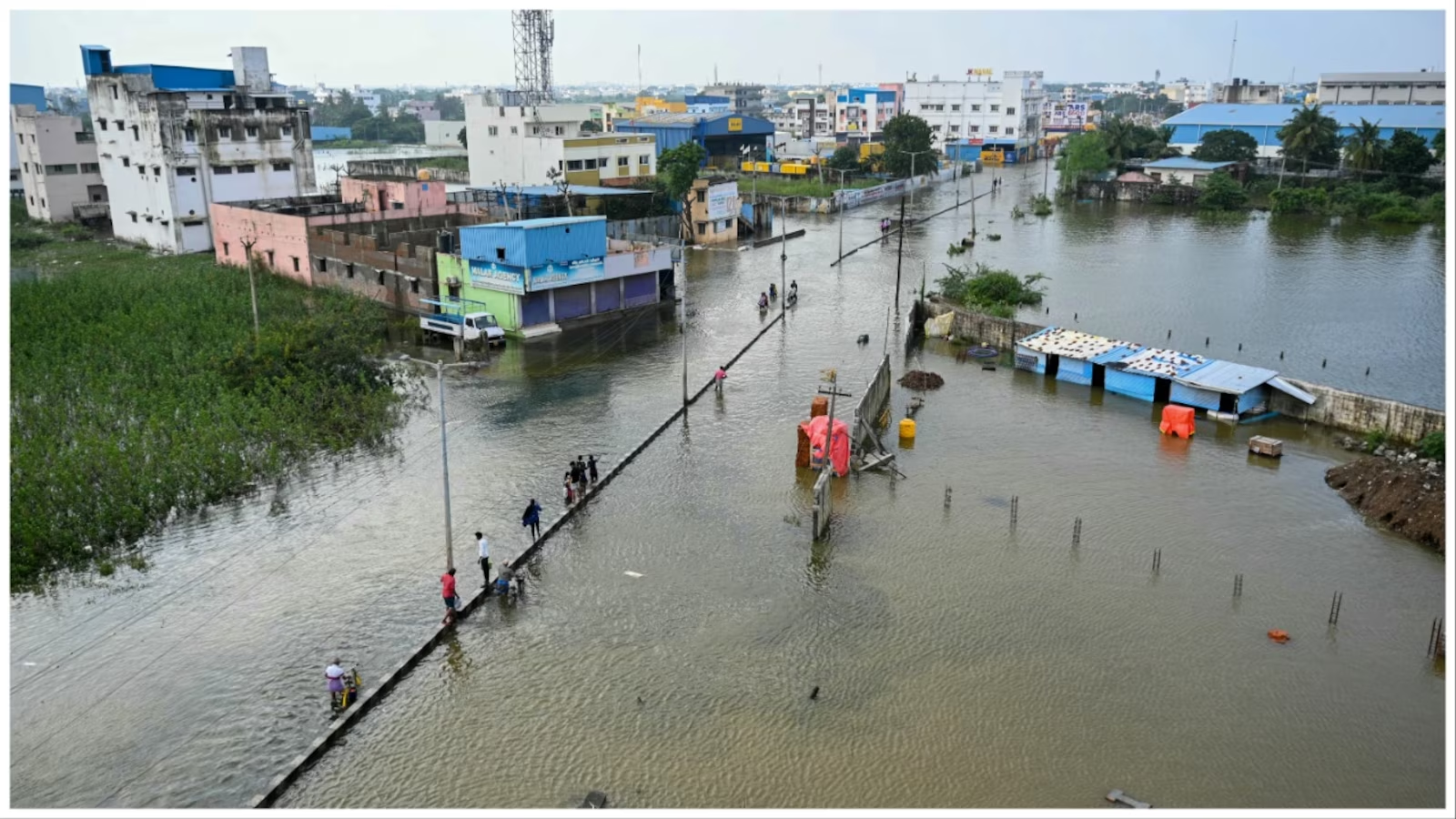
Cyclone Michaung has wreaked havoc on the city of Chennai, throwing life out of gear and exposing the vulnerabilities of the region's infrastructure. The unusually heavy downpour, reaching 151 mm in a 24-hour period ending at 8.30 am on December 4 (the third-highest in recorded history), has prompted the government to deploy the army for rescue and relief operations. The situation is dire, with the airport closed, numerous train cancellations, and schools shut down, evoking memories of the devastating floods in 2015.
The city of Chennai faced similar challenges in 2015 when record-breaking downpours on November 16 and December 2, combined with mismanagement of reservoirs, led to widespread chaos and suffering. Unfortunately, these extreme weather events are no longer isolated occurrences, as seen in recent devastating floods in Delhi this year, Bengaluru last year, and Mumbai in 2005. Both local factors and global phenomena contribute to the increasing frequency and intensity of such disasters.
One of the primary reasons for the worsening flood situations is the inadequate development of urban infrastructure. The burgeoning population has put immense pressure on the city's systems, and the encroachment of lakes, tanks, and floodplains has obstructed the natural drainage of floodwaters. Chennai's creaking urban drainage system, already under strain, is stretched to its limits during heavy downpours.
The 2015 floods highlighted the consequences of unregulated urbanization and poor infrastructure planning. However, little seems to have changed since then, leaving the city vulnerable to repeated natural disasters. The lack of proper land-use planning, unchecked construction, and inadequate drainage systems exacerbate the impact of heavy rainfall.
Beyond local factors, global climate change plays a significant role in the increasing frequency and intensity of extreme weather events. The climate crisis has disrupted traditional weather patterns, resulting in unpredictable and intense rainfall. What was once considered a once-in-a-century event has become alarmingly commonplace.
In the case of Chennai, the shift from evenly distributed monsoon rainfall to concentrated, heavy downpours in a short period has overwhelmed the city's infrastructure. Coastal cities like Chennai face additional challenges, as tidal patterns complicate drainage systems and exacerbate flooding during heavy rains.




















Leave Your Comment