


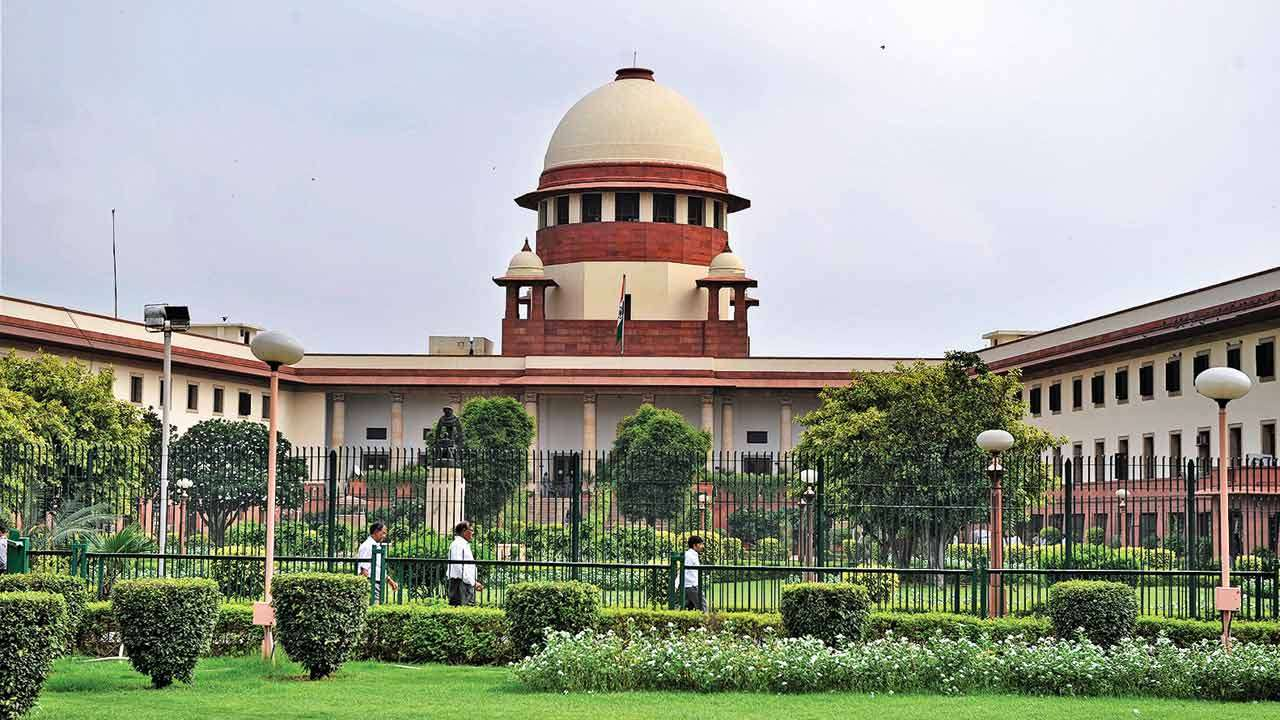
The issue of legal recognition to same sex marriage has been a topic of hot discussion in Indian life for a long time. The Supreme Court has given a truly historic decision by refusing to recognize same sex marriage under the Special Marriage Act. If seen, this decision by the five-judge bench of the Supreme Court is a victory for Indian culture, Indian traditions, life values, values, ideals and Indian-ness. The Supreme Court has also refused to give same-sex couples the right to adopt children. The court's decision not only re-affirms the sentiments and values of the Indian people, but also warns the foreign forces who are conspiring to spoil the social and family character of India by blurring and hurting Indian values, culture and ideals. Certainly, this commendable decision by the Supreme Court is a unique initiative to keep intact and strengthen India's past marriage tradition and culture.
The Supreme Court has made it clear that it cannot make laws, it can only interpret them. It is the job of Parliament to make changes in the Special Marriage Act. Certainly, this comment by the Supreme Court is worth noting. Respected and learned judges have accepted that persons having homosexual or lesbian tendencies should be given the rights that they have as citizens, and they should also be given equal fundamental rights, like other citizens in the social sphere, but as far as their relations with each other are concerned, if it is a matter of marriage, then this matter should be looked into by the elected representatives of the people sitting in the Parliament. By the way, those who stood or still stand in favour of legalizing same sex marriage should understand that marriage has a deeper meaning in Hinduism, marriage, also called marriage, is a social union between two people of opposite sex. Or a religiously recognized union that establishes rights and obligations between those people, as well as between them and any resulting in biological or adopted children and grandchildren.issue to the Parliament, but the important question is whether the Parliament will take initiative in this direction and make such a law? Parliament should chart the way forward considering Indian tradition and cultural values in the broader context. The current government's stance on this question is hopeful, because the government argues that gay or lesbian marriages cannot be recognized, because husband and wife are defined biologically in the law. Accordingly, both of them also have legal rights. Legalizing gay or lesbian marriages will create a lot of complications in issues related to adoption, divorce, maintenance, inheritance etc. All statutory provisions relating to these matters are based on marriage between a man and a woman. The responsibility of taking a decision regarding legal recognition of this complex subject, which is entangled in ancient and modern thinking, now rests on the shoulders of the country's legislature. It can be expected that before making any law on this subject, special care will be taken of the public sentiments and socio-religious beliefs.
India is a country with unity in diversity. There is opposition to same-sex marriages in almost all religions and sects. Recently such clear voices have been heard in the Sikh community. Akal Takht Jathedar Giani Raghbir Singh said that there is no place for same-sex marriages under Sikh principles. The Akal Takht has disqualified the priests from conducting religious services at the Bathinda Gurudwara after conducting same-sex marriages last month. The decision was announced by Jathedar of the Akal Takht, the highest secular body of the Sikhs, after a meeting of the 'Panj Singh Sahiban' (five Sikh clergy) in Amritsar a day before the Supreme Court announced its verdict.
The Supreme Court has declared same-sex as a non-criminal act in 2018 itself; and inspired by this, many pro-gay organizations had filed petitions before the Supreme Court to legalize their marriages, which were opposed by the Central Government. How can the marriage of gays and lesbians be considered perfect? It may not be a marriage, it may be a mutual relationship, but how can it be given the recognition and all the rights of natural marriages? Therefore, considering the social structure of India, if the Central Government opposes the recognition of gay and lesbian marriages, then it cannot be held wrong in any way. Even though such examples have been found in ancient times in India itself or there are many such examples mentioned in religious texts which point towards homosexual relationships, Indian society has always considered such relationships to be sexual, against nature and against social norms, placed in the category of sexual disorder. The sexual relationship between man and woman keeps nature dynamic. The meaning of home and family is the broader form of the results arising from the relationship between man and woman. The relationship between man and woman is the great journey of love and the child born from sexual relationship between these two is the basis for taking the family and lineage forward.
Man-woman relationships are not dependent on any religious belief rather they are a person's own scientific need. For new creation, union of opposite sex is natural, otherwise it is distortion. We cannot corrupt our culture and tradition in the name of blind imitation of the West. Even though times are changing, there are radical changes in traditions and new definitions of human relationships are being created, in India too two adult men and women live together without marriage in the form of live-in relationship. Therefore, if two people of the same sex want to live together, then the society can allow it by respecting their privacy; and their civil rights can also be protected. But as far as the Special Marriage Act is concerned, it can happen only between two people of opposite sex. Amending it would mean changing the conditions of marriage as well as destroying the concept of family.




















Leave Your Comment