


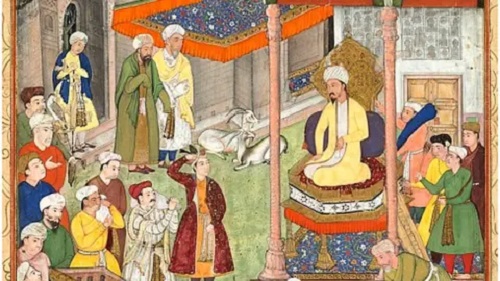
The recent changes introduced in the Class 8 history textbooks by NCERT have sparked a nationwide debate. Particularly, the depiction of Mughal rulers like Babur, Akbar, and Aurangzeb as "brutal mass murderers" and "destroyers of temples" has raised concerns among several historians and intellectuals, who argue that this is a distortion of history. However, such a claim overlooks the historical truth that has long been suppressed or presented in a softened manner. These changes are not a distortion, but rather a necessary step towards a more accurate and balanced portrayal of history.
History should not be written only as the narrative of the victors but must include the suffering of the victims and the experiences of various sections of society. The religious persecution, temple destruction, and massacres during the Mughal era are well-documented in historical records, Persian texts, and the accounts of foreign travelers. For example, the destruction of the Kashi Vishwanath and Mathura temples during Aurangzeb’s reign is a well-established historical fact, openly recorded in Mughal chronicles. Babur’s construction of a mosque at the site of Ram Janmabhoomi in Ayodhya is also mentioned in contemporary sources. When these incidents are included in modern textbooks, it is not a distortion but an effort toward transparency and truth.
Arguing that the Mughals were "glorious rulers" is a biased perspective that evaluates history solely on political stability or architectural achievements. The evaluation of any ruler should be based on their policies, religious tolerance, and treatment of the common people. Akbar is often portrayed as a "secular" ruler, but this view overlooks some of the more aggressive military campaigns and forced conversions during the early years of his reign. His policies evolved over time, but this does not negate the fact that his administration had significant religious and political conflicts in its earlier phases.
Correcting history means acknowledging the truths that were either deliberately ignored or presented with political or ideological bias. For too long, history writing in India has been influenced by a particular ideology that either overlooked the atrocities committed by certain rulers or justified them based on the context of their times. This is why rulers who were responsible for mass killings, the destruction of religious sites, and violence against a particular community were often portrayed as "great." Moving away from this one-sided narrative and embracing a more accurate portrayal is not a distortion but a correction of history.
History in a pluralistic society like India should be written in a balanced, truthful, and multi-voiced manner. We must remember that the purpose of history is not just to know the past, but to understand the present and learn lessons for the future. If we fail to acknowledge the darker chapters of our history, how can we learn from them?
Ultimately, the inclusion of the more controversial aspects of the Mughal rulers in the new NCERT textbooks is not an act of communalism or a conspiracy against any group. It is a step toward historical balance that has been long overdue. Therefore, it should be seen not as "distorting history" but as "correcting history."


















Leave Your Comment