


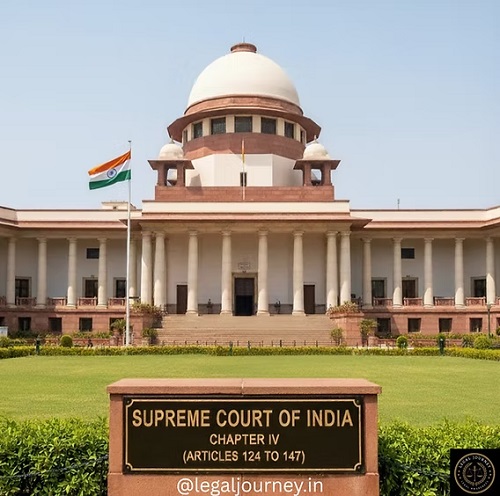
The Supreme Court’s decision to uphold the Madras High Court’s verdict in a case involving religious conversion and caste-based reservation has brought renewed attention to the relationship between religious identity, community recognition and eligibility for affirmative action. The case, originating in Tamil Nadu, concerned a government order that allowed certain individuals who had converted from Hinduism to Islam to seek inclusion in the Backward Class (Muslim) category. By sustaining the High Court’s decision to quash the order, the Supreme Court has underscored the importance of examining the legal basis on which community certificates and reservation benefits are granted.
The Supreme Court has backed Madras HC verdict on reservation eligibility after religious conversion. The case originated with a petitioner from Thoothukudi district who was born into a Hindu family and subsequently embraced Islam. He married a woman according to Islamic rites in 2016 and changed his name to Sameer Ahmed. He claimed that the Sunnath Jamath in Kayathar had issued a certificate confirming his conversion to Islam and later sought a community certificate identifying him as a member of the Muslim Lebbai community.
The Tahsildar of Kayathar rejected his application, prompting him to approach the Madras High Court. The dispute eventually raised a broader question: does conversion to another religion automatically establish eligibility for reservation under a different community category, or must the applicant independently satisfy the applicable legal requirements?
India's reservation framework operates through constitutional provisions, statutory rules and government notifications that identify eligible communities. Eligibility is therefore not determined simply by an individual's personal declaration or by the issuance of a religious conversion certificate.
In the present case, the petitioner's claim involved recognition as a member of the Muslim Lebbai community and inclusion in the Backward Class (Muslim) category. The rejection of his application and the subsequent litigation brought the applicable classification rules into focus.
The Madras High Court quashed the Tamil Nadu government's order that provided for including certain converts from Hinduism to Islam in the Backward Class (Muslim) category. The Supreme Court's decision to uphold that verdict leaves the High Court's ruling intact.
Ultimately, the central issue is not merely whether a person has changed religion, but whether the claim for a particular reservation category satisfies the governing legal requirements. Clear rules and consistent implementation are essential to maintaining both the credibility of affirmative action and public confidence in the system.






















Leave Your Comment